Pet rat care: every guide, tool and chart

Keep at least two rats: the RSPCA and PDSA say a rat should never live alone. Give a pair a cage of at least 80 × 50 × 80 cm (31 × 20 × 31 in) with 1 cm bars, soft dust-free bedding, complete rat nuggets twice a day with a little fresh veg, an hour out of the cage every day, and a vet who knows rats.

Checked against RSPCA: Pet rats, RSPCA: Creating the right home for rats, RSPCA: Rat diet and 7 more on

  • Lifespan2 to 3 years, sometimes longer (RSPCA, PDSA)
  • Adult sizeBucks 450 to 650 g (1 to 1.4 lb), does 350 to 450 g; body 23 to 28 cm (9 to 11 in) plus tail (AFRMA)
  • CompanyPairs or small same-sex groups; never alone (RSPCA)
  • AwakeMostly evening and night, feeding at dawn and dusk (RSPCA, PDSA)
  • DietOmnivore: rat pellets or nuggets plus a little fresh food (RSPCA)
  • Smallest home80 × 50 × 80 cm (31 × 20 × 31 in), 1 cm bars, for up to 4 rats (Wood Green)
  • HandlingDaily; support the chest and back legs, close to your body (PDSA)

Can a pet rat live alone?

No. The RSPCA says rats are social and should never be kept alone, and suggests a bonded pair or trio; Wood Green goes further and suggests at least three, so nobody is left alone if one dies. Same-sex groups are simplest, and mixed groups need neutering. See choosing male or female rats, where to get pet rats and, if your rat has lost a friend, my rat lost their cage mate.

How big should a rat cage be?

For two rats, get at least 80 cm high × 50 cm deep × 80 cm wide (31 × 20 × 31 in) with 1 cm (0.4 in) bar spacing: that is Wood Green's minimum for up to four rats. Only a bigger group of up to ten needs Wood Green's larger size, 123 × 63 × 93 cm (48 × 25 × 37 in). The RSPCA asks for a solid floor rather than wire, plus levels, hides and climbing. Check yours with the rat cage size calculator, then follow the rat cage setup guide.

What bedding is safe for rats?

A deep layer of dust-free paper, card or dust-extracted bedding (substrate). The RSPCA says to avoid sawdust, aspen and scented or coloured bedding, and AFRMA warns against pine and cedar because of their aromatic oils. Add plain tissue or fleece for nesting. More in our guide to the best bedding for rats.

What do pet rats eat?

A complete rat nugget twice a day, morning and evening, since the RSPCA says rats feed mainly at dawn and dusk. Wood Green suggests about 15 g (half an ounce) of dry food per rat per day, roughly two tablespoons, plus small amounts of fresh veg, a little fruit and cooked egg a few times a week. The RSPCA lists onion, citrus fruits, walnuts, rhubarb, grapes, raisins and chocolate as foods to avoid. Give water in bottles, enough for every rat at once. Start with what can rats eat.

How much time do pet rats need?

At least an hour a day out of the cage with you, plus about 10 to 15 minutes of feeding, water and spot-cleaning. The RSPCA asks for daily handling, talking, training and treats, supervised free-range time, a digging area and toys rotated regularly, and says never to use exercise balls. Try our 35 rat enrichment ideas.

Where should the cage go?

Indoors, in a room at 19 to 23°C (66 to 73°F), the RSPCA's ideal; the PDSA suggests about 20°C (68°F). Keep it out of direct sun and draughts, away from radiators, bathrooms and loud speakers, and never in a conservatory, garage or shed. See our rat temperature guide.

When does a rat need a vet?

Check your rats morning and evening and weigh them regularly, as the RSPCA advises. Sneezing, wheezing, red staining around the eyes or nose, a rough coat, weight loss, not eating or a hunched posture all mean a vet check. Quarantine any new rat for at least two weeks before introductions, following the National Fancy Rat Society. Use our is my rat sick checklist.

Laboured breathing, a rat that stops eating or drinking, heavy bleeding, a head tilt or a rat that is cold and floppy needs a vet the same day. Use our rat emergency guide while you call.

Every rat care guide

Getting rats: first-time owner guide, rats as pets, what rats cost, breeds and colours, fancy rats, dumbo rats, hairless rats, Siamese rats, husky rats, rat names, name generator, rat facts, pet rat facts and figures.

Rat history and stories: how rats became pets, famous rats, Magawa the hero rat, Karni Mata temple, the Year of the Rat.

Food: rat food chart, food checker, food game, drinking water.

Can rats eat it? apples, bananas, blueberries, cherries, grapes, kiwi, mango, oranges, peaches, pears, plums, raisins, raspberries, strawberries, tomatoes, watermelon, avocado, broccoli, butternut squash, cabbage, carrots, cauliflower, celery, courgette (zucchini), cucumber, green beans, kale, lettuce, mushrooms, pak choi (bok choy), peas, peppers, spinach, squash, eggs, mealworms, salmon, cheese, yoghurt, peanuts, peanut butter, almonds, seeds, sunflower seeds, bread, rice, Weetabix, popcorn, marshmallows, chocolate, dark chocolate, cat food, guinea pig food, hamster food, rabbit food.

Cage and home: cage setup, best rat cages, large cages for 2, 4 or 6 rats, cage size calculator, what a cage needs, choosing accessories, cleaning routine, litter training, bedding, bedding compared, bedding tool, hammocks, hanging a hammock, temperature, free-roam safety, playpens, quarantine cage, carriers, travel cages.

Is this cage big enough? Critter Nation 161, Critter Nation 162, Ferret Nation 182, Ferplast Furat, Ferplast Jenny, Prevue 528, Savic Zeno 3, Savic Zeno 3 Empire.

Health and age: is my rat sick?, emergencies, health problems, breathing, hiccups or breathing changes, teeth, bathing, lifespan, life stages, a rat on its own.

Behaviour and new rats: first 30 days, introductions, bonding pouch, body language, visual guide, bruxing and boggling, rat sounds, what rats see, biting, sleeping positions, harnesses, male or female, where to get rats.

Enrichment and play: 35 enrichment ideas, toys that keep rats busy, a bored rat, training, digging box, wheels, exercise wheels, shredding toys, safe wood, tunnels.

Questions people ask about rat care

Are rats easy to keep?

Rats are fairly easy once the basics are right, and they are among the most handleable small pets. They do need more than people expect: at least one friend, a large cage, daily handling and time out, a spot-clean most days and a full clean weekly, and vet care through a short life of about two to three years.

What do pet rats eat?

A complete food made for rats as the main diet, with small amounts of suitable fresh foods taken from the daily allowance, and fresh water at all times. The RSPCA says rabbit, guinea pig and hamster foods don't meet rats' needs. Our food chart lists everyday, sometimes and never foods.

When should I take my rat to the vet?

Straight away for laboured breathing, a rat that stops eating or drinking, bleeding, a head tilt or a sudden change in behaviour. The PDSA says respiratory signs need a vet immediately. Find an exotics vet who sees rats before you need one, and keep the number saved.

Can rats eat Weetabix?

A small piece of plain Weetabix Original is fine as an occasional extra for rats, but it is a fortified human breakfast cereal, not a rat food. Offer it dry or barely wetted, never with sugar, honey or chocolate versions. Our page on whether rats can eat Weetabix has portion sizes.

Is this information free to use?

Yes. Link to any page, or print any guide for adopters and members. Rescues, vets, clubs, schools and bloggers are welcome to use our guides. A credit link back to the page you used is kindly appreciated.

Ideas and gifts: gifts for rat lovers, pet rat supplies, hides for every theme, retro TV hide, cage furniture, cage themes, cage styling, gothic accessories, Halloween cage.

Sources

Can my rat eat it?

Home and cage

Rat wheels: do rats need one, and what size?

Rats don't strictly need a wheel, but if you add one it should be at least 30 cm (12 in) across, solid, and big enough to run with a flat back.

Rat temperature guide: too hot, too cold and just right

Pet rats are happiest at 19 to 24°C (66 to 75°F); act above 26°C (79°F), and treat 30°C (86°F) as dangerous.

Best rat cages: what to buy and what to skip

Buy a tall wire cage at least 80 x 50 x 80 cm (31 x 20 x 31 in) for up to four rats, with 1 cm (1/2 in) bars and solid floors.

Rat hammocks: why rats love them and what to look for

Rats love hammocks for sleeping high up and together; choose tight-weave fleece, fix it securely and wash it weekly at 60°C (140°F).

Rat carriers and travel cages

Use a hard plastic carrier with small air slits, lined with fleece and some food; never cardboard, and keep rats cool on the way.

Best bedding for rats: what is safe and what to avoid

The best rat bedding is dust-free paper, shredded card, hemp or dust-extracted shavings; avoid sawdust, pine, cedar and cotton wool.

Rat bedding: the best bedding for rats compared

The best rat bedding is low-dust and unscented: paper-based bedding, dust-extracted hemp or washable fleece, with plain tissue or paper for nesting.

Rat Cage Size & Fit Calculator

Check a rat cage's inside size and bar gaps against Blue Cross and Woodgreen guidance for your number of rats.

Gothic rat cage accessories for usable cage setups

Choose gothic rat accessories by job first: a hide for cover, shelves to climb, cups to forage, all secure and easy to clean.

Rat Bedding Comparison Tool

Rank rat bedding by what matters to you: low dust, soaking up wee, spot-cleaning, nesting, washing or foraging.

How to choose rat cage accessories

Pick rat cage accessories by job: one more hide than you have rats, shelves or ledges to climb, a heavy bowl and bottles, then foraging and theme pieces.

Rat cage aesthetic: how experienced owners style their setups

Set up the cage for rest, food and water, climbing, foraging and cleaning first, then carry one colour or theme through the pieces that already have a job.

Rat cage cleaning guide UK: daily, weekly and deep clean routine

Spot-clean wet bedding and old food daily, fully clean about weekly with hot soapy water or a pet-cage disinfectant, rinse, dry and keep a little clean bedding.

The complete rat cage setup guide

Two to four rats need at least 80 x 50 x 80 cm, ideally 90 x 60 x 120 cm, with 1 cm bar spacing, a solid floor, hides, climbing routes and good airflow.

Rat cage themes

Pick a theme such as fairy forest, spooky, sweets, gaming, woodland, clouds, bees or space, and let every hide, shelf and foraging cup join in.

Rat exercise wheels: fit, choice and alternatives

A rat wheel should be solid and at least 30 cm (12 in) across, so your rat runs with a straight back. It adds to free roam, never replaces it.

Rat hammock guide: choosing, hanging and checking

Choose an open or pocket rat hammock to suit how your rats sleep, hang it securely within an easy step, check it daily and wash or swap it weekly.

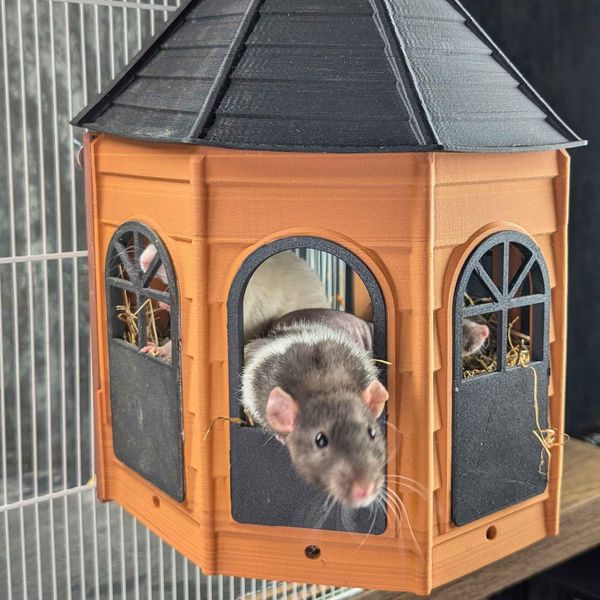
Retro TV rat hide guide: a novelty hide for themed rat cages

A good rat hide is dark, enclosed, stable and easy to clean; give one more hide than you have rats, then let a novelty piece like a Retro TV set the theme.

Safe wood for rats: branches, chews and dental care

Apple wood branches and untreated wooden chews made for small pets are the safe choices; skip any branch you can't identify or that may be treated.

Rat houses and hides: choose by fit, access and theme

The best rat hide is easy to enter, turn in and leave, and easy to clean. Offer one more hide than you have rats.

What should a rat cage have in it? The complete accessories guide

A rat cage needs bedding, two water bottles, a heavy bowl, one hide per rat plus one, hammocks, climbing routes, a litter tray and foraging toys.

Rat Travel Cages: Vet Trips and Moving House

Use a secure, ventilated hard plastic carrier for a vet trip, and a roomier travel cage when rats must stay contained for longer, such as a house move.

Rat playpen: how to set up a safe play area

A rat playpen is a supervised play space: secure, smooth sides, a clear floor, a hide, a tunnel and a forage spot, and you watching the whole time.

Halloween rat cage ideas: spooky hides that are still safe

Get the Halloween look from skull, bat and cauldron hides and shelves rats can use, and keep cobwebs, lights, candles and sweets away from the cage.

Rat tunnels: fit, materials and safe play

Choose rat tunnels about 10 cm (4 in) wide, open at both ends and free of slots that catch toes, and give one more hiding place than you have rats.

Is the MidWest Critter Nation 162 big enough for rats?

The recorded bar gaps exceed our guide figure, even where the dimensions reach the size comparison.

Is the MidWest Ferret Nation 182 big enough for rats?

Listed size reaches the comparison, but inside measurements and openings still need checking.

Is the Ferplast Furat big enough for rats?

Below our pair size comparison; see the measurements, limits and larger size candidates.

Is the Ferplast Jenny big enough for rats?

Below our pair size comparison; see the measurements, limits and larger size candidates.

Is the MidWest Critter Nation 161 big enough for rats?

Below our pair size comparison; see the measurements, limits and larger size candidates.

Is the Prevue Universal Small Animal Home 528 big enough for rats?

Below our pair size comparison; see the measurements, limits and larger size candidates.

Is the Savic Zeno 3 big enough for rats?

Below our pair size comparison; see the measurements, limits and larger size candidates.

Is the Savic Zeno 3 Empire big enough for rats?

Below our pair size comparison; see the measurements, limits and larger size candidates.

Large rat cages: how big for 2, 4 or 6 rats

Up to 4 rats need at least 80 x 50 x 80 cm (31 x 20 x 31 in), and up to 10 need 93 x 63 x 123 cm (37 x 25 x 48 in), with bars 1 cm (3/8 in) apart.

Food

Foods we have checked

Health

How long do rats live? Pet rat lifespan and life stages

Pet rats live about 2 to 3 years, sometimes 4. Wild rats usually live less than a year. The oldest pet rat on record reached 7 years 4 months.

Bathing pet rats: when cleaning help is really needed

Healthy rats groom themselves and rarely need a bath; spot-clean dirty patches and sponge-bathe only rats that can't groom, then dry them fully.

Is My Rat Sick? Warning Signs and What to Do

Tick the signs you have seen and find out how soon your rat should see a vet, with a note to copy for the call.

How to set up a quarantine cage for new or sick rats

Keep new rats in a simple quarantine cage in a separate airspace for at least two weeks with no signs of illness before any introductions.

Rat health problems: signs to watch and when to call a vet

Breathing disease, lumps, skin and coat trouble, teeth and weight changes are the common rat health problems; breathing difficulty is an emergency.

Rat hiccups or breathing changes? What to record

What looks like rat hiccups can be laboured breathing, so record it and ring a vet; struggling to breathe, open-mouth breathing or collapse is an emergency.

From kitten to senior: caring for rats at every age

Rats are babies to 6 weeks, juveniles to 6 months, adults to about 18 months to 2 years, then seniors, and each stage needs different food and care.

What can rats see? Rat vision and cage setup

Rats cannot see in complete darkness. Their eyesight is poor, so they move through dim light using whiskers, smell, hearing and familiar routes.

Rat respiratory infection: signs, vet care and support

Rat respiratory infections need a vet and usually prescribed medicine; at home you support with warmth, clean dust-free bedding, easy food and calm.

Rat emergency guidance: contact a vet now

Breathing trouble, collapse, heavy bleeding, poisoning, choking, fits or a bad fall: ring a vet now, keep the rat calm and contained, and give nothing yourself.

Behaviour

Rat sounds and noises: what your rat is telling you

Soft teeth grinding means content, a sharp squeak means pain or fright, a hiss means back off, and clicking or wheezing breaths mean see a vet.

Rat toys: the best enrichment toys that actually keep rats busy

The best rat toys give rats jobs to do: foraging cups first, then hides, shelves and ropes, plus plain cardboard and paper to shred. Toys never replace company.

Rat enrichment ideas: 35 activities to try

Rat enrichment is anything that lets rats forage, climb, hide, chew, dig and explore: here are 35 ideas from free DIY games to full cage setups.

How to train pet rats: three useful first skills

Train rats with tiny food rewards and short, willing sessions: start with coming to a cue, touching a target and stepping onto scales.

My rat lost their cage mate: what now?

Rats often change after a cage mate dies. Keep the routine familiar, check eating closely, and plan new rat company, because rats should not live alone.

Pet Rat Biting: Context, Safer Handling and Vet Checks

Pet rats rarely bite. Most bites come from fear, food-scented fingers, hormones or pain. Stop calmly, make it safer, and see a vet for sudden changes.

Rat body language: observe the whole situation

Read rat body language as a whole picture: posture, coat, tail, sounds and routine together. One signal on its own is rarely enough.

Understanding rat body language: a visual guide to what your rats are telling you

Read the whole rat, not one signal: soft bruxing and boggling usually mean content, while puffed fur, hunching or a lashing tail need a closer look.

Rat Digging Box: A Simple, Supervised Setup

A rat dig box is an easy-access tray of clean sand, coco coir or familiar bedding with some of the day's food hidden in it, offered during supervised play.

Rat free roam area guide UK

Give rats about an hour a day out of the cage in a rat-proofed room or pen, with cables, gaps, plants and chemicals dealt with first, and stay with them.

How to introduce new rats: the carrier method step by step

Put all the rats together in a small, plain, neutral carrier, then a bare cage, and add space and furniture only as they stay calm.

Rat sleeping positions: what to observe

A sleeping pose is a clue, not a verdict: check breathing, how easily the rat wakes and what is normal for that rat.

Safe rat shredding toys: paper and cardboard checks

Plain paper, unscented tissue, egg boxes and clean cardboard tubes and boxes, with tape, staples and glossy coatings removed, are safe for rats to shred.

Rat enrichment ideas: observe, adjust and compare

Watch the pattern, then change one thing at a time: forage with part of the daily food, add climbing routes and more places to retreat.

Why your rat deserves better furniture than you have

Rat cages need furniture (shelves, ledges, hides) for climbing and resting at height, plus rotating enrichment on top.

Rat Harness: Safer Ways to Explore

A rat harness is a poor first choice for outdoors: rats back out of loose fits and leads snag. A rat-proof room or supervised pen is safer for exploring.

How to Litter Train a Rat

Put a tray in the corner your rats already use, move droppings into it, reward use, and keep food, water and beds well away from it.

Rat Bonding Pouch: How to Introduce One Gently

A bonding pouch is an optional covered spot your rat can choose to rest in while you sit nearby: introduce it open, short and supervised, and never force it.

Rat Enrichment Idea Picker

Pick an enrichment activity for your rats by type, cost and time, with a safety check for each idea.

Getting one

Rat breeds, types and colours: fancy rat varieties

All pet rats are one species, the fancy rat. Varieties differ in coat, ears, colour and markings, not in personality or care.

Fancy rats: what they are and how to care for them

A fancy rat is a tame brown rat bred as a pet. Keep at least two, in a big multi-level cage at 19 to 23°C, on rat nuggets and fresh veg.

Dumbo rats: care, temperament and what makes them different

A dumbo rat is an ordinary pet rat with large, round, low-set ears. The ears come from one recessive gene and change nothing about care.

Hairless rats: care, skin and keeping them warm

Hairless rats need a warmer room (about 21 to 24°C), soft bedding, furred friends to cuddle and weekly skin checks. They are harder to keep than furred rats.

Rat names: ideas for every personality

Over 250 pet rat names sorted by theme, from Pickle and Nutmeg to Morticia and Bramble, with matching pairs and trios and tips on choosing.

How much does a pet rat cost to buy and keep?

A rat costs £10 to £30 ($15 to $100), but rats need a friend and around £250 ($200+) of setup, then food, bedding and vet bills.

Where to get pet rats: rescue, breeder or pet shop

Start with a rescue, then a breeder registered with a rat club, and use a pet shop last; always bring home two or more same-sex rats.

Rat facts: surprising things about pet rats

Rats laugh in squeaks too high for us to hear, can't vomit or sweat, cool down through their tails and have teeth that never stop growing.

Rats as pets: what to know before you get them

Rats are clever, affectionate pets for 2 to 3 years if you keep two or more, give them a big cage, a daily hour out and a vet who knows rats.

Your first 30 days with pet rats: a day-by-day plan

A day-by-day plan for new pet rats: settle them for 2 to 3 days, build trust with treats, start handling in week 2 and a daily routine by week 3.

Christmas gifts for rat lovers and their mischief

The best gifts for rat lovers are accessories that fit their actual cage: a hide, shelves, forage cups or a themed set, chosen with the keeper's measurements.

Male or Female Rats: Choosing a Compatible Group

Both make good pets. Bucks are bigger and often calmer, does busier. Keep a same-sex pair or group, and never house fertile males and females together.

Pet rat facts: the questions owners ask most, answered

Short, sourced answers to what pet rat owners ask most: food, eyesight, cages, behaviour, handling, health and lifespan.

Pet rat supplies for a busy little home

Rats need a big barred cage, one more hide than rats, shelves and hammocks, chew and foraging toys, paper bedding, two water points and a rat food.

Rat Name Generator

Pick a mood and get names for one rat, a pair or a trio, then save and share a shortlist.

Rat care guide: the complete guide for first-time owners

Keep at least two same-sex rats in a big wire cage, feed complete nuggets twice a day with fresh veg, give an hour out daily and find a rat vet first.

Siamese rats: markings and pet care

A Siamese rat is a pet rat with a beige body and darker nose, ears, feet and tail. The points darken in cool weather, and care is the same as for any rat.

Husky rats: markings and coat changes

A husky rat is a roan pet rat with a white V-shaped blaze and white belly. It is born dark and gets paler with each moult, sometimes until nearly white.