Hides and houses
 Shelves and ledges
 Foraging and toys
 Cage accessories
 Kits and bundles
 Fairy forest
 Spooky mischief
 Sweetie stash
 Game mode
 Forest floor
 Castles and cathedrals

What type of rat hammock should I choose?
Choose the type that matches how your rats like to sleep. Open hammocks make it easy to see resting rats, while pocket styles offer more enclosure. A hanging hide is another option, but it should not be confused with a soft fabric bed. Look at the actual description and photographs before choosing.
| Option | Purpose | What to check |
|---|---|---|
| Open hammock | Easy observation; good for rats who sprawl or pile together | Check edges and supports |
| Pocket hammock | Enclosed resting option for rats who like a snug corner | Check inside and entrance |
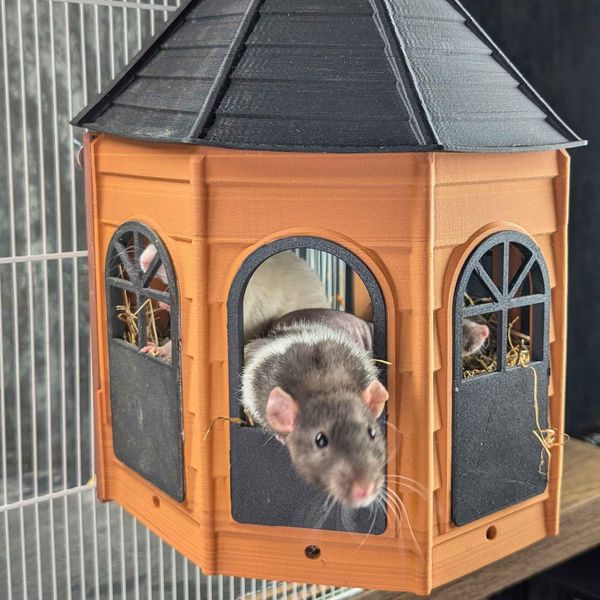
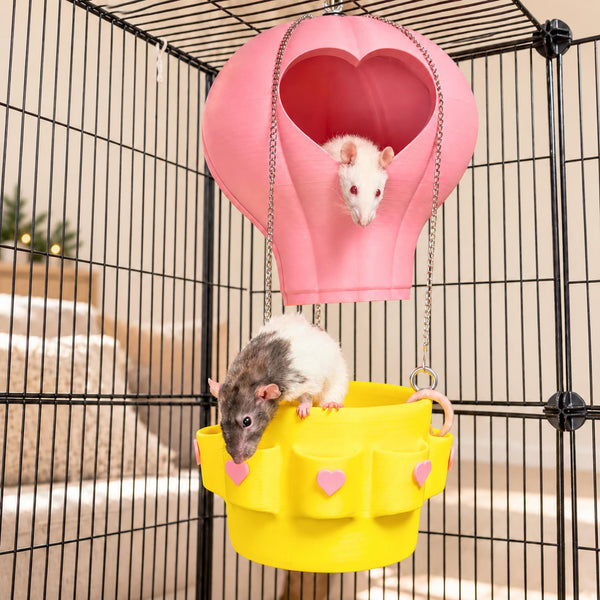
| Hanging hide | Structured shelter, such as a sputnik or hanging basket | Check fixing and approach |
| Low resting area | Reduced climbing demand for older or less agile rats | Keep access clear |
Start with the sleeping habits of your group: do they pile together, spread out or prefer enclosed corners? Offer alternatives rather than assuming the most elaborate bed will become everyone's favourite. Woodgreen lists hammocks and ropes (bought or homemade) and sputniks, hides that hang from the cage ceiling, among good cage furniture, the AFRMA includes hammocks in its list of rat toys, and PetMD names a fleece hammock among recommended rat products.
Fleece is the usual fabric because it does not fray into long threads. RSPCA Australia warns against loose-weave and long-fibre fabrics, which can catch toes and teeth. Hairless rats feel the cold more, so a pocket in soft fleece suits them well; see our hairless rat care guide.
How big should a rat hammock be?
Big enough for every rat who wants to share it to lie flat together, with an entrance your biggest rat can use easily. Check the usable sleeping area and entrances against the rats who might share it. A product photograph does not guarantee the same fit for a larger adult group, so do not infer capacity from a small animal pictured inside. Adult males can weigh around 500 g (1.1 lb) and adult females around 300 g (0.7 lb), the NFRS notes, so a bed that suits young does may be cramped for grown bucks.
The bed should hold its intended shape without forcing rats into a steep fold or blocking the opening. If you cannot establish the dimensions or attachment requirements, ask the seller before choosing it.
Where should I hang a rat hammock?
Hang it where a stable shelf, ledge or ramp reaches it in an easy step, away from a long unbroken fall. Keep the route to water and other resting places clear. The RSPCA asks for hides and resting spots at different heights, but also says enrichment should not take over the whole cage.
- Pick the spot. Choose a corner reached from a stable nearby surface, with a shelf or soft bedding below rather than a long drop to the base tray.
- Fix every corner. Hook each loop or clip onto the bars. Woodgreen suggests shower curtain hooks; RSPCA Australia asks for fastenings rats cannot undo and lists metal chains among things to avoid.
- Test it. Press down on the middle with gentle pressure and check that no corner slips and the hammock does not tip or swing into a steep fold.
- Clear the routes. Make sure the hammock does not block a doorway, ladder, water bottle or the way to another bed.
- Add a litter tray. Woodgreen suggests a small corner tray under a favourite hammock, since rats often toilet near where they rest.
- Let them explore. Rub a little used bedding on it and put a treat inside, then let the rats find it in their own time.
A high corner can look cosy but still be hard to reach, especially for an older rat. Lowering a favourite bed can be more useful than adding another challenging climbing route. Our guide to caring for rats at every age covers changes for senior rats.
Are rat hammocks safe for chewers?
Yes, with daily checks, but no fabric should be treated as chew-proof. RSPCA Australia advises monitoring fabric hides and hammocks closely and removing them once chewed, because swallowed fabric can block the gut. The RSPCA adds that rats cannot vomit, so they cannot bring back anything harmful they swallow.
- Seams: no splits, gaps or loose stitching.
- Loops and clips: every corner sound, nothing fraying where it takes the weight.
- Sleeping surface: no holes that could catch a foot or head.
- Edges: no loose threads long enough to wrap round a toe.
- Shape: still hangs flat, not sagging into a steep fold.
Check attachment points carefully: the bed may look intact while a supporting loop is failing. Some rats quickly destroy soft furnishings, and their habits should shape the choices you offer. A stronger-looking photograph is not evidence of safety. For a dedicated chewer, a solid hanging hide beside the fabric bed gives them somewhere to rest that survives.
If a rat stops eating, has fewer droppings or seems hunched and quiet after chewing a hammock, ring your vet the same day. The RSPCA lists not eating, reduced activity and a hunched posture among signs that need a vet.
How often should I wash a rat hammock?
Check it daily and clean it whenever it is soiled. Woodgreen replaces smelly hammocks weekly or twice weekly and, at a fuller clean every fortnight or so, washes hammocks and ropes at 60°C (140°F) with non-bio detergent. Follow the maker's care label if it gives a lower temperature.
- Swap in a spare. Keep at least one spare so the cage does not lose its main resting option while one dries.
- Shake it out. Brush off droppings and bedding outdoors or into the bin.
- Bag it. Woodgreen suggests a pillowcase or laundry bag so hair and clips do not clog or damage the machine.
- Wash it. Use non-bio, unscented detergent at the hottest temperature the label allows, up to 60°C (140°F).
- Dry it fully. Do not return a damp bed. Check fabric and seams again once it is dry.
If odour returns very quickly, review the whole cage routine rather than masking it with fragrance. The RSPCA asks owners to keep strong artificial smells such as air fresheners away from rats. Our rat cage cleaning guide covers the daily, weekly and deep-clean routine.
What if my rats will not use their hammock?
Check access, movement, smell and position before deciding they dislike hammocks. A swinging bed or unfamiliar entrance may take time to explore.
- Can every rat reach it in an easy step?
- Does it swing or tip when a rat steps on?
- Does it smell of detergent? Rub some used bedding on it.
- Is it in a busy, bright or draughty spot?
- Is the entrance big enough for your largest rat?
Keep their established sleeping place available and let them choose. Do not lift a nervous rat into a hanging pocket to force acceptance. If a previously active rat stops climbing or avoids a familiar bed, check for pain or illness with an exotics vet: the RSPCA notes rats often hide pain. Our guide to signs a rat is sick lists what to look for.
Real cage accessories for resting
For more on what to look for in a hammock, and why rats love them, read our rat hammocks guide.
Frequently asked questions
Do rats need a hammock?
They need suitable resting choices, and a hammock is one of the most popular. The RSPCA and Woodgreen both list hammocks among good cage enrichment, and PetMD notes many rats love lounging and sleeping in them. Offer one alongside solid hides and nesting areas, so every rat has a dark, safe place to sleep as well.
Can several rats share one?
Yes, if the hammock's size and support suit them. Many rats like to pile together, but check the usable sleeping area, not the photo, and watch how they settle. Keep other beds available so nobody is pushed out, and add a second hammock or hide if one rat is always left on the edge.
Can I use a damaged hammock?
No. Remove it as soon as damage creates loose threads, holes that could catch a foot or head, or a weak loop. RSPCA Australia warns that chewed fabric can be swallowed and block the gut. Do not wait for cleaning day: swap in a spare straight away and repair or bin the damaged one.
Should I hang it at the cage roof?
Not automatically. A safe approach and a short drop matter more than using the highest spot. Hang it where a shelf or ledge reaches it in an easy step, with no long unbroken fall beneath. Older or less agile rats often prefer a hammock lower down, so moving a favourite bed down can help more than adding a climb.
Is a hammock a replacement for floor space?
No. Sleeping furniture adds choice but does not replace usable cage space, exercise or opportunities to explore. The RSPCA says enrichment should not take over the whole cage. A cage still needs to meet its size minimum, such as Woodgreen's 80 x 50 x 80 cm (31.5 x 19.7 x 31.5 in) for up to four rats.
How do you attach a rat hammock to a cage?
Most hammocks have a loop or clip at each corner that hooks onto the cage bars. Woodgreen suggests shower curtain hooks as an easy way to hang hammocks and toys. RSPCA Australia asks for hammocks to be fastened securely in a way rats cannot undo, and lists metal chains among things to avoid. Check every corner holds before use.
What is the best material for a rat hammock?
Fleece is the usual choice: PetMD names a fleece hammock among recommended rat products, and fleece does not fray into long threads. Avoid loose-weave or long-fibre fabric, which RSPCA Australia warns can catch toes and teeth. Whatever the fabric, no hammock is chew-proof, so check seams and loops every day.
Why does my rat's hammock smell so quickly?
Rats often wee in their favourite resting spots. Woodgreen suggests putting a small litter tray under a favourite hammock and replacing smelly hammocks once or twice a week. If the smell returns very quickly, look at the whole cage routine, bedding and ventilation rather than masking it with fragrance, which the RSPCA says to keep away from rats.
More to explore
- Rat hides and houses
- Rat cage shelves and ledges
- Rat enrichment ideas
- Gifts for rat lovers
- The complete rat cage set-up guide
- Rat cage cleaning guide
- Rat houses and hides: choose by fit, access and theme
- Every pet rat care guide