Hides and houses
 Shelves and ledges
 Foraging and toys
 Cage accessories
 Kits and bundles
 Fairy forest
 Spooky mischief
 Sweetie stash
 Game mode
 Forest floor
 Castles and cathedrals

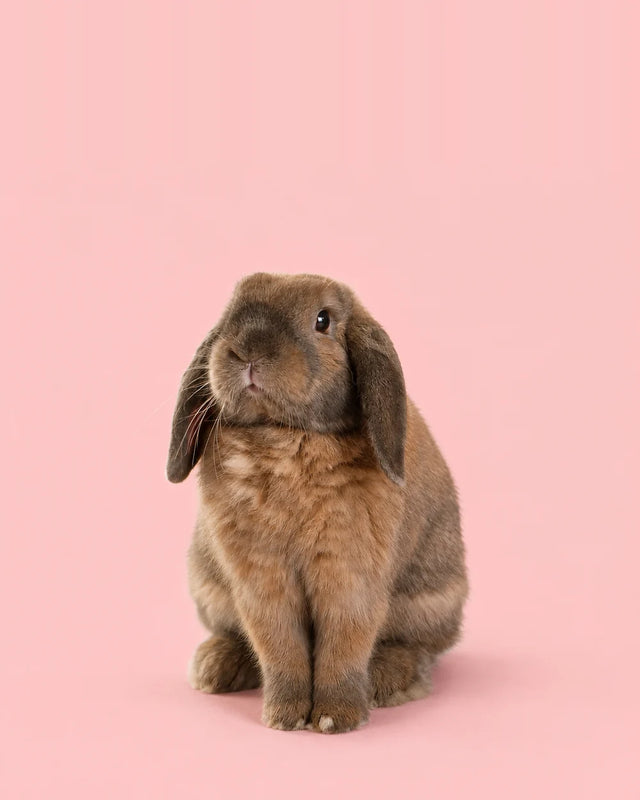
Rabbit care for beginners: what a rabbit needs
A rabbit needs company, space, the right food, health care and the chance to behave like a rabbit: run, dig, hide, chew and graze. Those are the same five welfare needs every UK charity uses, and every section below comes back to one of them.
Rabbits are not cheap, small or short-lived pets. They live 8 to 12 years according to the RSPCA, they need a home far bigger than a shop hutch, and PDSA's 2024 sums put the minimum cost of a pair at £80 to £84 a month after £922 to £980 of set-up costs. PDSA does not give US figures; our guide to what a rabbit costs to buy and keep breaks it down. If you are still deciding, start with what to know before you get a rabbit.
- A bonded friend, or a plan to adopt a pair
- A shelter plus run of at least 3 x 2 x 1 m (10 x 6 x 3 ft), open all day and night
- Hay rack or pile, heavy water bowl, food bowl
- Large litter tray and safe paper or wood-based litter
- One hiding place per rabbit, plus one spare
- Things to dig, chew and climb on
- A pet carrier and a vet who sees rabbits
- Insurance, or savings set aside for vet bills
Do rabbits need a friend?
Yes. Rabbits live in stable groups of 2 to 10 in the wild, and the RSPCA says pet rabbits must not live on their own unless a vet advises it. In 2024 it found 42% of UK pet rabbits were living alone, which is the single most common welfare gap.
The easiest pairing is a neutered male with a neutered female. Two neutered sisters or brothers raised together can also work. Rescues often have bonded pairs ready to go, which skips the hardest part. If you are adding a friend to a rabbit you already have, follow our step-by-step guide to bonding two rabbits and read up on neutering and spaying first, because unneutered rabbits fight.
How big should a rabbit's home be?
For two medium rabbits, the RSPCA, PDSA and Rabbit Welfare Association all set the same minimum: 3 m long, 2 m wide and 1 m high (10 x 6 x 3 ft), with the shelter and run joined so the rabbits can choose where to be at any hour. A hutch alone is not enough, however it is sold.
The Scottish Government guidance splits that into a shelter of at least 180 x 60 x 60 cm (6 x 2 x 2 ft) with a dark sleeping room and a separate living room, joined to a run of at least 240 x 180 x 90 cm (8 x 6 x 3 ft). Every rabbit must be able to take three big hops end to end and stand up on its back legs without its ears touching the roof. Giant breeds need much more. Our rabbit cage size guide has a table by breed, and the real minimum hutch size explains why most shop hutches fall short.
In the US, the House Rabbit Society uses a smaller baseline: at least 8 sq ft (0.75 m²) of enclosure and 24 sq ft (2.2 m²) of exercise space, with at least four to five hours of free running a day. We follow the UK figure because it gives the rabbits room all the time, not only when someone is home.
Indoors or outdoors?
Both work if the space is big enough, safe and the right temperature. The RSPCA puts the ideal range at 10 to 20°C (50 to 68°F). Indoors, keep them away from radiators, fires, direct sun and draughts, and rabbit-proof every cable and houseplant. Outdoors, raise the shelter off the ground, make it predator-proof and weatherproof, and give shade from about 20°C (68°F). Our indoor or outdoor rabbits guide weighs it up, the rabbit temperature guide covers heatwaves and frosts, and rabbit cage setup ideas shows layouts that work.
What do rabbits eat?
Rabbits eat mostly hay. The RSPCA splits the diet like this: about 85% hay or grass, 10% leafy greens and herbs, 5% nuggets, and treats only now and then.
| Food | Share of diet | How much |
|---|---|---|
| Hay or grass | About 85% | Unlimited; at least a bundle as big as the rabbit each day |
| Leafy greens and herbs | About 10% | A large handful of mixed, washed greens a day |
| Nuggets (pellets) | About 5% | 25 g per kg of body weight (about an egg cup per 2.2 lb) |
| Fruit, carrot, treats | Tiny | A thumb-sized piece, a few times a week at most |
| Water | Always | Fresh, changed twice a day; bowls clean daily |
So a 2 kg (4.4 lb) rabbit gets about 50 g (1.8 oz) of nuggets a day, not a full bowl. Skip muesli mixes: rabbits pick out the sweet bits and leave the fibre. If you are switching, the RSPCA advises mixing in nuggets and phasing the muesli out over 14 to 28 days. Carrots are high in sugar, so they are a treat, not a staple. Our rabbit diet guide covers daily feeding, and what rabbits can eat lists safe and unsafe foods one by one, such as carrots and lettuce.
Bunny dental care: how to look after rabbit teeth
A rabbit's teeth never stop growing, about 2 to 3 mm (roughly 1/8 in) a week for the front teeth, and the side-to-side chewing of hay is what wears them down. Plenty of hay is the best protection you can give.
- Feed hay first. Unlimited hay or grass does more for teeth than any chew toy. Nuggets and soft foods take little chewing.
- Look at the front teeth weekly. Gently lift the lip. The top pair should sit just in front of the bottom pair, cream-coloured and even.
- Watch how they eat. Dropping food, eating slowly, picking only soft foods, drooling or a wet chin can all mean tooth pain.
- Book back-teeth checks. You can't see the back teeth at home. The Scottish Government guidance advises a vet check with an otoscope about every six months.
- Weigh monthly. Slow weight loss is often the first sign of a tooth problem. Write the number down each time.
Rabbit health care: vaccines, neutering and daily checks
Every rabbit needs a yearly vaccine against myxomatosis and both strains of rabbit haemorrhagic disease (RHD1 and RHD2), indoor rabbits included. PDSA says the first dose can be given from about five weeks old, then a booster every year. Both diseases are usually fatal and spread on insects, wild rabbits, shoes and hay.
Neutering prevents unwanted litters and makes bonding, litter training and calm behaviour far easier. The Scottish Government guidance says males are usually neutered from about 3 months and females from about 4 months. PDSA includes neutering in its set-up costs because it treats it as standard care. See our guide to neutering rabbits for what to expect.
The daily and weekly health check
- Daily: eating, drinking and pooing normally (round, dry, plentiful droppings)
- Daily: eyes, nose and ears clean with no discharge
- Daily: bottom and tail clean, twice a day in warm weather
- Weekly: front teeth, nails, feet and coat; feel for lumps
- Monthly: weigh and write it down
Rabbits hide illness until they are quite poorly, so knowing what is normal for yours matters more than anything else. Our rabbit health guide lists the signs to watch for and how fast to act, and how long rabbits live covers each life stage.
Grooming and nails
Short-coated rabbits need brushing weekly, more during a moult. Long-haired breeds such as Angoras need grooming every day, or the coat mats and they swallow too much fur. Check nails weekly; they should not stick out much beyond the fur of the foot. Ask your vet or a vet nurse to show you how to trim them the first time.
Baby bunny care: 2, 3, 4, 6 and 8 week old rabbits
Baby pet rabbits belong with their mother until they are weaned at 6 to 8 weeks (42 to 56 days), and the Scottish Government guidance says they should not go to a new home before 8 weeks. Before that, the best care you can give is to leave mum and babies in peace.
| Age | What is normal | What you do |
|---|---|---|
| 2 weeks | Still in the nest on milk; mothers visit only around dawn and dusk | Leave the nest alone; keep it quiet, warm and dry |
| 3 weeks | Starting to leave the nest and nibble hay | Make sure hay and water are low enough to reach |
| 4 weeks | Eating more hay, still drinking milk | Unlimited hay; no new foods yet |
| 5 to 6 weeks | Weaning; can have the first vaccine | Book the vaccine; ask your vet about portions |
| 8 weeks | Old enough for a new home | Keep the same diet for the first weeks; add greens slowly, one at a time |
| 3 to 4 months | Puberty begins in small breeds | Separate or neuter before litters happen |
Growing rabbits may need more nuggets than adults, so ask your vet for an amount. If you have orphaned baby pet rabbits younger than 3 weeks, ring a vet the same day; hand-rearing is hard and needs expert guidance. If you have found wild babies, the RSPCA says to leave them unless they are hurt, cold, covered in flies or their mother is dead nearby, because mothers only visit the nest around dawn and dusk. Wild rabbits are not pets and should never be kept as one.
How to handle and bond with a rabbit
Most rabbits dislike being lifted, because in the wild only predators pick them up. Do most of your bonding on the floor: sit in their space, let them come to you and offer hay or a leaf from your hand. When you must lift, support the chest and the back legs together, keep them close to your body and stay low. Never lift a rabbit by the ears or the scruff.
Learn what thumping, flopping and chinning mean with our rabbit body language guide, and follow how to tame and handle a rabbit for a nervous one.
Bedding, litter and cleaning
Use soft, dust-extracted straw or hay for sleeping areas over an absorbent layer such as paper pellets, and a large tray of paper or wood-based litter with hay on top for the toilet. Avoid sawdust and clumping cat litter. Most rabbits learn to use a tray, especially once neutered; see how to litter train a rabbit.
Clean toilet areas every day and do a full clean once a week, leaving a little unsoiled bedding behind so it still smells like home. Our guide to the best rabbit bedding compares every type, and how to clean a rabbit cage gives the full routine.
Keeping rabbits busy
Rabbits spend about 70% of their waking hours eating and foraging, and the rest running, digging and exploring. A bored rabbit chews the house, over-grooms or sulks. Give a dig box of soil or shredded paper, tunnels with two exits, cardboard boxes, platforms to jump on and hay hidden in toys. Our rabbit enrichment guide has ideas that cost nothing, and our picks of rabbit toys, rabbit hides and houses and rabbit cages and pens come from other shops we'd look at.
Bunny care sheet: daily, weekly and yearly jobs
- Morning: fresh water, hay topped up, greens, quick health check
- Evening: nuggets, more hay, clean toilet areas, check bottoms in warm weather
- Weekly: full clean of the home, check teeth, nails and coat, brush
- Monthly: weigh, rotate toys and hides, check the run for gaps and wear
- Every 6 months: back-teeth check at the vet
- Yearly: booster vaccine and full health check
More on the animal itself: rabbit breeds and colours, surprising rabbit facts, rabbit name ideas and where to get a rabbit, rescue first.
Rabbit care questions
Is a rabbit a good pet for a beginner?
A rabbit can be a good first pet if you are ready for a pair, a big home, a vet who knows rabbits and 8 to 12 years of care. They suit calm adults and older children better than small children, because most rabbits dislike being picked up and are easily hurt if dropped.
Can a rabbit live alone?
Rabbits should not live alone unless a vet advises it. They are social animals that live in groups in the wild, and a neutered rabbit friend gives company no human can match. If your rabbit must live alone for a while, spend time with them every day and talk to a rescue about bonding.
How often do rabbits need to see a vet?
At least once a year for the booster vaccine and a full health check, which should include a look at the back teeth. Vets advise back-teeth checks about every six months. Go the same day if your rabbit stops eating, stops pooing or has flies or maggots on them.
Do indoor rabbits need vaccinations?
Yes. PDSA vets advise vaccinating indoor rabbits too, because myxomatosis and both strains of RHD can travel on insects, on shoes and clothing and on hay. Both diseases are usually fatal. The first vaccine can be given from about five weeks old, then a booster every year.
Do rabbits smell?
A healthy rabbit with a clean home smells of hay, not much else. The smell people notice is urine in a dirty litter tray or wet bedding. Clean the toilet area every day, deep clean weekly and neuter your rabbits, since unneutered rabbits have stronger-smelling urine and spray more.
How long can you leave a rabbit alone?
Rabbits need checking at least twice a day: fresh water, greens, hay topped up, the toilet area cleaned and a quick health check. In warm weather you need to check their bottoms twice a day for flystrike. For a weekend away, arrange a sitter or a rabbit boarder who knows rabbits.
What do rabbits need every day?
Unlimited fresh hay, a large handful of washed greens, a small portion of nuggets, clean water changed twice a day, a clean toilet area, the chance to run and dig, company of their own kind and a quick health check of their eating, droppings, eyes, nose and bottom.
Sources
- RSPCA: Rabbit care
- RSPCA: Rabbit diet
- RSPCA: Rabbit environment
- PDSA: Creating the ideal home for your rabbits
- PDSA: Rabbit vaccines
- PDSA: The cost of owning rabbits
- Scottish Government: Pet rabbit welfare guidance, natural characteristics
- Scottish Government: Pet rabbit welfare guidance, suitable environment
- Scottish Government: Pet rabbit welfare guidance, protection from disease
- HouseRabbit.org: Housing rabbits safely
- RSPCA: Wild rabbits and hares
- House Rabbit Society: How to care for a pet rabbit