Hides and houses
 Shelves and ledges
 Foraging and toys
 Cage accessories
 Kits and bundles
 Fairy forest
 Spooky mischief
 Sweetie stash
 Game mode
 Forest floor
 Castles and cathedrals

What is a mini lop bunny?
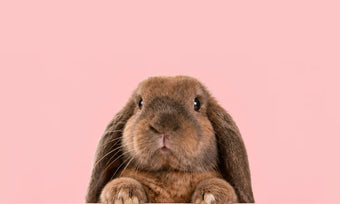
A mini lop is a small rabbit with ears that hang down beside its face instead of standing up. PetMD describes the breed's look as long ears, a short neck, a button nose and large round eyes, with the ears reaching about 2.5 cm (1 in) below the chin. The breed was developed from the German Big Lop in the 1970s and recognised in the USA in 1980.
Here is the part that confuses everyone: the UK and the US both have a "mini lop", and they are not the same size. The British Rabbit Council standard caps the UK mini lop at 1.6 kg (3 lb 8 oz). The American mini lop can weigh up to 2.9 kg (6.5 lb). Going by weight, the American mini lop is closer to the UK dwarf lop, which PDSA puts at 2 to 2.5 kg (4.4 to 5.5 lb). If you read care advice, check which country it comes from. Our guide to rabbit breeds and our French lop guide cover the other lops.
Mini lop bunny size
| Rabbit | Adult weight | Source |
|---|---|---|
| UK mini lop | Up to 1.6 kg (3 lb 8 oz) | British Rabbit Council standard, Woodgreen |
| UK dwarf lop | 2 to 2.5 kg (4.4 to 5.5 lb) | PDSA |
| US mini lop | Up to 2.9 kg (6.5 lb), ideal 2.5 kg (5.5 lb) | American standard, PetMD |
| French lop, for comparison | 5 to 6 kg (11 to 13 lb) | PDSA |
Small size does not mean small space. A mini lop runs, jumps and digs just like a bigger rabbit, and the space rules below apply in full.
Mini lop colours
Mini lops come in almost every rabbit colour. The UK standard accepts any colour the British Rabbit Council recognises except the broken pattern (white with coloured patches). That means black, blue, brown and chocolate, grey and agouti, lilac (a pinky dove-grey), white and many more are all mini lops. Colour has no link to temperament or health, so choose the rabbit, not the coat.
Mini lop temperament
Mini lops are known for being friendly and easy-going. PetMD calls them gentle, affectionate and laid-back, and says they bond with every member of the family. Petplan describes them as full of fun and energy, and says they do best in quieter homes rather than with young children. PetMD adds that a bored mini lop may bite or kick, so daily company and things to do matter. Our guide to taming and bonding with a rabbit covers the first weeks.
How much space does a mini lop rabbit need?
At least 3 x 2 m (10 x 6 ft) and 1 m (3 ft) high for a pair, open to them all day and night. That is the Rabbit Welfare Association figure used by UK charities, and it applies to small breeds too. PetMD says most rabbits need at least 3 hours a day of exercise out of a cage, but a hutch with a short daily run does not meet UK welfare guidance. Our guides to rabbit hutch size and rabbit playpens and runs show layouts that work indoors and out.
- Shelter joined to a run, or a rabbit-proofed room or pen, of 3 x 2 m (10 x 6 ft) or more
- Solid, non-slip floor (wire floors cause sore hocks)
- Large litter tray with hay at one end
- Two hides, each with two exits
- Water bottle and a heavy bowl
- Tunnels, dig box and chew toys
- A neutered rabbit friend
What do mini lop rabbits eat?
Mini lops eat what every rabbit eats: mostly hay. There is no special mini lop diet. Hay wears their constantly growing teeth down and keeps their gut moving. PetMD puts greens at about 1 cup per 900 g (2 lb) of body weight a day and nuggets at about a quarter of a cup per 1.8 to 2.3 kg (4 to 5 lb). PDSA's simpler rule for small rabbits is one tablespoon of nuggets a day. The full list of safe greens is in our rabbit diet guide.
| Food | UK mini lop (about 1.5 kg) | US mini lop (about 2.5 kg) |
|---|---|---|
| Hay or grass | Unlimited, at least their own size daily | Unlimited, at least their own size daily |
| Leafy greens | About 1.5 cups a day, two meals | About 2.5 to 3 cups a day, two meals |
| Nuggets (pellets) | 1 level tablespoon | About a third of a cup |
| Fruit or carrot | A thumbnail-sized piece, once or twice a week | A thumb-sized piece, once or twice a week |
| Water | Fresh daily, bottle and bowl | Fresh daily, bottle and bowl |
Good everyday greens include romaine lettuce, rocket (arugula), coriander (cilantro), basil, mint and spring greens. PetMD warns that parsley, kale and spinach are high in calcium, so mix them with others rather than feeding them every day. Skip iceberg lettuce. Safe vegetables in small amounts include broccoli, courgette (zucchini), deseeded peppers and Brussels sprouts.
The best food for a mini lop is a good meadow or timothy hay that smells sweet and looks green. If your rabbit leaves a lot of it, try a different cut or brand before adding more nuggets. Picky hay eaters are how dental problems start.
Looking after a mini lop's ears
Lop ears need checking because the fold in the ear canal traps wax. The RSPCA reports that about 25% of lop-eared rabbits in one study had ear conditions, against 10% of upright-eared rabbits. A larger Royal Veterinary College study of 435 pedigree rabbits, summarised by the Rabbit Welfare Association, found lops more likely to show 9 of the 11 ear problems checked. The Rabbit Welfare Association asks owners to request an ear exam at every routine vet visit, even if the rabbit seems fine.
- Pick a calm moment. Sit on the floor with your rabbit beside you after a meal, when they are relaxed.
- Lift each ear gently. Look at the inside surface and the opening of the canal. Normal is clean and pale pink with a little light wax.
- Sniff and look for change. A smell, heavy brown wax, crusts, wet discharge or redness all mean a vet visit.
- Feel the base. Run your fingers round where the ear joins the head. A swelling there can be an abscess.
- Leave cleaning to your vet. Never push cotton buds into the ear. Your vet can clean deeper wax safely and show you what is safe to do at home.
Head shaking, scratching at the ears, a head tilt, loss of balance, or a rabbit that becomes quiet and withdrawn can all be signs of painful ear disease. Rabbits hide pain well, so book a vet within a day or two, and the same day if your rabbit stops eating.
Grooming and health
PetMD suggests brushing weekly and more often during the two yearly moults, and trimming nails every month or two. Petplan says the mini lop is prone to dental, ear and eye problems, and PetMD adds gut stasis, hairballs, mites and E. cuniculi. Neutering, yearly vaccinations against myxomatosis and RHD, and a hay-heavy diet prevent most trouble. Our rabbit health guide lists the signs that need a vet the same day.
How much is a mini lop rabbit?
The rabbit itself is the small part of the cost. PDSA puts the lifetime cost of a similar-sized dwarf lop at £6,800 to £9,000 per rabbit, which doubles for a pair (as of November 2026). Our guide to what a rabbit costs to buy and keep sets out the set-up and monthly costs.
Mini lop bunnies for adoption
Lops are very common in UK rescues, and the Rabbit Welfare Association urges people to adopt rather than buy, especially lops. RSPCA branches, Woodgreen and Blue Cross list rabbits, and many come neutered, vaccinated or as a bonded pair. In the US, try the House Rabbit Society and local shelters. Our guide to where to get a rabbit covers what to ask and what a healthy rabbit looks like.
Mini lop questions
How big does a mini lop get?
It depends which country's mini lop you mean. The British Rabbit Council standard caps an adult at 1.6 kg (3 lb 8 oz), and Woodgreen gives the same figure. The American standard allows up to 2.9 kg (6.5 lb), with an ideal of 2.5 kg (5.5 lb). Either way it is a small rabbit with a big need for space.
How long do mini lop rabbits live?
PetMD gives an average of 8 to 10 years and Petplan up to 10 years. Neutering, vaccinations, a hay-based diet, a bonded friend and early attention to ear and tooth problems are what help a mini lop reach the upper end of that range.
Are mini lops good with children?
They are gentle, but no rabbit is a toy for small children. Petplan says mini lops do best in quieter homes and are not necessarily suited to homes with young children. Rabbits dislike being lifted and can break their backs if they kick and fall, so let children sit on the floor and stroke rather than carry.
Can a mini lop live indoors?
Yes, and many do very well as house rabbits. They need a rabbit-proofed room or large pen of at least 3 x 2 m (10 x 6 ft), non-slip flooring, a big litter tray and a rabbit friend. Indoor life also makes the weekly ear and teeth checks easier, which matters more for a lop.
How much should I feed my mini lop?
Unlimited hay, at least their own body size each day, plus about 1 cup of leafy greens per 900 g (2 lb) of body weight, split over two meals. Add one level tablespoon of nuggets for a UK mini lop, or around a third of a cup for a larger American one, as PetMD suggests.
Where can I adopt a mini lop?
Lops are among the most common rabbits in UK rescues. Try the RSPCA's find-a-pet pages, Woodgreen, Blue Cross and local rabbit rescues, and in the US the House Rabbit Society and local shelters. Many rescue rabbits are already neutered and vaccinated, and some come as bonded pairs.
For cleaning, enrichment and the rest of daily life, see our complete guide to rabbit care.
Sources
- Woodgreen Pets Charity: Popular pet rabbit breeds, a guide for new owners
- Mini Lop Club of Scotland: Mini Lop breed standard
- PetMD: Mini Lop rabbit
- Petplan: Popular rabbit breeds
- RSPCA: Rabbit genetics and breed-related health
- Rabbit Welfare Association & Fund: Response to RVC rabbit ear disease study
- PDSA: Dwarf lop breed information