Hides and houses
 Shelves and ledges
 Foraging and toys
 Cage accessories
 Kits and bundles
 Fairy forest
 Spooky mischief
 Sweetie stash
 Game mode
 Forest floor
 Castles and cathedrals

How many rabbit breeds are there?
The American Rabbit Breeders Association (ARBA) recognises 53 breeds. The British Rabbit Council (BRC) recognises over 82 breeds and more than 500 colour and pattern varieties. Every domestic breed comes from the same wild European rabbit, so the differences are all size, shape, ears and coat.
Breed standards mostly matter to people who show rabbits. Wood Green points out that most pet rabbits in the UK are crossbreeds, and they make just as good companions. If you are choosing a pet, the useful questions are: how big will it get, what does its coat need, and does its face or ear shape bring health risks?
Types of rabbits: the main groups
The BRC sorts breeds into Fancy, Lop, Fur and Rex sections. For a pet owner, it is easier to think in the groups below.
| Type | Examples | Size | What to know |
|---|---|---|---|
| Dwarf and small | Netherland Dwarf, Polish, Britannia Petite, Dwarf Hotot | Up to about 1.6 kg (3.5 lb) | Often timid; short faces bring tooth problems |
| Lops | Holland Lop, Mini Lop, Dwarf Lop, French Lop, English Lop | 1.6 to 6 kg (3.5 to 13 lb) or more | Ear infections and tooth problems more common |
| Rex | Standard Rex, Mini Rex | Mini about 2 kg (4.5 lb); Standard 3 to 3.5 kg (6.6 to 7.7 lb) | Velvet coat, little grooming; thin foot fur means sore hocks |
| Long-coated | English, French, Giant and Satin Angora; Lionhead; Jersey Wooly | From about 1.5 kg (3.3 lb) to giant | Daily brushing to stop mats and hairballs |
| Medium, normal face | Dutch, Havana, Tan, Harlequin, Chinchilla | 2 to 4 kg (4.4 to 9 lb) | Often the easiest pets |
| Giants | Flemish Giant, British Giant, Continental Giant | 6 to 7 kg (13 to 15 lb), often more | Gentle, but shorter lives and need very big housing |
Weights come from PDSA's breed pages and ARBA's maximum show weights. ARBA maximums are the top of the show standard, so many pets sit a little under them.
Lop eared rabbit breeds
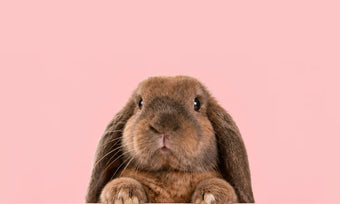
Lops are rabbits whose ears hang down beside the face instead of standing up. They are among the most popular pet rabbits in the UK and US, and they come in sizes from small to very large.
| Lop breed | Adult weight | Coat | Notes |
|---|---|---|---|
| Holland Lop (US) | Up to 4 lb (1.8 kg) | Short | The smallest lop on ARBA's list |
| Mini Lop (UK) | Up to about 1.6 kg (3.5 lb) | Short | Wood Green: friendly, compact, round face |
| Mini Lop (US) | Up to 6.5 lb (2.9 kg) | Short | Bigger than the UK Mini Lop |
| Dwarf Lop (UK) | 2 to 2.5 kg (4.4 to 5.5 lb) | Soft, dense, medium | PDSA: brush 2 to 3 times a week |
| American Fuzzy Lop | Up to 4 lb (1.8 kg) | Long wool | Daily grooming |
| French Lop | 5 to 6 kg (11 to 13 lb) | Soft, dense | PDSA: good-natured; lives 6 to 8 years |
| English Lop | Large, no ARBA maximum | Short | A large lop; check the ears often |
Holland Lop, Dutch Lop, Netherland Lop and Highland Lop
The Holland Lop is a real and very popular small lop, with a maximum show weight of 4 lb (1.8 kg). "Dutch Lop" and "Netherland Lop" are not breeds on the ARBA or BRC lists: people usually mean the Holland Lop (Holland being part of the Netherlands), a Dutch rabbit, which has upright ears and the classic white blaze and saddle, or a Netherland Dwarf. "Highland Lop" is a name some breeders use for long-coated lops; it is not on ARBA's list of 53 breeds, so expect a lop with a long coat that needs daily brushing.
Lop health: ears and teeth
The Rabbit Welfare Association & Fund (RWAF) lists lops, along with dwarf breeds, Lionheads, Jersey Woolies, Polish and Thriantas, as breeds with flatter faces. A short face can crowd the cheek teeth and misalign the front teeth, so teeth wear badly and overgrow. Lop ears can narrow the ear canal and trap wax, which can lead to painful abscesses at the base of the ear. Watch for weepy eyes, head shaking or tilting, drooling and a rabbit that leaves hay or hard food.
- Look inside the ears weekly for wax, redness or smell
- Check the front teeth meet neatly and are not overgrown
- Wipe weepy eyes and book a vet check if it keeps happening
- Make sure hay is always the main food, to wear the teeth down
Rex and Mini Rex rabbits
Rex rabbits have a short, dense coat that feels like velvet. The BRC's Rex section is mainly the Standard Rex and the Miniature Rex. PDSA puts the Standard Rex at 3 to 3.5 kg (6.6 to 7.7 lb), calm and good-natured, with a lifespan of 6 to 8 years, and says the coat needs no traditional grooming: a damp cloth is enough. ARBA's Mini Rex tops out at 4.5 lb (2 kg). The one catch, says the RWAF, is thin fur on the feet, so Rex rabbits are more prone to sore hocks. Give them soft, thick bedding and avoid wire or hard floors.
Angora rabbits
Angoras are the long-wool rabbits. ARBA recognises four: English, French, Giant and Satin Angora. The English Angora is the one most often kept as a pet in the UK; PDSA puts adults at 2.5 to 3 kg (5.5 to 6.6 lb) with a lifespan of 7 to 10 years. Wood Green calls them generally affectionate but sometimes easily startled, because wool over the eyes means they may not see you coming.
The coat is the whole story. PDSA says English Angoras need extensive grooming every day, because the very long coat mats easily and swallowed fur can cause hairballs and gut trouble. A matted bottom also hides flystrike. Lionheads, with a long mane around the head and a shorter body coat, need the mane brushed daily and the rest weekly.
Dwarf rabbits: Netherland Dwarf and friends
The Netherland Dwarf is the classic tiny rabbit: under 1 kg (2.2 lb), with a round head, short ears and a short coat that needs only weekly brushing. PDSA says they are often timid and easily startled, dislike being picked up and have fragile backs, so they are not a good match for young children. Wood Green adds that their compact heads bring dental problems, and that being small does not reduce their need for space to run, dig and stretch out. Other small breeds include the Polish, the Britannia Petite and the Dwarf Hotot, white with a black ring around each eye.
Giant rabbit breeds
Flemish Giants, British Giants and Continental Giants are the gentle heavyweights. PDSA puts Flemish and British Giants at 6 to 7 kg (13 to 15 lb), and ARBA notes Flemish Giants often weigh over 20 lb (9 kg). They are usually laid-back, but they live shorter lives, about 5 to 8 years, and they need far more room than a standard hutch: doorways, litter trays and hides all have to be bigger. Our rabbit cage size guide covers sizes for big rabbits.
Rabbit colours and patterns
The BRC recognises more than 500 varieties, so this is only the start. Most colours turn up in many breeds.
- Agouti: the wild brown-grey, where each hair has bands of colour.
- Self colours: one even colour all over, such as black, blue (soft grey), chocolate, lilac (pinkish grey) and white.
- Ruby-eyed white: white with pink-red eyes; blue-eyed white is a different variety.
- Dutch pattern: coloured back half and cheeks with a white blaze and collar, as on the Dutch breed.
- Broken: patches or spots of colour on white, as on the English Spot.
- Himalayan or pointed: white body with coloured nose, ears, feet and tail.
- Harlequin: alternating bands of two colours, a pattern with its own breed.
Bunny breeders: how to find a good one
Look in rescues first. UK and US rescues have pedigree rabbits too, including lops and Lionheads, and the RWAF says adopting reduces demand for breeds with built-in health problems. Our guide on where to get a rabbit lists national rescues.
If you want a particular breed, the BRC keeps a breeders directory of members listed by breed. It is only an introduction: the BRC says it does not guarantee any rabbit's health and buyers must check for themselves. In the US, ARBA is the national breed body. Whichever country you are in, a good breeder will:
- Let you see the mother and where the rabbits live
- Not let babies go before 8 weeks; selling under 2 months is illegal in many US states
- Tell you the expected adult weight and any breed health issues honestly
- Show clean, bright eyes, a clean nose, clean ears and a clean bottom on every rabbit
- Know the sex for sure, or suggest a vet check
- Ask you about your setup, and take a rabbit back if things go wrong
Holland Lops and Mini Rex are bred widely, so be wary of anyone selling them cheaply in large numbers or meeting you in a car park. Our rabbit cost guide shows what a rabbit really costs once it is home.
Which rabbit breed is best for you?
Start with the life you can offer, then pick the rabbit.
- Measure your space. A pair needs at least 3 x 2 x 1 m (10 x 6 x 3 ft) whatever the breed. Giants need more.
- Be honest about grooming. Short coats need a weekly brush; Angoras and Lionheads need daily work.
- Think about face shape. Normal-faced breeds like the Dutch have fewer tooth and ear problems than lops and dwarfs.
- Consider who will handle them. Small breeds are often timid; PDSA says most rabbits dislike being picked up and have fragile backs.
- Plan for two. Rabbits need a neutered friend, so you are choosing a pair.
- Check rescues for your breed. Many have bonded pairs already neutered and vaccinated.
For lifespans by breed, see how long rabbits live, and for the everyday care every breed needs, see our complete rabbit care guide and rabbit health guide.
Rabbit breeds: common questions
What is the best rabbit breed for a first-time owner?
A medium, short-coated rabbit with a normal face shape, such as a Dutch or a crossbreed from a rescue. Wood Green calls the Dutch calm, sociable and popular with first-time owners, and its longer face means fewer tooth problems than flat-faced breeds. Avoid long-coated breeds until you know you can groom every day.
What is the smallest rabbit breed?
The Netherland Dwarf and the Britannia Petite are the smallest common breeds. The American Rabbit Breeders Association sets a maximum of 2.5 lb (1.1 kg) for both, and PDSA puts the average adult Netherland Dwarf under 1 kg. Small does not mean easy: they are often timid and need just as much space as bigger rabbits.
What is the biggest rabbit breed?
The giant breeds: Flemish Giant, British Giant and Continental Giant. PDSA puts Flemish and British Giants at 6 to 7 kg (13 to 15 lb) on average, and the American Rabbit Breeders Association notes that Flemish Giants often top 20 lb (9 kg). Giants live shorter lives, usually 5 to 8 years, and need extra-large housing.
Do lop eared rabbits have more health problems?
Yes, on average. The Rabbit Welfare Association says lop ears can narrow the ear canal and trap wax, causing painful ear infections and abscesses, and that lops are among the flatter-faced breeds more prone to tooth problems. Many lops live healthy lives, but check their ears weekly and get regular dental checks.
How long do Holland Lops live?
UK and US welfare charities don't give a figure for Holland Lops alone. They are small lops, and Wood Green puts smaller lop varieties at about 7 to 9 years. Neutering, a hay-based diet, a companion and regular ear and tooth checks give any lop the best chance of reaching or beating that.
Are Angora rabbits good pets?
They can be gentle pets, but only for owners ready for daily grooming. PDSA says English Angoras need extensive grooming every day because their very long coat mats easily, and swallowed fur can cause hairballs and gut problems. Matted coats also hide flystrike. If you can't groom every single day, choose a short-coated breed.
What colours do rabbits come in?
Many. The British Rabbit Council recognises over 500 varieties across its breeds. Common pet colours include agouti (the wild brown-grey), black, blue (grey), chocolate, lilac, orange, white with red or blue eyes, and patterns such as Dutch markings, broken (patches on white) and Himalayan points on the nose, ears, feet and tail.
Sources
- American Rabbit Breeders Association: Recognized breeds
- British Rabbit Council: Rabbit breeds
- British Rabbit Council: Breeders directory
- Wood Green: Rabbit breeds, a guide to popular pet bunnies in the UK
- Rabbit Welfare Association & Fund: Brachycephaly
- Rabbit Welfare Association & Fund: Caring for senior rabbits
- PDSA: Netherland Dwarf rabbits
- PDSA: Lionhead rabbits
- PDSA: Dwarf Lop rabbits
- PDSA: French Lop rabbits
- PDSA: Rex rabbits
- PDSA: English Angora rabbits
- PDSA: Dutch rabbits
- PDSA: Flemish Giant rabbits
- MSD Veterinary Manual: Description and physical characteristics of rabbits