Hides and houses
 Shelves and ledges
 Foraging and toys
 Cage accessories
 Kits and bundles
 Fairy forest
 Spooky mischief
 Sweetie stash
 Game mode
 Forest floor
 Castles and cathedrals

How do you take care of a chinchilla?
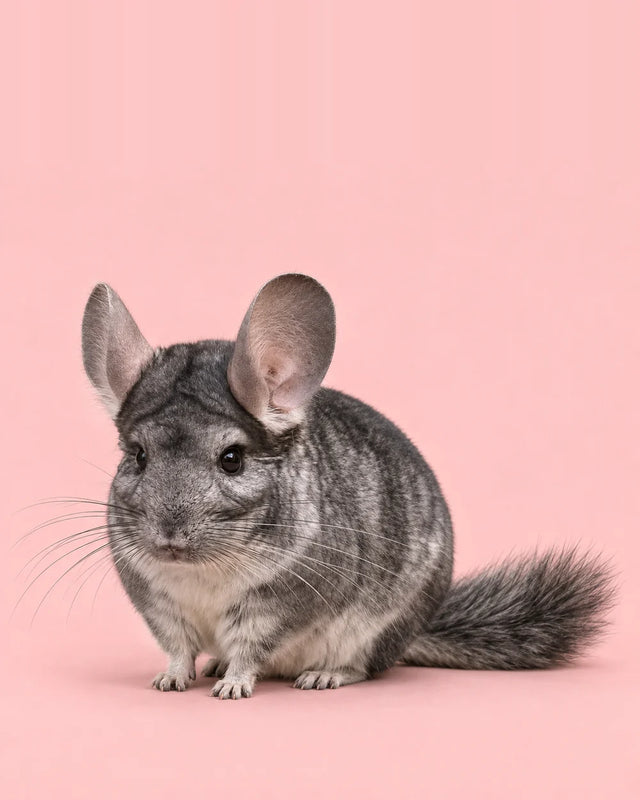
You give it a cool, quiet, tall home, a friend of its own kind, a diet that is almost all hay, a regular dust bath and a daily check. That sounds short, but each part has details that matter, and most problems in pet chinchillas come from getting one of them wrong: too warm a room, too many pellets or treats, bare wire floors or too little space to jump.
Chinchillas come from the cold, dry Andes mountains of South America. Their fur is the densest of any land animal, with up to 60 hairs growing from each follicle where we grow one to three, according to the MSD Veterinary Manual. That coat is why heat is the biggest danger, why water baths are out and why dust baths are in. Their teeth grow all their life, which is why hay matters so much. Keep those two facts in mind and most of the rules below make sense.
Are chinchillas hard to care for?
They are not complicated, but they ask more than most small pets. PetMD puts daily care at one to two hours, and the MSD Veterinary Manual suggests about two hours of supervised time out of the cage each day. The hardest parts for most homes are these:
- A room that stays below about 18°C (64°F) all year, including summer heatwaves.
- Floor space for a cage at least 152 cm (5 ft) tall, ideally much bigger.
- Being around in the evening, when chinchillas wake up.
- A chinchilla-proof room for exercise, with cables and skirting boards out of reach.
- An exotics vet within reach, and money set aside for dental care.
- A commitment of 10 to 15 years, sometimes 20.
If those fit your life, the daily jobs themselves are simple. Our guide to chinchillas as pets goes through who they suit and who they don't, and how much a chinchilla costs to buy and keep covers the money side.
What kind of home does a chinchilla need?
A tall, multi-level metal cage or a chinchilla-safe room, with solid shelves, a solid resting floor and no single drop over 60 cm (2 ft). Chinchillas can jump over 1.8 m (6 ft), says the RSPCA, so height matters as much as floor area.
Sources disagree a lot on size. VCA gives a minimum of 91 × 61 × 91 cm (3 × 2 × 3 ft) for one chinchilla and 91 × 61 × 152 cm (3 × 2 × 5 ft) for a pair. PDSA goes much further: if you use a cage, it should be at least 2 m high, 2 m wide and 1 m deep (about 6.5 × 6.5 × 3.3 ft). We treat the VCA pair figure as the floor and the PDSA figure as the goal. Our guide to chinchilla cage size has a full table, and the best chinchilla cages shows what to look for when you buy.
Inside, chinchillas need wooden shelves at staggered heights, a nest box each plus one they can share, a hay rack, a heavy bowl, a water bottle and chewable wood. PDSA suggests nest boxes of about 25 × 25 × 25 cm (10 × 10 × 10 in), one per chinchilla, one large shared box and a spare. Our chinchilla cage setup guide walks through a layout step by step, and the best chinchilla hides covers nest boxes and houses.
What temperature do chinchillas need?
Keep them between 10 and 18°C (50 and 64°F) and never let the room go above 27°C (80°F). The RSPCA says 10 to 18°C, PDSA says 10 to 15°C (50 to 59°F), and the MSD Veterinary Manual says heatstroke can happen above 27°C (80°F). PDSA warns that over 30°C (86°F) can kill. VCA adds that humidity should stay below 40 to 50 percent.
Put the cage in a cool, dry, draught-free room away from windows, radiators, conservatories and direct sun. A cheap thermometer and hygrometer on the cage wall pays for itself. In a heatwave you may need air conditioning, a cool tile for them to lie on and a plan to move them to the coolest room in the house. Our chinchilla temperature guide covers signs of overheating and what to do.
What do chinchillas eat?
Mostly hay, as much as they want, every day. Chinchillas are strict plant-eaters with long, delicate guts and teeth that never stop growing, and chewing grass hay keeps both working. The RSPCA says food should be available 24 hours a day.
| Food | How much | Notes |
|---|---|---|
| Grass hay (timothy, meadow, orchard grass) | Unlimited, topped up daily | The main food. Alfalfa only for young or nursing chinchillas (PetMD). |
| Plain chinchilla pellets | 1 to 2 tablespoons a day (PetMD); Chewy says about 2 heaped | Every piece the same. No muesli mixes, which lead to picking out sugary bits and dental disease (PDSA). |
| Fresh water | Always available | Bottle or heavy bowl, cleaned daily. |
| Dried herbs, rose hips, plain dried flowers | A pinch, a few times a week | Good for foraging in the hay. |
| Treats of any kind | Under 10 percent of the diet | No sugar, nuts, seeds or dried fruit (PetMD). |
Our chinchilla diet guide has daily amounts and how to change foods safely, and what chinchillas can eat is a quick food-by-food list. Single foods have their own pages too, such as which hay chinchillas can eat and whether chinchillas can eat raisins.
How often do chinchillas need a dust bath?
Most days, for about 10 to 15 minutes, then take the bath away. Chinchilla dust soaks up the natural oils in their coat, and without it the fur mats, says PDSA. Good sources differ on how often: PDSA and VCA say daily, while PetMD and Chewy say a few times a week. We would start with daily, short baths and let the coat guide you: clumped or greasy fur means more often, dry or flaky skin means less.
- Pick a bath. Use a ceramic, metal or glass container at least 15 × 15 × 23 cm (6 × 6 × 9 in), big enough to roll in.
- Add the dust. Pour in 2.5 to 6 cm (1 to 2.5 in) of dust made for chinchillas (VCA and PDSA). Never use play sand or builders' sand.
- Offer it in the evening. Put it in when they wake, and let them roll for about 10 minutes.
- Take it out. Remove it before they start using it as a toilet. PDSA warns that long baths can irritate the eyes.
- Sieve and replace. Sieve out droppings after each bath and replace the dust about once a week.
Our chinchilla dust bath guide covers which dust to buy and how to tell if a bath is too much.
Do chinchillas need a friend?
Yes. In the wild chinchillas live in colonies of more than 100, and the RSPCA says pet chinchillas must not be kept alone. A same-sex pair is simplest. A male and female need the male neutered first, says Burgess, or you will have babies. Chinchillas that grow up together get on best, and introducing adults takes days to weeks in side-by-side cages, says VCA, because fights can cause serious injury.
Don't house chinchillas with other species. PetMD warns against rabbits in particular, which can carry bacteria that make chinchillas ill.
How do you handle and tame a chinchilla?
Slowly, and mostly on their terms. The RSPCA says chinchillas are shy and don't enjoy being stroked or held, and are easily startled by sudden noise. Rough handling can cause fur slip, where a chinchilla drops a patch of fur to escape. The MSD Veterinary Manual says gentle, regular handling while young makes them calmer.
- Give them a quiet week. Let a new chinchilla settle for several days with just food, water and quiet company.
- Sit by the cage in the evening. Talk softly and let them come to the bars to sniff your fingers.
- Use their favourite safe treat. Offer a plain rose hip or a pinch of dried herb from your hand.
- Let them climb on you. In a safe room, sit on the floor and let them hop onto your lap rather than grabbing them.
- Lift with both hands. When you must pick one up, scoop under the body, hold it close, and support the back end. Never grab the tail or fur.
Read how to tame and bond with a chinchilla for the full method, and chinchilla behaviour and body language to understand barks, popcorning and fur chewing.
What bedding is best for chinchillas?
Dust-free paper bedding or kiln-dried wood shavings on the floor, fleece liners if you wash them often, and soft hay in the nest boxes. Avoid cedar, untreated pine, dusty shavings, cotton wool and anything fluffy or thread-like, says the RSPCA. Our guide to chinchilla bedding compares each type side by side.
How do you keep a chinchilla busy?
Give them space to jump, things to chew and food to find. Good options from PDSA, Burgess and the RSPCA include untreated apple, pear or willow branches, pumice and wood chews, cardboard tubes stuffed with hay, wooden ramps and seesaws, and a solid wheel of at least 38 cm (15 in) across, says VCA. Avoid plastic toys, hanging ropes and anything a leg could get trapped in. See our guides to chinchilla enrichment, the best chinchilla toys and chinchilla wheels.
How do you clean a chinchilla cage?
Spot-clean every day, change the bedding every week, and strip and scrub the whole cage every month. PDSA suggests cleaning in the evening, when chinchillas are awake anyway, with an unscented pet-safe cleaner, and keeping back a handful of clean used bedding so the cage still smells like home. VCA and PetMD suggest a weekly full clean with soap and water. Our chinchilla cage cleaning routine lists every job.
- Daily: remove wet bedding and droppings, top up hay, wash bowl and bottle, offer a dust bath.
- Daily: check each chinchilla is eating, pooing and moving normally.
- Weekly: change all bedding, wipe shelves, wash fleece, replace dust.
- Monthly: strip the cage, scrub it, let it dry fully before they go back.
How do you keep a chinchilla healthy?
Check them every day and see an exotics vet once a year. PetMD and VCA recommend yearly check-ups, mainly because dental problems are common and can be inherited. Chinchillas hide pain, so small changes matter.
See a vet within a day if you notice any of these, from PDSA and PetMD: not eating, fewer, smaller or no droppings, soft droppings or diarrhoea, drooling or wet fur on the chin, runny eyes or nose, laboured breathing, limping, weight loss, patches of missing fur or sitting hunched and quiet. The MSD Veterinary Manual adds dark urine, dry droppings and skin that stays tented when lifted as signs of dehydration that need a vet straight away.
Our chinchilla health guide covers common problems, and how long chinchillas live explains each life stage.
Getting a chinchilla
Look at rescues first. Small-animal rescues regularly have adult chinchillas looking for homes, and an adult's temperament is already known. Our guide to where to get a chinchilla covers rescues, good breeders and what a healthy chinchilla looks like. If you want to know the colours and types first, see chinchilla breeds and colours. For the fun side, there are surprising chinchilla facts and chinchilla name ideas.
Chinchilla care questions
Are chinchillas hard to care for?
They are not complicated, but they are demanding. The hard parts are keeping the room below about 18°C (64°F) all year, finding space for a tall cage, giving one to two hours a day of time and supervised exercise, and committing to 10 to 15 years or more. Food and cleaning are simple once you have a routine.
Is a chinchilla easy to take care of for a beginner?
A chinchilla suits a calm adult beginner who has read up, has a cool room and is home in the evenings. It does not suit a young child who wants a cuddly pet, because most chinchillas dislike being held, and rough handling makes them shed patches of fur.
How often should a chinchilla have a dust bath?
Offer a dust bath most days or at least a few times a week, for about 10 to 15 minutes, then take it out. PDSA and VCA say daily; PetMD and Chewy say a few times a week. Watch the coat: greasy or clumped fur means more often, dry or flaky skin means less.
Can a chinchilla live alone?
The RSPCA says chinchillas should not be kept alone, because they live in large groups in the wild. A same-sex pair, or a neutered male with a female, is the usual set-up. A single chinchilla needs far more of your time each day to stay settled.
Do chinchillas need a vet?
Yes. Book a check with an exotics vet when you first get your chinchilla and once a year after that, mainly because their teeth grow all their life and dental disease is common. Chinchillas hide illness, so a change in eating or droppings needs a vet within a day.
Can chinchillas be bathed in water?
No. Their fur is so dense that it stays wet for a long time, which can lead to chills and skin problems. Chinchillas keep clean by rolling in chinchilla dust. If a patch is soiled, spot-clean it with a barely damp cloth and dry it fully, or ask your vet.
Can I use Beaphar Care+ for my chinchilla?
Beaphar Care+ Chinchilla is a single-type pellet, where every piece is the same, which is the style vets prefer over muesli mixes. Whatever brand you choose, it should be a small daily measure alongside unlimited hay, not the main food. Change brands slowly over a week or two.
Sources
- RSPCA: Chinchillas
- RSPCA: Chinchilla environment
- PDSA: The ideal home for chinchillas
- PDSA: Chinchilla health
- VCA Animal Hospitals: Chinchillas, housing
- PetMD: Chinchilla care sheet
- MSD Veterinary Manual: Description and physical characteristics of chinchillas
- MSD Veterinary Manual: Routine health care for chinchillas
- Burgess Pet Care: Set up a home for your chinchillas