Hides and houses
 Shelves and ledges
 Foraging and toys
 Cage accessories
 Kits and bundles
 Fairy forest
 Spooky mischief
 Sweetie stash
 Game mode
 Forest floor
 Castles and cathedrals

What does a healthy chinchilla look like?
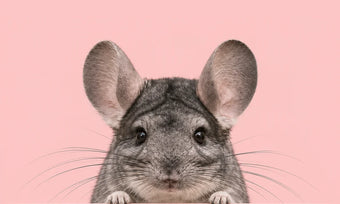
Bright, busy and hungry in the evening. Burgess lists bright eyes, a clean nose, ears and eyes, and interest in the world around it as signs of health. PetMD adds good eating and drinking, healthy fur and comfortable breathing. Know what is normal for yours, because a change from normal is the earliest warning you will get.
- Eating hay and pellets every day, mostly early morning and evening.
- Plenty of firm, dry, evenly shaped droppings every day (RSPCA).
- Front teeth dark orange, level and meeting evenly (Woodgreen).
- Dry fur under the chin and on the front legs.
- Clear, bright eyes with no wetness; a dry nose.
- Thick, even coat with no bald or chewed patches.
- Lively and jumping around at dusk and night.
- Steady weight, within 450 to 680 g (1 to 1.5 lb) for most adults.
Signs your chinchilla is ill, and how fast to act
The RSPCA says chinchillas have pain thresholds much like ours but are poor at showing pain, so they may suffer a lot before you notice. Because they sleep all day, check them in the evening when they should be at their liveliest.
| Sign | Could mean | How fast |
|---|---|---|
| Not eating, or eating much less | Gut slowdown, dental pain, many illnesses | Vet today |
| Fewer, smaller or no droppings | Gut slowdown or blockage | Vet today |
| Panting, red ears, floppy, lying stretched out | Heatstroke | Emergency, now |
| Fast or difficult breathing | Heatstroke, chest infection | Vet today |
| Drooling, wet chin, dropping food | Dental disease | Vet within a day (VCA says immediately) |
| Diarrhoea or soft droppings | Diet change, infection | Vet today if it lasts or the chinchilla is dull |
| Hunched, quiet, not responding | Pain or serious illness | Vet today |
| Runny or weeping eyes | Dental roots, dust irritation, infection | Vet within a day or two |
| Limping, swollen leg, can't grip | Fracture or leg injury | Vet today |
| Bald or chewed patches, flaky skin | Fur chewing, ringworm | Vet within a few days |
| Straining, blood in urine | Bladder stones | Vet today |
| Dark urine, dry droppings, skin stays tented when pinched | Dehydration (MSD Vet Manual) | Vet today |
These signs come from the RSPCA, PDSA, PetMD, Chewy, VCA and the MSD Veterinary Manual. The timings are our reading of how they describe each sign: wherever a source says "immediately" or "straight away", we've put today.
Chinchilla teeth problems
Dental disease is one of the commonest chinchilla health issues. VCA says chinchilla teeth are open-rooted and grow about 5 to 7.5 cm (2 to 3 in) a year, all their lives. If the teeth don't meet properly (malocclusion), they don't wear evenly and grow sharp spurs that cut the tongue, cheeks or lips. Infected teeth can also cause abscesses in the jaw.
Woodgreen lists these signs: weeping eyes, drooling, playing with food without eating it, front teeth turning paler, teeth growing apart or at an angle, a swollen face or a lump along the jaw, smaller or fewer droppings, and matted fur on the inside of the front legs from wiping a wet mouth. VCA says drooling or a drop in appetite needs a vet straight away.
Prevention is mostly hay. The MSD Veterinary Manual says chinchillas that eat mostly pellets are more likely to get dental problems, because pellets don't wear teeth the way hay does. PDSA warns that muesli-style mixes cause painful dental disease, because chinchillas pick out the sugary bits. Our chinchilla diet guide sets out the right balance.
What vets do: VCA says a full mouth check needs sedation or anaesthetic, plus X-rays to see the roots and jaw. The MSD Veterinary Manual says treatment can include trimming the teeth, treating mouth sores, pain relief and antibiotics, with surgery for impacted teeth and abscesses. Dental problems can be inherited, so affected chinchillas shouldn't be bred.
Not eating, gut slowdown and droppings
A chinchilla's gut has to keep moving. The RSPCA says if eating or drinking changes, or droppings get fewer, smaller or stop, talk to a vet straight away, because your chinchilla could be seriously ill. Not eating is often a symptom of something else, such as dental pain, stress or heat, but it quickly becomes a problem in its own right.
The MSD Veterinary Manual lists digestive trouble as less appetite with either diarrhoea or no droppings at all. Very sick or dehydrated chinchillas may need hospital care with fluids and medicines, and the MSD Veterinary Manual says some need liquid food given by syringe. Diet is the main cause: VCA says dried fruit and vegetables can cause severe gut upset, and sudden food changes upset the gut too.
Heatstroke
Chinchillas can't sweat, says Burgess, and their thick coat traps heat. The MSD Veterinary Manual says they can get heatstroke above 27°C (80°F), and VCA says they can die quickly from overheating and don't tolerate humidity. Keep them at 10 to 20°C (50 to 68°F), the VCA range, with humidity under 40 to 50%.
Chewy lists panting, red ears and lethargy as heatstroke signs. If you see them, move the chinchilla to the coolest room in the house straight away, keep it quiet, and ring a vet while you do it. Don't soak it in water. Our chinchilla temperature guide covers keeping a room cool in summer.
Fur problems: slip, chewing, ringworm and fur rings
| Problem | What you see | What to do |
|---|---|---|
| Fur slip | A clean clump of fur left in your hand after a grab or fright | Harmless; handle more gently. Regrowth can take months (VCA) |
| Fur chewing (barbering) | Short, ragged patches on the body | Vet check, then look at stress, space and boredom |
| Ringworm | Patchy hair loss, sometimes with flaky skin | Vet; it is a fungal skin infection (MSD Vet Manual) |
| Fur ring (males) | Irritation or swelling at the tip of the penis | Vet; VCA says fur can wrap round the penis and constrict it |
| Normal moult | A wavy line of new fur from the head down, every 3 to 4 months | Nothing; Woodgreen says this is normal |
PetMD lists barbering and fur rings among the common problems vets see. The MSD Veterinary Manual names ringworm among the commonest chinchilla problems. Our chinchilla behaviour guide goes into the stress side of fur chewing.
Eyes, feet and broken bones
Eyes. PDSA warns that long dust baths can cause eye problems, and PetMD says not to leave the dust bath in the cage because dust can cause conjunctivitis. Keep baths to about 10 to 15 minutes and take the tray out. Weeping eyes can also be a sign of dental roots pressing behind the eye, Woodgreen notes, so a vet should check any eye that keeps running. Our chinchilla dust bath guide explains how to give one safely.
Feet. The RSPCA lists sore feet among signs of illness or injury. Long periods on wire floors cause sore, swollen pads, so give solid shelves and floors.
Broken bones. PetMD lists fractures among common chinchilla illnesses, and the MSD Veterinary Manual names toe and leg injuries. Chinchillas have delicate skeletons. Falls over 60 cm (2 ft), ladders, wire wheels and gaps that trap a leg are the usual causes. Woodgreen says to contact a vet about any change in movement or a swollen leg.
Bladder stones
PetMD lists urinary stones (urolithiasis) among common chinchilla illnesses, and VCA and PetMD both link too much calcium, mainly from alfalfa hay, to bladder stones. Straining to wee, passing small amounts often, or blood in the urine are all reasons for a prompt vet visit. Feed grass hay rather than alfalfa to adults, to cut the risk.
Medicines and finding a chinchilla vet
Never give your chinchilla a medicine a vet has not prescribed for it. VCA says penicillin and erythromycin can be lethal to chinchillas, and the RSPCA says medicine meant for other animals is dangerous to them. Chewy adds that many standard medicines can be fatal.
Find an exotics vet before you need one, and book a check-up at least once a year, as the RSPCA and PetMD advise. Regular checks catch dental problems early, says the MSD Veterinary Manual. Pet insurance is worth considering, the RSPCA says, as chinchillas live a long time.
What you can do at home while you wait for the vet
- Keep it cool and quiet. Move the cage away from noise and heat, and keep other pets out of the room.
- Offer hay and water. Put fresh hay and its usual pellets within easy reach, and a shallow bowl of water as well as the bottle.
- Note what you've seen. Write down when it last ate, when you last saw droppings, and anything else odd. Take a few recent droppings in a bag.
- Travel safely. Use a hard, ventilated, chew-proof carrier with hay in it, out of the sun, as the MSD Veterinary Manual advises. Take its cage mate too if they are bonded and the vet agrees.
Chinchillas can live 10 to 15 years or more, and good daily care is what gets them there. Our chinchilla lifespan guide covers the life stages, and the complete chinchilla care guide covers the routine that prevents most of the problems on this page.
Chinchilla health questions
Are chinchillas hard to care for?
Not hard, but exacting. The daily routine is simple, and good hay prevents many problems. The difficult parts are keeping them cool all year, spotting illness early because they hide pain, and finding an exotics vet before you need one. Most serious problems start with diet, heat or rough handling, which you control.
What are the downsides of having a chinchilla?
They live 10 to 15 years or more, so vet care adds up over a long life, and dental disease is common. They need a cool room below about 20°C (68°F), are mostly awake at night, and many medicines that are safe for other pets are dangerous to them, so you need a vet who knows chinchillas.
Why can't chinchillas touch water?
Their coat is so thick that soaked fur takes days to dry, Chewy says, and damp fur next to the skin raises the risk of fungal skin infections and chills. Chinchillas clean themselves by rolling in chinchilla dust. Fresh drinking water every day is essential; only bathing in water is the problem.
What foods are bad for chinchillas?
Nuts, seeds, dried fruit, grains, sugary treats and muesli-style mixes cause the most trouble, through weight gain, gut upsets and dental disease. Chocolate, caffeine and alcohol are toxic. Sudden diet changes are also a health risk in themselves, so switch any food slowly over several weeks.
How long can chinchillas be left alone?
No more than about a day without someone checking. The RSPCA says to check chinchillas for illness or injury every day, and have someone else do it when you are away. A chinchilla that stops eating, or a room that gets too hot, can turn serious within hours.
How do I know if my chinchilla is in pain?
Look for quietness rather than noise. The RSPCA says chinchillas feel pain much as we do but are poor at showing it. Signs include not eating, sitting hunched, being less active, sensitivity to touch, grinding or drooling, squinting eyes and a change in droppings. A quiet chinchilla that ignores food needs a vet.
What do chinchillas need in their diet to stay healthy?
Unlimited grass hay to wear their teeth and keep the gut moving, 1 to 2 tablespoons of plain chinchilla pellets a day, fresh water and safe wood to gnaw. The MSD Veterinary Manual says chinchillas that eat mostly pellets are more likely to have dental problems, so hay comes first.
Sources
- RSPCA: Chinchilla health
- PDSA: Chinchilla health
- MSD Veterinary Manual: Routine health care for chinchillas
- MSD Veterinary Manual: Special considerations for chinchillas
- VCA Animal Hospitals: Chinchillas, problems
- VCA Animal Hospitals: Chinchillas, feeding
- Woodgreen: Chinchilla health
- PetMD: Chinchilla care sheet
- Chewy: Chinchilla care sheet (vet reviewed)
- Burgess Pet Care: The ultimate guide to happy, chilled chinchillas
- RSPCA: Chinchilla behaviour