Hides and houses
 Shelves and ledges
 Foraging and toys
 Cage accessories
 Kits and bundles
 Fairy forest
 Spooky mischief
 Sweetie stash
 Game mode
 Forest floor
 Castles and cathedrals

What is the right temperature for a chinchilla?
Between 10 and 18°C (50 and 64°F) is the safe, comfortable band, and the cooler half of it is better. Good sources agree on the shape of the answer, cool and dry, but not on the exact numbers:
| Source | Ideal range | Upper limit |
|---|---|---|
| RSPCA | 10 to 18°C (50 to 64°F) | Not given |
| PDSA | 10 to 15°C (50 to 59°F) | Over 30°C (86°F) "can be deadly" |
| Wood Green | About 10 to 15°C (50 to 59°F) | Not given |
| MSD Veterinary Manual | 10 to 16°C (50 to 60°F) | Heatstroke above 27°C (80°F) |
| VCA Animal Hospitals | 10 to 20°C (50 to 68°F) | Never as high as 27°C (80°F) |
| PetMD and Chewy | 13 to 21°C (55 to 70°F) | Never above 27°C (80°F) |
Which should you follow? We would aim for 15 to 18°C (59 to 64°F) most of the year and treat 20°C (68°F) as the line where you start cooling the room. That sits inside every source's range, and it leaves a buffer below 27°C (80°F) for a hot afternoon or a humid spell. If you can keep the room nearer 10 to 15°C (50 to 59°F), as PDSA and Wood Green suggest, even better.
The reason is where chinchillas come from. The RSPCA notes that wild chinchillas live in the Andes at more than 4,000 m (13,000 ft), in cool, dry air, and their soft, very dense fur is built for cold. That coat cannot be shed when the weather warms up, and chinchillas have no good way to cool down. Our complete chinchilla care guide covers everything else they need.
Why humidity matters as much as heat
Damp, warm air is worse than dry, warm air. VCA says chinchillas "do not tolerate humid conditions and can quickly die from overheating", and both VCA and Chewy ask for humidity below 40 to 50%. The RSPCA adds that chinchillas can become ill in hot, wet, humid, draughty or dirty housing.
In practice that means a warm, muggy day is more dangerous than a warm, dry one at the same temperature, so be extra careful in thundery weather and in steamy rooms such as a kitchen or a bathroom after a shower. A cheap digital thermometer with a humidity reading (a hygrometer), placed at cage height, tells you both at a glance.
Signs your chinchilla is too hot
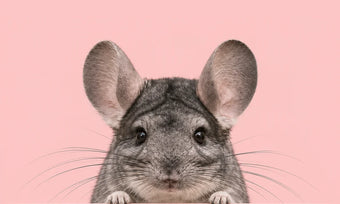
Heatstroke is an emergency. The vet-reviewed Chewy care sheet lists panting, red ears and lethargy as the signs. A chinchilla's ears are thin and full of blood vessels, so bright red or pink ears that feel warm are often the first thing you notice. Look out for:
- Ears redder or warmer than usual.
- Fast, shallow breathing or panting with the mouth open.
- Lying stretched out flat instead of sitting up, and not moving when you come in.
- Weakness, wobbling or not wanting to eat.
- Drooling or wet fur around the mouth.
Stretching out on a cool shelf on a mild day can be normal. Stretching out, red ears and fast breathing together in a warm room is not.
What to do if your chinchilla is overheating
Ring your vet straight away, and say you think it is heatstroke. The sources we use say to get veterinary help quickly and do not set out first aid, so the steps below are the sensible, low-risk things to do while you arrange it, reasoned from what they say about heat and damp:
- Ring the vet first. Tell them the room temperature if you know it, and ask whether to come in now. An exotic vet is best, but any vet open now is better than waiting.
- Move to the coolest room. Out of the sun, away from windows, ideally a tiled floor or a north-facing room. Keep it quiet and dim.
- Cool the air, not the chinchilla. Open windows on the shady side or switch on air conditioning. Do not soak, dunk or spray the chinchilla: wet fur dries very slowly and the RSPCA warns that damp conditions make chinchillas ill.
- Offer something cool to lie against. A bottle of frozen water wrapped in a tea towel, or a stone tile that has been in a cool place, gives them a choice to move towards or away from.
- Offer water, don't force it. Put their bottle within reach. Never squirt water into the mouth of a weak animal.
- Travel cool. Use a ventilated carrier, keep it out of direct sun and get the car cool before you set off.
How to keep a chinchilla cool in summer
Choose the right room first, then add cooling only if you need it. Most chinchilla problems with heat come from a cage in the wrong place.
- Pick the coolest room in the house: north-facing in the UK (south-facing in the southern hemisphere), on the ground floor, since heat rises.
- Keep the cage out of direct sun and away from windows and radiators, as PDSA and Wood Green advise.
- Close curtains or blinds on sunny windows from the morning, before the room warms up.
- Never keep chinchillas in a conservatory, shed, garage, caravan or car on a warm day; the RSPCA warns against all of these for pets.
- Add a frozen water bottle wrapped in a cloth and a stone or ceramic tile to a shelf, so they can lie against something cool.
- Keep checking the max reading on your thermometer through any warm spell.
An electric fan only moves air; it does not lower the room temperature, so on its own it does little for a chinchilla in a hot room. It can help by pushing warm air out of an open window, but never point it straight at the cage, because the RSPCA asks for draught-free housing. If the room still climbs past 20 to 22°C (68 to 72°F) in summer, air conditioning or a portable air conditioner in that room is the reliable answer. In hot US states it is part of keeping chinchillas at all.
Cage choice matters too. A cage in the middle of a cool room beats one pushed against a sunny wall, and an all-metal cage holds less heat than a wooden hutch. Our guide to chinchilla cage setup shows where shelves and nest boxes go, and the best chinchilla cages page has cages worth a look.
Can chinchillas get too cold?
In winter, keep them in a dry indoor room, out of draughts, and give them nest boxes filled with good hay, as the RSPCA advises. Keep the room steady: a cage near a radiator that switches on and off swings from warm to cool every few hours, which is worse than a steady 12°C (54°F). We would not keep chinchillas in an unheated outbuilding in a UK winter, because damp, cold air and frost are hard to control there. If the room regularly drops below 10°C (50°F), add a low, steady background heat to the room, not a heat pad or lamp in the cage, which they may chew and cannot get away from.
Why can't chinchillas get wet?
A chinchilla can drink water and won't come to harm from a wet paw, but it must never be bathed in water. Its coat is so thick that water soaks in and takes a very long time to dry, leaving the skin damp, which the RSPCA warns makes chinchillas ill. Instead they roll in fine dust, which soaks up oil and keeps the fur clean and fluffy. PDSA notes that without a regular dust bath the fur can mat from skin oils. If your chinchilla does get soaked, pat it dry with towels, keep it in a warm, draught-free room and call your vet for advice. Our chinchilla dust bath guide covers how often, how long and which dust to use.
Temperature and a chinchilla's daily routine
Chinchillas are most active at dawn, dusk and night, the RSPCA says, and sleep through the day. That suits a cool household, because their busy hours fall in the coolest part of the day. Plan their time out of the cage for the evening in summer, never in a sunny room in the afternoon. A long jumping session in a warm room can tip an animal towards overheating faster than sitting still.
The heat question is also one of the biggest things to think about before you get chinchillas. If your home gets hot in summer and you can't cool one room, think again or plan the air conditioning first. Our page on chinchillas as pets covers the rest of what to know, and our chinchilla health guide lists other signs of illness to watch for.
Chinchilla temperature questions
What temperature is too hot for a chinchilla?
Anything above 27°C (80°F) puts a chinchilla at real risk of heatstroke, say VCA and the MSD Veterinary Manual. Trouble can start lower in a humid room, and PDSA says over 30°C (86°F) can be deadly. Aim to keep the room under 20°C (68°F) all year.
What temperature is too cold for a chinchilla?
None of the main sources gives a hard lower limit, because chinchillas come from cold mountains and carry very dense fur. Their ideal range starts at 10°C (50°F). Below that, keep them dry, out of draughts and with plenty of hay in their nest boxes, and keep them indoors.
Why can't chinchillas touch water?
They can drink it, and a splash on the paws is fine. What they must not have is a bath. Their fur is so dense that it holds water and dries very slowly, and the RSPCA warns that wet, damp conditions make chinchillas ill. They clean their coats in dust instead.
Do chinchillas need air conditioning?
Only if the chinchillas' room climbs past about 20 to 22°C (68 to 72°F) in summer and you have no cooler room. In much of the UK a cool, shaded room is enough. In hot US states, or in heatwaves anywhere, air conditioning or a portable air conditioner in the chinchillas' room is the safest answer.
How long can chinchillas be left alone?
A healthy pair with plenty of hay, water and a cool, steady room can manage a night or a weekend if someone checks on them daily. Heat is the reason not to stretch it: a failed air conditioner or a sunny day can turn dangerous in hours, so a sitter should check the room temperature too.
Are chinchillas hard to care for?
They are simple in some ways and demanding in others. Their food is mostly hay, but they need a cool room all year, a big cage, a dust bath, daily time out and care for 10 to 20 years. PetMD puts the daily commitment at one to two hours.
What are the downsides of having a chinchilla?
Heat is the biggest one: you must keep a room cool through every summer. They are also awake at night, often dislike being held, need company of their own kind, and can live 10 to 20 years, says the RSPCA. They chew almost anything left in reach.
Sources
- RSPCA: Chinchilla environment
- RSPCA: Chinchillas
- PDSA: The ideal home for chinchillas
- Wood Green: Help your chinchilla feel at home
- VCA Animal Hospitals: Chinchillas, housing
- VCA Animal Hospitals: Chinchillas, problems
- MSD Veterinary Manual: Routine health care for chinchillas
- PetMD: Chinchilla care sheet
- Chewy: Chinchilla care sheet (vet reviewed)
- RSPCA: Summer pet care