Hides and houses
 Shelves and ledges
 Foraging and toys
 Cage accessories
 Kits and bundles
 Fairy forest
 Spooky mischief
 Sweetie stash
 Game mode
 Forest floor
 Castles and cathedrals

What is a French lop rabbit?
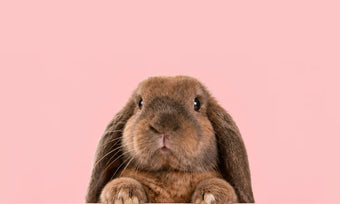
The French lop is one of the largest pet rabbit breeds: a heavy, broad rabbit with a big head and long ears that hang down beside the face. As the name says, it was developed in France, and it is the breed most people picture when they say "giant lop". The American breed standard sets a minimum adult weight but no maximum, so a "giant French lop" or "giant French lop eared rabbit" is the same breed, just a big example.
The name confuses people because there are several lop breeds of very different sizes. If you are buying or adopting, check which one you are getting, because the space, food and handling are very different.
| Lop breed | Typical adult size | Our guide |
|---|---|---|
| French lop | Giant, about 5 to 6 kg (11 to 13 lb) or more | This page |
| English lop | Large, with the longest ears of any breed | English lop rabbits |
| Mini lop, dwarf lop | Small to medium | Mini lop rabbits |
French lops come in many colours, from solid black, blue and fawn to broken patterns with white. Colour makes no difference to care.
French lop rabbit size: what to plan for
Plan for a rabbit the weight of a small dog. Stretched out, a big French lop is well over 60 cm (2 ft) long, and it needs room to lie flat on its side, stand fully upright on its back legs without its ears touching the roof, and take several hops in a row.
PDSA's minimum for a pair of average-sized rabbits is 3 × 2 × 1 m (10 × 6 × 3 ft) of space available all day, with a shelter inside, and it says to give much more. For a giant breed, take that as a starting point, not a target. Many owners use a converted shed, an aviary-style run or a rabbit-proofed room. Our guides to rabbit hutch size and rabbit sheds show how to plan a home that fits.
- A shelter tall enough to sit fully upright in, with a doorway wide enough for a heavy rabbit to turn through
- Solid, soft flooring: rubber matting, carpet tiles or deep bedding over hard floors, to protect the hocks
- Low entrances and wide ramps, or no ramps at all, to save the joints
- A large litter tray: a cat tray or a storage-box base big enough to turn round in
- Hay in a big rack or tray they can reach without climbing
- A carrier sized for a giant rabbit, so a vet trip is never a struggle
French lop temperament: are they good pets?
French lops are known for being placid and good-natured, and many enjoy flopping out beside people on the floor. They are still prey animals. PDSA notes they don't enjoy being picked up, and like all rabbits their backs are fragile and can break if they kick out while held. A heavy rabbit makes that more likely, which is why PDSA says the breed is not really suited to small children, and better with older children who will spend time with them at ground level.
They are social and need a rabbit friend. PDSA recommends a compatible pair, such as a neutered male with a neutered female. A friend of similar size is safest, because a giant rabbit can hurt a much smaller one by accident during play. Our rabbit bonding guide covers introductions, and how to tame and handle a rabbit shows how to lift a big rabbit safely when you must: one hand under the chest, the other supporting the whole bottom, held close to your body and low down.
French lop rabbit care: diet, weight and grooming
Feed like any rabbit, scaled up. PDSA advises a pile of hay at least the size of the rabbit every day, a handful of leafy greens twice a day, and one tablespoon of rabbit nuggets (pellets) twice a day for rabbits over 3.5 kg (7.7 lb). Hay should be most of what they eat. Our rabbit diet guide and safe food list give the detail.
Weight is the big one for this breed. A big rabbit that gains weight struggles to reach its bottom to clean itself and to eat the soft droppings (caecotrophs) it needs, and the Rabbit Welfare Association lists overweight rabbits among those most at risk of flystrike. Extra weight also adds pressure to the hocks and joints.
- Weigh monthly. Use kitchen or baby scales with a box on top, or weigh yourself holding the rabbit and subtract. Write the number down.
- Feel the ribs and spine. You should feel them easily under a thin layer of padding, without them sticking out. A thick roll at the neck or rump is a warning sign.
- Cut sugar first. Drop fruit and sugary shop treats before cutting hay or greens. Keep pellets to the measured amount.
- Add movement. More space, scattered greens to forage for and a digging box all help. A giant rabbit will not exercise in a small enclosure.
- Ask your vet. If weight keeps climbing, or the rabbit seems reluctant to move, have the vet check teeth, joints and body condition.
The coat is short and dense. Brush weekly, and daily during a moult, because rabbits cannot bring up swallowed fur. Check nails monthly: a heavy rabbit on soft flooring wears them down slowly.
French lop health: ears, joints and flystrike
The folded ears are the breed's best-known weak spot. A Royal Veterinary College study of rescue rabbits found lop-eared rabbits had narrower ear canals, more wax and more signs of pain on ear examination than upright-eared rabbits. The RSPCA explains that drooping ears cannot clear wax and debris, raising the risk of infection that can spread deeper and sometimes needs surgery, and notes one study found ear conditions in about 25% of lop-eared rabbits against 10% of erect-eared ones. Lops are also prone to weepy eyes from tear duct problems.
The RSPCA also notes that giant breeds may develop osteoarthritis younger than small breeds, because of the extra load on their joints. Signs include trouble hopping up, not grooming, being less active and changes in mood. Rabbits hide pain well, so these changes are easy to miss.
- Ears weekly: lift each ear gently and look for wax, redness, smell or discharge. Head shaking, scratching or a tilted head needs a vet.
- Bottom daily, twice a day in warm weather, for droppings or damp fur (flystrike risk).
- Feet weekly: look under the back feet for bald, red or scabbed patches (sore hocks).
- Eyes: a wet, crusty or matted face needs a vet check.
- Teeth: drooling, dropping food or a wet chin.
- Vaccinations every year: myxomatosis and both strains of rabbit haemorrhagic disease (RHD1 and RHD2).
Never clean inside a rabbit's ear canal with cotton buds. If the ears look waxy or sore, your vet can examine them with an otoscope and advise on cleaning.
Our rabbit health guide explains each sign and how fast to act.
How much does a French lop rabbit cost?
PDSA gives an average purchase price of about £25 for a French lop, and a lifetime cost of £6,800 to £9,000 per rabbit, which roughly doubles for a pair. A giant breed sits at the top end: more hay, a bigger home, more bedding, and vet costs that can be higher for a larger animal. Our rabbit cost guide breaks down set-up and monthly costs.
French lops and lop crosses come into rescues regularly, often because their size surprised the first owner. A rescue will usually know the rabbit's adult size and temperament, and many are already neutered and vaccinated. See our guide to where to get a rabbit, our rabbit breeds guide to compare other large breeds such as the Flemish giant, and our complete rabbit care guide for daily care.
French lop questions
How big do French lop rabbits get?
Big. PDSA gives an average adult weight of 5 to 6 kg (11 to 13 lb), and many reach 7 kg (15 lb) or more. The American breed standard sets a minimum weight but no maximum. Stretched out, a large French lop can be well over 60 cm (2 ft) long.
Is a French lop the same as a giant French lop?
Yes. The French lop is itself a giant breed, so "giant French lop" usually just means a big one. A mini lop or dwarf lop is a different, much smaller breed, so check which you are being offered.
Are French lops good with children?
They are usually calm and good-natured, but PDSA says they are not suitable for small children. They are heavy, dislike being lifted and their backs can break if they kick and fall. Older children who sit on the floor with them are a better match.
How long do French lop rabbits live?
PDSA gives 6 to 8 years. Giant breeds tend to live shorter lives than small breeds, and keeping a French lop at a healthy weight, with good teeth and regular ear checks, gives it the best chance of reaching the top of that range.
Can a French lop live in a hutch?
Not in a hutch alone. A hutch can be the shelter, but a French lop needs a permanently attached run or room. PDSA's minimum for a pair of average rabbits is 3 × 2 × 1 m (10 × 6 × 3 ft), and a giant breed needs more, with a shelter tall enough to stand up in.
How much does a French lop rabbit cost?
PDSA gives an average purchase price of about £25 and a lifetime cost of £6,800 to £9,000 for one rabbit, which roughly doubles for a pair. A giant breed eats more and needs a bigger home, so expect the higher end of most budgets.