Hides and houses
 Shelves and ledges
 Foraging and toys
 Cage accessories
 Kits and bundles
 Fairy forest
 Spooky mischief
 Sweetie stash
 Game mode
 Forest floor
 Castles and cathedrals

What is a lop-eared bunny?
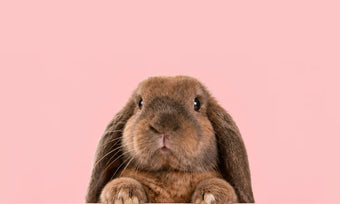
A lop is a rabbit whose ears fall down beside its face instead of standing up. The name covers a whole family of breeds rather than one. The British Rabbit Council (BRC) puts them in their own Lop section, which it describes as running "from the petite Mini Lop to the historic English Lop". The American Rabbit Breeders Association (ARBA) recognises five breeds with lopped ears.
Lops are popular because they look soft and sleepy, and many are calm, friendly rabbits. They are not a different kind of pet, though. A lop needs everything any rabbit needs, covered in our rabbit care guide, plus a closer eye on its ears.
Lop eared rabbit breeds compared
Here is every lop recognised by the BRC in the UK and by ARBA in the US. Weights are adult weights from the breed clubs, the UK show magazine Fur and Feather, PDSA and PetMD. Breed names are where most people get confused, so the table says where a UK and US name mean different rabbits.
| Breed | Where recognised | Adult weight | Coat | Temperament and notes |
|---|---|---|---|---|
| Mini lop (UK, Miniature Lop) | BRC | Ideal 1.5 kg (3.3 lb) | Normal fur | The smallest lop; accepted by the BRC in 1994. Closest US match is the Holland lop. |
| Miniature lion lop | BRC | Ideal 1.5 kg (3.3 lb) | Mane like a lionhead | National club formed in 2007. Mane needs brushing. |
| Holland lop | ARBA | Up to 4 lb (1.8 kg) | Dense, heavy undercoat | Friendly and playful but can be skittish; suits a calm home. Over 30 colours. |
| American fuzzy lop | ARBA | Up to 4 lb (1.8 kg) | Wool | Sweet-tempered and energetic; the wool needs regular grooming. |
| Miniature cashmere lop | BRC | Small; no weight published by the BRC online | Long, soft | A smaller version of the cashmere lop. |
| Dwarf lop (UK) / mini lop (US) | BRC and ARBA | UK: 2 to 2.5 kg (4.4 to 5.5 lb). US: up to 6.5 lb (2.9 kg) | Soft, dense, medium length | Friendly and laid-back. The rabbit the US calls a mini lop is the UK dwarf lop's nearest match. |
| Cashmere lop | BRC | About 2.2 to 2.4 kg (4.8 to 5.3 lb) | Very soft, long | Needs daily grooming, says Fur and Feather. |
| German lop | BRC | About 2.9 to 3.9 kg (6.5 to 8.5 lb) | Normal fur | Stocky; made by crossing French and Holland lops. |
| Meissner lop | BRC (rare variety) | Ideal 4 to 5 kg (8.8 to 11 lb) | Normal fur | From Meissen, Germany; known for a calm nature. |
| English lop | BRC and ARBA | About 5 kg (11 lb) | Short | Longest ears of any breed; placid and easy-going. Any colour. |
| French lop | BRC and ARBA | 5 to 6 kg (11 to 13 lb) | Soft, dense, medium | The largest lop; good-natured and heavy-boned. |
The BRC also lists a lion lop and a plush lop, and rescues see German lops and lionhead lops regularly. The Teddywidder is a woolly, lop-eared dwarf from Germany. For every other breed, upright ears included, see our full guide to rabbit breeds.
Breed names cross the Atlantic badly. By the published weights, the UK "mini lop" is the size of a US Holland lop, and the US "mini lop" is the size of a UK dwarf lop. Ask for the adult weight, not the name.
Mini lop eared bunnies: the small lops
The small lops are the UK mini lop and mini lion lop (ideal 1.5 kg, 3.3 lb), the Holland lop and American fuzzy lop (up to 4 lb, 1.8 kg), and the UK dwarf lop (2 to 2.5 kg, 4.4 to 5.5 lb). PetMD describes the Holland lop as compact with a large head and ears about 10 to 13 cm (4 to 5 in) long, and the American mini lop as stocky with a "softball-sized" head.
Small does not mean less space. A small lop still needs the full Rabbit Welfare Association & Fund (RWAF) minimum for a pair: one enclosed area of at least 3 x 2 m (9 ft 10 in x 6 ft 7 in) and 1 m (3 ft 3 in) high. Small lops are often lively, and PetMD suggests at least three hours a day of exercise time for a mini lop.
Giant lop eared rabbit breeds
The biggest lop is the French lop. Fur and Feather calls it "the largest Lop", bred originally for meat and now one of the UK's most popular show breeds, with a desired weight of 5.5 kg (12 lb). PDSA gives 5 to 6 kg (11 to 13 lb). ARBA sets no top weight and describes it as massive and heavy-boned, believed to come from English lop and Giant Papillon crosses in the 1800s.
The English lop weighs about 5 kg (11 lb), and the Meissner lop 4 to 5 kg (8.8 to 11 lb). If you've seen a "lop eared Flemish giant", there is no such breed in the BRC or ARBA lists. A giant rabbit with lopped ears is usually a French lop or a cross; the Flemish giant is its own breed.
Lop eared bunny colours: grey, black, brown and fluffy
Most lop breeds come in many colours, so grey, black, brown, white and patterned lops are all common. ARBA recognises over 30 colours and patterns in the Holland lop alone, and Fur and Feather notes the English lop is accepted in any colour. Colour has no link to temperament or health.
"Fluffy" lops are the woolly and long-coated breeds: the American fuzzy lop, the cashmere lop and miniature cashmere lop, the mini lion lop and the Teddywidder. They look wonderful and take real work. The BRC says long-haired breeds need gentle daily grooming to prevent matting, and the RWAF explains that rabbits can't vomit, so a woolly lop that isn't brushed swallows fur it can't bring back up.
How long do lop eared rabbits live?
Most lops live 6 to 10 years. PDSA gives 6 to 8 years for the dwarf lop and French lop and 5 to 7 years for the English lop. PetMD gives 8 to 10 years for the American mini lop and 7 to 10 years for the Holland lop. As a rule, the very large lops have the shorter lives.
The same things lengthen any rabbit's life: neutering, vaccinations against myxomatosis and rabbit haemorrhagic disease (RHD), a diet that is mostly hay, a friend, and plenty of space.
Caring for lop eared rabbits: the ears
A lop's ear canal bends sharply where the ear folds over, and that bend traps wax and debris. The RSPCA reports ear conditions in about 25% of lop-eared rabbits against 10% of rabbits with upright ears. In one study of 435 pedigree rabbits, reported by the RWAF, 86% had flaky discharge in the ear canal, 42% had a narrowed canal, and lops were the most at risk.
Ear trouble is easy to miss, because a rabbit hides pain. The RWAF lists the signs to watch for:
- Scratching or rubbing the ears, or shaking the head
- Head tilt, poor balance or seeming easily startled
- Redness, crusting, or wet or flaky discharge in the ear
- Swelling at the base of the ear
- A bad smell from the ear
- Less response to sounds, or a change in grooming
- Being quiet, grumpy or off their food
Don't push cotton buds or cleaner into a lop's ear. Ask your vet to look inside the ears at every check-up, even when your rabbit seems well, and book a visit within a day or two if you see any of the signs above. A sudden head tilt or loss of balance needs a vet the same day.
Other health problems lops share
Lops get the same illnesses as every rabbit, and a few are worth extra care. The RSPCA links lop ears to tear duct problems, so check for runny eyes or wet fur under the eyes. Dental disease affects every breed; the RSPCA says the evidence for some breeds being more prone is not settled, so the answer for all of them is unlimited hay and a vet check of the teeth. The Rabbit Welfare Association & Fund goes further and counts every lop breed among the short-faced (brachycephalic) breeds, whose crowded back teeth can grow painful spurs; it advises feeling round the base of the ears regularly for lumps.
PDSA lists the main risks for every lop as dental disease, myxomatosis, RHD, flystrike and the parasite E. cuniculi, which can cause a head tilt. Check under the tail every day in summer, because a dirty bottom attracts flies. Our rabbit health guide explains each one and when to see a vet.
- Weekly: look at the ears from outside and sniff them
- Weekly: check eyes, teeth, nails and weight
- Weekly: brush (daily for woolly lops and during a moult)
- Daily in summer: check under the tail for mess or flies
- Every vet visit: ask for an ear and tooth check
How much are lop eared bunnies?
PDSA lists average prices of about £20 for a dwarf lop, £25 for a French lop and £30 for an English lop, as of November 2026. It also estimates the lifetime cost of one rabbit at £6,800 to £9,000 for a dwarf lop or French lop and £5,800 to £7,900 for an English lop, and says a pair doubles that. We couldn't find a vet or welfare source for US prices, so we haven't given one. Our rabbit cost guide breaks down set-up and monthly costs.
Lop eared bunny for sale or adoption near me
Start with a rescue. On the day we checked, Rabbit Rehome listed hundreds of lops waiting for homes in UK rescues, including 716 mini lops, 327 dwarf lops, 206 English lops and 108 French lops. The RWAF goes further and asks people not to buy baby lops at all, because of the ear problems the breed shape brings, and to adopt instead.
- UK: search by breed on Rabbit Rehome, or try your local RSPCA or Blue Cross centre
- US: Rabbit.org lists rabbit rescues by state
- Ask the rescue if the rabbit is neutered, vaccinated and already bonded to a friend
- Ask when the ears were last checked by a vet
If you do go to a breeder, ask to see both parents and their ears, ask about the ear and tooth history of the line. Our guide on where to get a rabbit lists more questions to ask.
Lop-eared rabbit questions
How long do lop-eared rabbits live?
It depends on size. PDSA gives 6 to 8 years for dwarf lops and French lops and 5 to 7 years for English lops. PetMD gives 8 to 10 years for the American mini lop and 7 to 10 for the Holland lop. Neutering, vaccinations, a hay-based diet and regular ear checks all help a lop reach the top of its range.
What is the biggest lop-eared rabbit breed?
The French lop. Fur and Feather calls it the largest lop, and PDSA puts adults at 5 to 6 kg (11 to 13 lb). The English lop is close behind at about 5 kg (11 lb) but is more famous for its ears, which are far longer. There is no lop-eared Flemish giant breed in the UK or US breed lists.
How much does a lop-eared rabbit cost?
PDSA lists average prices of about £20 for a dwarf lop, £25 for a French lop and £30 for an English lop, as of November 2026. The rabbit is the cheap part: PDSA estimates £5,800 to £9,000 over a lop's lifetime for housing, food, vet care and insurance, and twice that for the pair they should live in.
Is a mini lop the same as a Holland lop?
Not in name, but they are close. The UK mini lop has an ideal weight of 1.5 kg (3.3 lb), and the American Holland lop has a top show weight of 4 lb (1.8 kg), so they are the nearest match. The American mini lop is bigger, up to 6.5 lb (2.9 kg), and matches the UK dwarf lop more closely.
Do lop-eared rabbits have more health problems?
Yes, mainly with their ears. The RSPCA reports ear conditions in about 25% of lop-eared rabbits against 10% of rabbits with upright ears, because the folded ear canal traps wax and debris. The Rabbit Welfare Association & Fund advises a vet ear check at every routine visit for any lop.
Are lop-eared rabbits good with children?
Many lops are calm and friendly, but PDSA says rabbits in general are not really suitable for small children. They dislike being picked up, and their backs are fragile and can break if they are dropped. A lop suits a family with older children who are happy to sit on the floor and let the rabbit come to them.
Sources
- PDSA: Dwarf lop
- PDSA: French lop
- PDSA: English lop
- Fur and Feather: Lop breeds
- British Rabbit Council: Rabbit breeds
- American Rabbit Breeders Association: Recognised breeds
- PetMD: Mini lop rabbit
- PetMD: Holland lop rabbit
- RSPCA: Rabbit genetics and breed-related health
- Rabbit Welfare Association & Fund: Response to the RVC rabbit ear disease study
- Rabbit Welfare Association & Fund: Indoor housing
- Rabbit Welfare Association & Fund: Brachycephaly in rabbits
- Rabbit Welfare Association & Fund: Grooming rabbits
- Rabbit Rehome: Rabbit breeds in rescue
- Rabbit.org: Adoption