Hides and houses
 Shelves and ledges
 Foraging and toys
 Cage accessories
 Kits and bundles
 Fairy forest
 Spooky mischief
 Sweetie stash
 Game mode
 Forest floor
 Castles and cathedrals

What is a Holland Lop bunny?
The Holland Lop is the smallest of the popular lop-eared breeds. The American Rabbit Breeders Association (ARBA) credits Adriaan de Cock of the Netherlands with creating it, aiming for a lop that was smaller and easier to handle than the big French Lop. PetMD says he worked in Tilburg, crossing French Lops with Netherland Dwarfs, and that a European standard was adopted in 1964. Creatures' vet-written breed guide dates the work from 1949 and says Hollands reached England around 1969 to 1970. ARBA recognised the breed in 1979, and it is now one of the five most popular breeds ARBA shows.
Our lop-eared breeds guide compares every lop, and the Netherland Dwarf profile covers its upright-eared ancestor.
How to recognise a Holland Lop
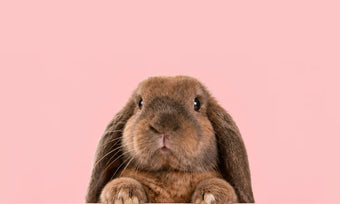
Look for a small, solid rabbit that seems to be mostly head. The Holland Lop Rabbit Specialty Club describes the ideal: a compact, massive body with good width and depth, short thick legs, a bold head with a clear "crown" ridge across the top, and short, thick, well-furred ears that hang close to the cheeks with rounded, teaspoon-shaped tips.
- Adult weight under 1.8 kg (4 lb)
- Ears hang down both sides, with no upright or half-up ear
- Short, broad face with a short, rounded nose
- Dense, glossy coat about 2.5 cm (1 in) long that rolls back into place when stroked from tail to head
- Short, thick front legs and a short, rounded body
Creatures notes that Hollands without the dwarf gene often grow past the 4 lb limit, so a large "Holland" is not always a cross.
Holland Lop, mini lop or dwarf lop: UK and US names
Lop names change at the border, which is why so many people are confused. In the US, the Holland Lop and the Mini Lop are two different ARBA breeds, and the Mini Lop is the bigger one. In Britain, the British Rabbit Council (BRC) breed closest in size to a Holland is the Miniature Lop, which people shorten to mini lop. Creatures adds that the Holland is called the Dwarf Lop across much of Europe, while the BRC's own Dwarf Lop is a bigger rabbit.
| Breed and registry | Adult weight | Closest match across the Atlantic |
|---|---|---|
| Holland Lop (ARBA, US) | Up to 1.8 kg (4 lb) | Miniature Lop (BRC, UK) |
| Miniature Lop, "mini lop" (BRC, UK) | Up to 1.6 kg (3 lb 8 oz) | Holland Lop (ARBA, US) |
| Mini Lop (ARBA, US) | Up to 2.9 kg (6.5 lb) | Dwarf Lop (BRC, UK) |
| Dwarf Lop (BRC, UK) | About 1.9 to 2.4 kg (4 lb 4 oz to 5 lb 4 oz) | Mini Lop (ARBA, US) |
So if you are in the UK and want a Holland-sized rabbit, look for a Miniature Lop. Our mini lop rabbit guide covers both the British and American mini lop in detail.
Holland Lop colours: black, blue, chinchilla, broken and more
Hollands come in a huge range of colours. PetMD says ARBA recognises over 30 colour and pattern variations, and Creatures counts 45 colours accepted for registration, including agouti, self, shaded, otter, steel, pointed white and tri-colour. At shows they are judged in just two groups, according to the breed club: solid (one colour all over the body) and broken (colour in patches on a white coat).
| Colour name | What it looks like |
|---|---|
| Black | Solid glossy black all over, a "self" colour |
| Blue | Solid soft slate grey, often called grey by sellers |
| Chinchilla | An agouti colour: banded hairs that look silvery grey with dark ticking |
| Blue chinchilla | A paler, blue-grey version of chinchilla |
| Broken (black and white, broken chinchilla) | Any colour in patches on a white coat |
| Chestnut and other agoutis | Brown, banded coats, the colour people usually mean by "brown" |
Colour has no effect on health or temperament, so choose the rabbit, not the coat. Our rabbit breeds and colours guide explains the colour groups across all breeds.
Holland Lop temperament: are they good pets?
Yes, for a calm home that can give them space and a friend. PetMD describes Hollands as generally friendly, playful and energetic but sometimes skittish, and says males tend to be more outgoing and more destructive. The breed club calls their temperament endearing, and Creatures notes that most dislike being carried. PetMD suggests homes with adults or children aged 9 and over.
Small rabbits are fragile. PetMD warns that a Holland that struggles can strain its back or injure its spine, so always support the back legs and hold the rabbit low and close. Better still, sit on the floor and let it come to you. See our taming and handling guide.
The RSPCA says every rabbit should live with at least one other rabbit, and that a neutered male with a neutered female is usually the best pair. See our rabbit bonding guide before you bring a second rabbit home.
Caring for a Holland Lop: what is different
Space
Small rabbits still need big homes. The RSPCA's minimum for two rabbits is 3 m × 2 m × 1 m (10 ft × 6 ft 6 in × 3 ft), shelter and run together, and it says a small hutch should never be a rabbit's only home. Floors should be solid and non-slip, not wire. Our rabbit cage size guide has layouts that fit this space indoors and out.
Food
The RSPCA says hay or grass should make up about 85% of the diet, with a bundle of hay as big as the rabbit every day, a large handful of leafy greens, and pellets at 25 g per kg of body weight. For a 1.8 kg (4 lb) Holland that is about 45 g (1.6 oz) of pellets a day, a little under two egg cups. PetMD's rule of about a quarter of a cup per 4 to 5 lb gives a similar amount. There is no special "Holland Lop food": the best food for a Holland is good grass hay, such as timothy or meadow hay, and a plain, hay-based pellet. Our rabbit diet guide and safe food list cover the greens.
Grooming
PetMD says Hollands have a heavy undercoat and shed heavily for about two weeks a year. Brush once or twice a week, every day in a moult, and trim nails every one to two months. Don't bathe a rabbit in water, and never cut out tangles with scissors, because rabbit skin tears easily.
Weekly care checklist
- Look inside both ears for wax, redness, crusts or a smell
- Check the front teeth are short, straight and meet evenly
- Check under the tail is clean and dry (daily in warm weather)
- Brush the coat, and daily during a moult
- Weigh your rabbit and check its nails
- Full clean of the litter tray and bedding
Holland Lop health problems
The main one is ears. The RSPCA says lop ears can't release wax and debris well, and reports that about 25% of lop-eared rabbits had ear conditions, against 10% of rabbits with upright ears. Untreated infections can spread deeper and may need surgery. PetMD recommends weekly ear cleaning with a rabbit-safe cleaner, ideally after your vet has shown you how, and ear checks at every vet visit.
Head shaking, scratching at an ear, a head tilt or a bad smell from the ear needs a vet within a day or two. A rabbit that stops eating or stops passing droppings for more than a few hours needs a vet the same day, because gut stasis can kill.
Other problems to watch for, from PetMD and the RSPCA:
- Teeth. Rabbit teeth grow about 2 mm a week. Dropping food, eating less, smaller droppings or a lump on the jaw all need a vet.
- Weepy eyes. The RSPCA says tear duct problems are common in lops and flat-faced breeds.
- Parasites. Fur mites cause flaky, itchy skin, and E. cuniculi can cause head tilt and weakness.
Our rabbit health guide lists every sign to watch and how fast to act, and the rabbit lifespan guide covers life stages.
Holland Lop bunnies for sale or adoption: where to find one
Start with rescues. Rescues often have lop-eared rabbits waiting, and many arrive already neutered and vaccinated, sometimes as a bonded pair. In the UK, look at the RSPCA, Wood Green, Blue Cross and local rabbit rescues. In the US, try the House Rabbit Society, local shelters and adoption listings. A rescue lop may be a cross, but it will make just as good a pet.
If you choose a breeder, a good one will be happy to answer all of these:
- Can I see the mother, and the father if he is there?
- How old is the baby, and has it been fully weaned from its mother?
- Has it been vet checked, and what are its ears and teeth like?
- Is it registered or pedigreed with ARBA or the BRC, if that matters to you?
- Will you take the rabbit back if I can no longer keep it?
- Do you sell rabbits in pairs, or can you help me find a neutered companion?
A healthy youngster has bright, clear eyes, clean ears with no crust or smell, a clean nose and bottom, straight front teeth and a curious, alert manner. Walk away from a seller who won't let you see where the rabbits live, who sells very young babies, or who sells a single rabbit with no word about company. Our guide to where to get a rabbit has the full checklist, and the complete rabbit care guide covers everything else.
Holland Lop questions
How big do Holland Lops get?
Small. The American Rabbit Breeders Association sets a maximum adult weight of 4 lb (1.8 kg), and good show rabbits often weigh less. PetMD gives ears of about 4 to 5 inches (10 to 13 cm). A Holland that grows well past 4 lb probably lacks the dwarf gene, which is harmless for a pet.
How long do Holland Lop rabbits live?
About 7 to 10 years, according to PetMD. Small breeds tend to live longer than big ones, the Scottish SPCA says. Neutering, vaccinations, a hay-based diet, a neutered rabbit friend and early vet help for ear or tooth trouble all push a rabbit towards the top of that range.
Is a Holland Lop the same as a mini lop?
In the US, no: the American Mini Lop is a separate, bigger breed of up to 6.5 lb (2.9 kg). In the UK, the closest match to a Holland is the Miniature Lop, which people shorten to mini lop, with a 1.6 kg (3 lb 8 oz) limit. So a British mini lop and an American Holland are near cousins.
Are Holland Lops good for children?
Only for older, calm children. PetMD suggests children aged 9 or older, always supervised, and a quiet home. Holland Lops startle easily and can hurt their backs if they kick while being held, so let children sit on the floor and stroke the rabbit rather than pick it up.
Do Holland Lops need to live in pairs?
Yes, like every rabbit. The RSPCA says rabbits should live with at least one other rabbit, and a neutered male with a neutered female is usually the easiest pair. A person cannot replace rabbit company, and a guinea pig is not a suitable friend for a rabbit.
How much does a Holland Lop cost?
We can't give a fair figure for a pedigree Holland, because breeders' prices vary widely. PDSA puts the lifetime cost of a similar UK lop at £6,800 to £9,000 per rabbit as of November 2026, doubling for a pair. Rescues charge an adoption fee that usually covers neutering and vaccinations.
What is a chinchilla Holland Lop?
Chinchilla is a colour, not a separate breed. It is one of the agouti colours: each hair is banded, so the coat looks silvery grey with darker ticking. Blue chinchilla is the softer, blue-grey version, and broken chinchilla means chinchilla patches on a white coat.
Sources
- American Rabbit Breeders Association: Holland Lop
- Holland Lop Rabbit Specialty Club: Breed information
- PetMD: Holland Lop rabbit
- Creatures (Elliott Garber, DVM): Holland Lop breed guide
- Mini Lop Club of Scotland: UK Mini Lop breed standard
- RSPCA: Rabbit genetics and breed-related health
- RSPCA: Rabbit housing and environment
- RSPCA: What to feed rabbits
- PDSA: Dwarf lop breed information
- Scottish SPCA: How long do rabbits live?