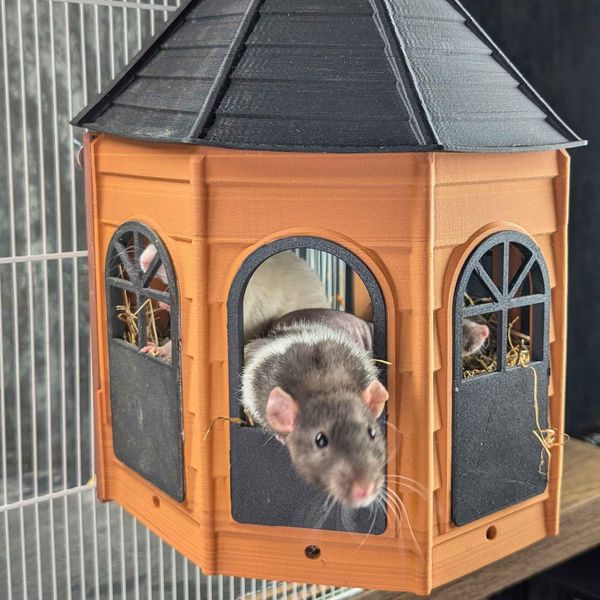
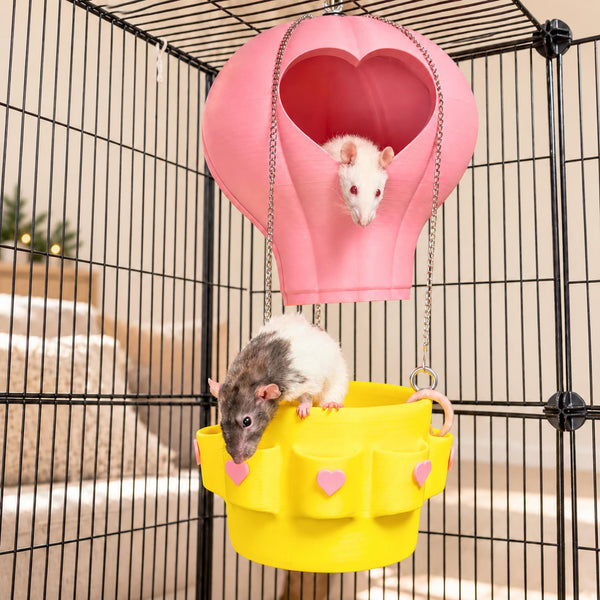
Hides and houses
 Shelves and ledges
 Foraging and toys
 Cage accessories
 Kits and bundles
 Fairy forest
 Spooky mischief
 Sweetie stash
 Game mode
 Forest floor
 Castles and cathedrals

Rat age stages: quick summary
Rats age faster than most pets, moving through distinct life stages in just two to three years. That is a full mammal lifespan compressed into a very short window. Young rats (under six months) need higher protein and frequent socialisation; adults (6 to 18 months) are at peak health and engagement; seniors (from about 18 months) need softer food, warmer bedding and more veterinary monitoring. Knowing which stage your rat is in shapes diet, enrichment and the health changes to watch for, and prepares you for the harder decisions that come later.
| Age | Stage | What is happening |
|---|---|---|
| 0 to 4 weeks | Kitten (pup) | Born blind, deaf and hairless; eyes open; weaning starts |
| 4 to 12 weeks | Young juvenile | Weaned, separated by sex, ready to go home from 6 weeks |
| 3 to 6 months | Older juvenile | Fast growth, peak energy, best time for training |
| 6 to 12 months | Young adult | Growth slows, adult personality and hormones settle in |
| 12 to 18 months | Adult | Health problems become more common; begin closer checks |
| 18 months to 2 years and up | Senior | Slowing down, weight and mobility changes |
| 2 to 3 years | Typical lifespan | Reaching 3 years is less common |
Sources use slightly different cut-offs. Rat Guide calls about 1.5 years onwards the "later years", while many owners only say "senior" from 2 years. We use 18 months as the point to start senior-style checks and adjustments, because the health changes in the adult section often begin then.
Baby (0 to 6 weeks): the breeder's job
You should never receive a rat younger than 6 weeks old. This stage is entirely the breeder's or rescue's responsibility. Understanding it helps you assess whether your rats had a good start.
Rat kittens (yes, baby rats are called kittens, or pups) are born blind, deaf and hairless. They are entirely dependent on their mother for the first three weeks. Rat Guide gives 10 to 12 days for eyes opening, and most are open by day 14. By about day 21 they are eating solid food alongside nursing; the MSD Veterinary Manual puts weaning at about 21 days and Rat Guide at about 4 weeks.
Weaning and moving home: ask the rescue, experienced breeder or rat-experienced vet to confirm the youngsters are ready to leave their mother and group. Do not rush separation or rely on a single age figure without checking the individual animals and their care needs.
What a good breeder does during this period:
- Handles kittens gently from around day 7 onward (socialisation window)
- Separates males and females by 5 weeks to prevent early pregnancy; MSD says males can mature from about 6 weeks
- Weans gradually, not abruptly
- Does not rehome before 6 weeks minimum (many good breeders wait until 7 to 8 weeks)
Red flags when collecting a young rat:
- Under 6 weeks old
- Sneezing, wheezing, or red discharge around the eyes or nose
- Skittish, flinching, or biting when handled (suggests poor early socialisation)
- Housed in mixed-sex groups past 5 weeks
Our guide on where to get pet rats covers rescues, breeders and the questions to ask.
- Ask what they eat now. Ask your breeder or rescue what the kittens have been eating, and take a small bag home if you can.
- Start with their food. Changing diet abruptly causes digestive upset, so keep to the old food for the first few days.
- Mix over 7 to 10 days. Mix the breeder's food with your chosen food, adding a little more of the new food each day for a smooth transition.
Juvenile (6 weeks to 6 months): the wild months
Juvenile rats are balls of energy. This is your prime window for socialisation, training and bonding. It is also the period where they will test every boundary.
From 6 weeks to about 6 months, young rats are growing rapidly, learning constantly and burning through energy at a rate that will astonish you. This is the stage where most new owners think something is wrong because their rats will not sit still. Nothing is wrong. They are just young.
What to expect:
- Constant exploration. Everything gets investigated, climbed, chewed and rearranged.
- Fast learning. Juvenile rats pick up tricks, litter training and name recognition fastest at this age. Our guide on how to train pet rats has three easy first skills.
- Play fighting. Wrestling, chasing and pinning are all normal. As long as nobody is drawing blood, this is healthy social development.
- Growth spurts. Males especially will gain weight quickly between 8 and 16 weeks.
Diet at this stage: juvenile rats need a higher protein diet than adults. Many rat guides give 16 to 18% protein compared with 14 to 16% for adults; Rat Guide sets a higher bar of at least 18% to about 22% from about 3 weeks to 5 months. We'd follow Rat Guide while your rats are under 5 months, as growing rats use the extra. A quality complete rat food (such as Science Selective or Rat Rations in the UK) is the base. Supplement with small amounts of fresh vegetables daily and the occasional protein treat: a little cooked chicken, a mealworm or a piece of boiled egg. Rat Guide notes that babies of 3 to 7 weeks can eat up to twice as much as an adult.
The socialisation window: this is the single most important period for building a bond with your rats. Handle them daily, let them explore you and your space, hand-feed treats and teach basic behaviours. Rats that are well socialised between 6 and 12 weeks tend to be calmer, more confident and easier to handle for the rest of their lives.
Health monitoring: weigh weekly. A healthy juvenile should gain weight steadily. Any sudden weight loss, stalling or rapid unexplained gain warrants a vet check. Watch for respiratory symptoms (sneezing, wheezing, clicking), as young rats, particularly those from pet shops, are vulnerable to Mycoplasma pulmonis flare-ups during the stress of rehoming. Rat Guide says nearly all pet rats carry it. See our rat respiratory infection guide for the signs.
Young rats compared with senior rats
| Juvenile care priorities | Senior care adaptations |
|---|---|
| Higher-protein diet for growth | Lower-protein diet for kidney health |
| Maximum socialisation window | Lower ramps and accessible hides |
| Frequent gentle handling | Softer bedding for joint comfort |
| Introduce enrichment variety | Increased monitoring frequency |
| Monitor for congenital issues | Weekly, then at least monthly, weight checks |
| Neutering discussion with a vet | Lower cage heights to prevent falls |
Young adult (6 to 12 months): peak condition
Your rats are in their prime. This is when hormonal changes happen, when neutering decisions are made, and when you set the baseline for what "healthy" looks like.
By 6 months, growth slows and your rats settle into their adult personalities. Males become noticeably calmer, though still playful. Females remain more active and curious throughout their lives. If you are still choosing, our guide to male or female rats compares them.
Hormonal changes in males: between 6 and 12 months, some intact males develop hormonal aggression. Signs include unprovoked biting, persistent aggression toward cagemates that was not there before, and mounting that goes beyond normal dominance. Not all males do this. If your male becomes suddenly aggressive at this age, hormones are a likely cause, though pain can do the same, so a vet check comes first. Our guide to pet rat biting covers the other causes.
The neutering window: if neutering is needed (for aggression or for mixed-sex housing), it is often done between 4 and 6 months. Wood Green says neutering can reduce hormonal aggression toward other rats or people and help bonded groups stay together. Neutering later still works but the change can take several weeks, sometimes up to 8 weeks after surgery, as hormones clear. Discuss timing with an exotic-experienced vet.
Females and mammary lumps: discuss neutering, its possible benefits and surgical risks with a rat-experienced vet. Decisions and timing need individual assessment. Check regularly for new lumps and arrange a veterinary examination if you find one. Wood Green says lumps can develop from as young as a year old.
Setting the health baseline: weigh your rats monthly and record the numbers. Learn what their normal coat looks like, how they breathe at rest and how they move. When something changes at 18 months or 2 years, you will be comparing against this baseline. Without it, you are guessing.
Diet adjustment: move to adult-level protein. Rat Guide gives 11 to 18% for healthy adults; the commonly quoted 14 to 16% sits in the middle of that. Reduce high-calorie treats. Males in particular can become overweight easily once growth stops. Our guide on what to feed a rat has the full food chart.
When do rats become adults, and when is a pet rat fully grown?
Rats are sexually mature at 6 to 12 weeks, well before they are fully grown. The MSD Veterinary Manual gives about 6 to 10 weeks for males and 8 to 12 weeks for females, and Rat Guide 6 to 8 weeks for puberty. Growth slows by about 6 months, and most rats reach full adult size by around 12 months, with males often filling out for longer.
| Adult weight | Rat Guide | MSD Veterinary Manual |
|---|---|---|
| Female (doe) | 225 to 400 g (8 to 14 oz) | 350 to 450 g (12 to 16 oz) |
| Male (buck) | 250 to 550 g (9 to 19 oz) | 450 to 650 g (16 to 23 oz) |
The ranges overlap rather than agree, because pet rat lines vary a lot in size. Your rat's own steady weight matters more than any chart.
Adult (1 to 2 years): steady maintenance
Adult rats are settled, bonded and predictable. Your job is consistent care, regular health checks and early detection of the age-related conditions that will arrive sooner than you expect.
The adult stage is the most straightforward period of rat ownership. Your rats know the routine, their hierarchy is established, and you know their individual personalities.
Routine care:
- Daily: health glance (breathing, eyes, coat, activity level), food, water, free roam time
- Weekly: cage clean, weight check, closer physical examination (feel for lumps, check teeth, inspect feet for bumblefoot)
- Monthly: deeper cage inspection, review diet, assess enrichment (rotate toys to prevent boredom)
- Yearly: a check-up with a rat-experienced vet, as Burgess recommends
Our rat cage cleaning guide sets out the daily, weekly and deeper jobs.
Common health concerns from 12 months:
- Respiratory disease. Most rats carry Mycoplasma pulmonis from birth, and Rat Guide notes the signs tend to increase with age. Listen for increased sneezing, wheezing or clicking during quiet moments.
- Mammary tumours. Particularly common in unspayed females. Check weekly for lumps, especially under the front legs and along the belly. The MSD Veterinary Manual says most are not cancerous and surgery is the usual treatment, ideally while they are small, though new ones can appear.
- Bumblefoot (pododermatitis). Swelling on the soles of the feet, linked to wire cage floors, rough surfaces or excess weight. Check feet during handling.
Diet: continue with a balanced adult mix. Increase fresh vegetables if your rats will eat them. Watch portion sizes for rats that are gaining excess weight.
Keep a simple health log: date, weight and any observations. It takes 30 seconds and gives your vet critical information when something goes wrong. Our guide to rat health problems shows what to record.
Senior (18 months to 2 years and up): comfort and quality of life
Senior rats slow down, lose weight, develop age-related conditions and need their environment adapted for reduced mobility. Your focus shifts from enrichment to comfort.
Rats over 18 months benefit from lower cage ramps and hides placed at ground level. Hind leg degeneration (HLD) is common in senior rats, and Wood Green says it is particularly common in males. It makes climbing hard, so adapt the environment before mobility loss is obvious.
Do not assume reduced activity in seniors is "just ageing". Sudden lethargy, weight loss or mobility problems in rats over 18 months can signal tumours, a pituitary tumour or organ failure. Prompt veterinary advice can make treatment and comfort decisions clearer.
Reaching 2 years is common. Reaching 3 years is less common. Most pet rats live between 2 and 2.5 years, though genetics, diet and veterinary care all play a role.
Physical changes you will notice:
- Weight loss. Gradual weight loss is common in senior rats even with a good appetite; Rat Guide notes metabolism slows and older rats may eat less. Sudden or rapid weight loss needs a vet visit.
- Reduced mobility. Climbing becomes harder. Jumping becomes riskier. You may notice your rat hesitating at heights it used to take confidently.
- Hind leg degeneration (HLD). Progressive weakness in the back legs: wobbling, then dragging. The rat gradually loses normal use of its hind legs. There is no cure, so ask your vet about comfort, pain relief and gentle supported exercise.
- Front paw weakness. Stiff front legs, trouble holding food or a head tilt can be signs of a pituitary tumour, which Rat Guide says is most often seen in females aged 13 to 24 months. Ring the vet, as medicine can ease signs.
- Drinking more. The MSD Veterinary Manual says kidney disease is common in older rats, more so in males, and shows as thirst, weeing more and weight loss.
- Coat changes. Thinning fur, a duller coat and sometimes patchy hair loss. Teeth also darken with age (Wood Green).
- Claws. Wood Green notes older rats may occasionally need their back claws trimmed.
- Increased sleeping. Seniors sleep more, and more deeply.
Adapting the cage:
- Lower the platforms. Keep every possible fall to 15 cm (6 in) or less, or pad the base with thick fleece.
- Swap ropes for ramps. Replace ropes and vertical climbing with wide, gentle ramps.
- Bring food and water down. Move them to the lowest level, next to the main bed.
- Add soft, warm beds. Extra soft bedding and warm sleeping spots, in a room kept at 19 to 23°C (66 to 73°F).
- Go single-level if needed. Consider a single-level or shallow cage set-up if mobility is significantly reduced. Rat Guide recommends a one-level cage with soft bedding for rats with weak limbs.
Diet changes:
- Higher-calorie, softer foods for rats losing weight: mashed avocado (flesh only), soaked pellets, baby food without onion or garlic
- Water always within easy reach: a low, heavy dish as well as a bottle
- Protein-rich treats to maintain muscle (cooked egg, small amounts of cooked chicken)
- For older males, Rat Guide suggests a lower-protein staple of 11 to 14%, which also suits kidneys; ask your vet
- Help a rat that cannot hold food by offering soft foods it can lick or eat from a spoon
The hardest part: quality of life decisions. At some point you will need to assess whether your rat's quality of life is still acceptable. This is the hardest part of rat ownership.
Signs quality of life may be declining:
- No longer eating or drinking
- Persistent laboured breathing that does not respond to medication
- Inability to groom or keep clean
- Complete withdrawal from social interaction
- Visible pain that cannot be managed
Talk to your vet early. A good exotic vet will help you assess the situation honestly. Having the conversation before it is urgent makes the moment itself a little easier. If a rat is left on its own afterwards, our guide for when a rat loses its cage mate helps with the next step.
The "more bad days than good days" rule is a starting point. Track each day as broadly good or bad. When the balance tips, it is time for a serious conversation with your vet.
Rat age limit: how old can a rat get?
Most pet rats live two to three years, and few pass three. The PDSA gives an average of two to three years, Rat Guide 24 to 40 months, and the MSD Veterinary Manual about 1.5 to 3 years. Genetics, diet and veterinary care all play a role: good food, a healthy weight, clean air and early vet care help every rat reach its own limit. Our guide to pet rat lifespan goes into what affects it.
How can you tell a rat's age?
You cannot tell an adult rat's exact age by looking, but size, coat and behaviour give a good guess. A rescue or breeder should tell you the date of birth or an estimate.
| Clue | Young rat | Older rat |
|---|---|---|
| Size and shape | Small, long-legged, big head and ears for its body | Full size; may be bony along the spine and hips |
| Coat | Soft, fine, sleek | Thinner, duller, sometimes patchy |
| Teeth | Paler orange-yellow | Darker with age (Wood Green) |
| Energy | Rarely still, bouncing, play fighting | Sleeps more, slower, prefers low levels |
| Back legs | Strong jumper and climber | May wobble or drag (HLD) |
Age-appropriate enrichment at every stage
Enrichment needs change as your rats age. What thrills a juvenile can frustrate or injure a senior.
| Life stage | Best enrichment | Avoid |
|---|---|---|
| Juvenile (6 weeks to 6 months) | Climbing opportunities, foraging toys, training sessions, tunnels, digging boxes, new textures | Nothing in particular: they can handle almost everything at this age, with supervision |
| Young adult (6 to 12 months) | Puzzle feeders, scatter feeding, free roam obstacle courses, new cage layouts | Boredom (rotate enrichment weekly) |
| Adult (1 to 2 years) | Mix of physical and mental: foraging, new objects, social enrichment, varied free roam spaces | Stale environments (they still need novelty) |
| Senior (from about 18 months to 2 years) | Ground-level foraging, gentle social interaction, warm nesting materials, easy-access treats | Heights, ropes, demanding physical enrichment |
Life stage quick-reference table
| Stage | Age | Weight (approx.) | Protein need | Key focus |
|---|---|---|---|---|
| Baby | 0 to 6 weeks | 10 to 80 g (0.4 to 3 oz) | Mother's milk, then weaning food | Breeder's responsibility |
| Juvenile | 6 weeks to 6 months | 80 to 350 g (3 to 12 oz), varies by sex | 16 to 22% (Rat Guide: 18 to 22% to 5 months) | Socialisation, training, bonding |
| Young adult | 6 to 12 months | 300 to 500 g (11 to 18 oz) males; 250 to 350 g (9 to 12 oz) females | 14 to 16% (Rat Guide: 11 to 18%) | Neutering window, health baseline |
| Adult | 1 to 2 years | Stable at adult weight | 14 to 16% | Health monitoring, routine care |
| Senior | From 18 months to 2 years | Gradual decline from adult weight | Higher-calorie, softer foods; lower protein for older males | Comfort, mobility, quality of life |
Where to go from here
Every life stage is covered in more depth across our other guides. These are the most useful next reads depending on where your rats are right now.
- The complete rat care guide for first-time owners
- Your first 30 days with pet rats
- How to introduce new rats
- Rat body language guide
- Rat cage setup guide
- How to choose rat cage accessories
This general pet-care guide is not a substitute for professional veterinary advice. Speak to a rat-experienced vet about health concerns and individual care decisions.
Frequently asked questions
How long do pet rats live?
Pet rats commonly live around two to three years. The PDSA gives two to three years and Rat Guide 24 to 40 months. Most reach 2 to 2.5 years; genetics, diet, a healthy weight, clean air and early vet care all affect it.
What age is a young rat?
A young (juvenile) rat is between about 6 weeks and 6 months old. Babies under 6 weeks should still be with their mother and littermates. From 6 months rats count as young adults, and growth slows down.
When is a pet rat fully grown?
Most rats are close to adult size by about 6 months and fully grown by around 12 months, with males often filling out for longer. Adult females usually weigh about 225 to 450 g (8 to 16 oz) and males about 250 to 650 g (9 to 23 oz).
When do rats become adults?
Rats can breed from about 6 weeks, so they are sexually mature very young, but they behave as adults from about 6 months. That is when growth slows, play fighting eases and their adult personality settles in.
At what age is a rat old?
Treat a rat as senior from about 18 months to 2 years. Rat Guide calls about 1.5 years onwards the later years. Start lowering levels, checking weight more often and watching for lumps, back leg weakness and weight loss from then.
What is the best age to get a pet rat?
Between 6 and 12 weeks for a young rat, never under 6 weeks; many good breeders let them go at 7 to 8 weeks. Adult rescue rats are a good choice too, as their personality is already known.
Sources
- PDSA: Rats as pets
- RSPCA: Rat behaviour and enrichment
- RSPCA: Rat care
- Blue Cross: Rat advice
- Wood Green: Rat health
- Rat Guide: Diet
- Rat Guide: Vital statistics in rats
- Rat Guide: Pituitary tumour
- MSD Veterinary Manual: Breeding and reproduction of rats
- MSD Veterinary Manual: Description and physical characteristics of rats
- MSD Veterinary Manual: Disorders and diseases of rats
- Burgess: Rat health guide