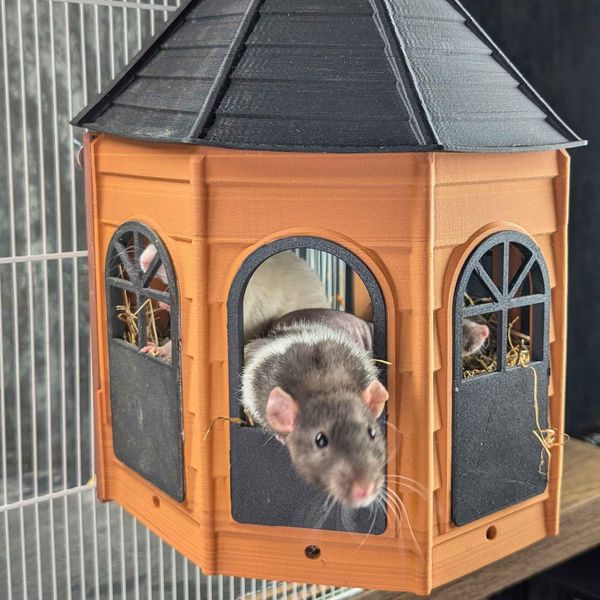
Hides and houses
 Shelves and ledges
 Foraging and toys
 Cage accessories
 Kits and bundles
 Fairy forest
 Spooky mischief
 Sweetie stash
 Game mode
 Forest floor
 Castles and cathedrals

Rat bedding compared
Here is every common bedding for rats side by side. Our rat bedding comparison tool lets you sort them by what matters most to you.
| Bedding | Dust | Absorbs wee | Holds smell down | Good for | Watch out for |
|---|---|---|---|---|---|
| Paper-based bedding (shredded or soft paper) | Very low | Good | Fair | Most cages; nesting and burrowing | Choose unscented; replace soiled patches daily |
| Shredded card or cardboard squares (about 1 cm, 0.4 in) | Low | Good | Fair | The cage base (Wood Green) | Choose plain, ink-free card made for pets |
| Recycled paper pellets | Very low | Very good | Good | Litter trays and corners rats use as a toilet | Hard underfoot over a whole floor; pair with softer bedding |
| Hemp bedding | Low (dust-extracted) | Very good | Very good | Bigger cages, odour control | Buy a dust-extracted, unfragranced brand made for small pets |
| Fleece liners | None | Wicks through to a layer underneath | Fair if washed often | Shelves, solid floors, a tidy look | Needs washing every few days; no digging |
| Kiln-dried aspen shavings | Low to medium | Good | Good | Owners who like wood shavings | The RSPCA advises against aspen; US clubs accept it. We'd choose paper or hemp |
| Pine or cedar shavings, sawdust | High | Fair | Masks rather than removes | Not recommended | Dust and aromatic oils can irritate rats' airways |
| Hay, straw, corn cob | Medium to high | Fair | Poor | Not recommended as the main bedding | Can bring dust and damp growth (RSPCA Australia) |
| Cotton wool, fluffy "hamster bedding" | Medium | Poor | Poor | Not recommended | Fibres can wrap round feet and tails, and cause gut blockages if eaten |
PDSA suggests paper-based bedding or a regularly washed fleece liner, with nesting material such as tissue, and advises against sawdust, cedar or pine woodchips, newspaper and cotton wool. The RSPCA asks for a generous layer and adds aspen, sawdust, over-absorbent and fragrant or coloured beddings to the avoid list. Wood Green names shredded paper, shredded card, unfragranced hemp, cardboard squares around 1 cm and paper pellets for the litter tray.
The sources disagree on aspen. The RSPCA in the UK says avoid it because of breathing and other health problems, while US clubs such as AFRMA list aspen among acceptable shavings. Where good sources split, we take the careful side: paper and hemp are on everyone's safe list, so start there.
What should I put at the bottom of my rat cage?
A solid floor, or solid-floored levels, covered with a layer of low-dust bedding deep enough for rats to dig and nest in. PDSA and the RSPCA both say the floor should be solid, not wire or bars, because wire is hard on rats' feet and can trap a foot. If your cage has wire floors or shelves, cover them.
Many owners use a mix, and it works well:
- Paper or hemp bedding across the base, deep enough to dig
- A deeper dig area of at least 3 to 4 cm (about 1.5 in), as RSPCA Australia suggests
- Fleece liners on shelves, levels and in hammocks
- A litter tray of paper pellets in the corner the rats already use as a toilet
- Plain tissue, kitchen roll or paper strips for nesting
- A covered hide for the nest, with one more hide than you have rats (RSPCA)
How deep? Sources give slightly different numbers. PetMD suggests 1 to 2 inches (2.5 to 5 cm) of paper bedding across the base, and RSPCA Australia at least one area 3 to 4 cm deep. If your cage base is shallow, a separate dig box gives them proper depth: see our rat digging box guide.
Nesting material
Give rats something to carry and shred: plain unscented tissue, kitchen roll or strips of plain paper. The RSPCA suggests offering a variety so rats can choose, and warns against fluffy products such as cotton wool, which can tangle round limbs and cut off circulation. Watching them build a nest is one of the best parts of keeping rats, and a covered hide gives that nest walls and a roof. Old soft jumpers, socks and towels work too, Wood Green says, as long as you take fabric away once rats start eating it rather than just chewing it.
How to set up rat bedding
- Cover any wire. Lay a solid tray, liner or fleece over wire floors and shelves so feet can't catch.
- Lay the base. Spread paper or hemp bedding across the floor, deeper in one corner for digging.
- Add the litter tray. Put a tray of paper pellets in the corner your rats choose as their toilet. Moving a few droppings into it helps them learn.
- Line the levels. Fit fleece on shelves and hammocks, with an absorbent layer underneath on solid levels.
- Give nesting material. Leave a pile of plain tissue or paper strips near the hides and let the rats build the nest themselves.
How often does rat bedding need to be changed?
- Every day: remove wet or soiled bedding and droppings, and empty the litter tray.
- Every few days: swap fleece liners and hammock linings for clean ones. Wood Green washes fabric at 60°C (140°F) with non-bio detergent.
- Weekly (roughly): a full clean of the base and levels, more often for a big group (PetMD). Keep a handful of used but clean nesting material and put it back, so the cage still smells like home.
Our rat cage cleaning guide has the full routine and the cleaners that are safe to use.
Best rat bedding for smell
Hemp and paper pellets hold smell down best. Smell in a rat cage comes from ammonia in urine, so the fix is absorbing it and removing it, not covering it with scent. A litter tray in the toilet corner, daily spot cleans and good airflow do more than any bedding.
Avoid scented bedding and air fresheners near the cage: strong scents are hard on rats' airways too. PDSA warns that ammonia exposure can itself cause breathing illness in rats, so a cage that smells strongly is a health problem, not just a nose problem.
Dust-free rat bedding and breathing
Rats are prone to breathing problems, and dusty bedding makes them worse. Wood Green lists dusty bedding, poor ventilation, stress and sudden temperature changes among the things that worsen breathing conditions, and PDSA warns that wood shavings and sawdust can cause breathing problems.
If a rat sneezes a lot, wheezes, has a rattling chest or has red-brown staining around the eyes or nose, switch to a dust-free bedding and see an exotics vet. PDSA advises going as soon as possible, because breathing infections in rats can get worse very quickly.
Our rat respiratory health guide explains the signs to watch, and our page on rat hiccups and breathing changes covers what to record for the vet.
Bedding we'd look at
We don't make bedding, so these are from other shops we'd look at. Check the bag says unscented or unfragranced, dust-extracted, and suitable for rats or small pets.
Aubiose hemp bedding (UK)
Dust-extracted hemp bedding for small pets and rodents, with no synthetic fragrance. Wood Green names unfragranced Aubiose as a rat bedding. Suits bigger cages where smell is the main worry.
carefresh Natural Paper Bedding (US)
Soft paper bedding sold for rats and other small pets, described as virtually dust-free and with no dyes. A good everyday base layer for digging and nesting.
Small Pet Select Soft Paper Bedding (US)
Paper bedding listed for rats with no added dyes or scent blockers. Stock varies by size, so check the page before you plan around it.
For a longer look at brands and what to avoid, see our guide to the best bedding for rats.
Hides, hammocks and beds: the other half of bedding
Bedding is the floor; rats also want somewhere enclosed to sleep up off it. PDSA says rats need a warm, enclosed place to sleep, such as hammocks, beds or boxes with rat-safe bedding inside. A hide with a roof, a hammock and a few soft corners give them choices through the day.
Frequently asked questions
What bedding is best for rats?
Low-dust, unscented bedding: paper-based bedding, dust-extracted hemp or washable fleece liners, with plain tissue or paper strips for nesting. PDSA recommends paper-based bedding or a regularly washed fleece liner, and Wood Green lists shredded paper, shredded card, unfragranced hemp and paper pellets for the litter tray.
Can rats have sawdust or wood shavings?
Avoid sawdust and pine or cedar shavings: they are dusty and aromatic, and PDSA and the RSPCA both warn against them. The RSPCA also advises against aspen. Some US clubs accept kiln-dried, dust-extracted aspen, but we'd choose paper or hemp, which every source we checked is happy with.
Is fleece good for rats?
Yes, fleece liners are dust-free and soft, and PDSA suggests a regularly washed fleece liner. Rats can't dig in fleece and it doesn't absorb much, so wash it every few days, put an absorbent layer underneath, and give them paper, tissue or a dig box as well.
How deep should rat bedding be?
Deep enough to dig and nest in. RSPCA Australia suggests at least one area 3 to 4 cm (about 1.5 in) deep for burrowing, and PetMD suggests 1 to 2 inches (2.5 to 5 cm) of paper bedding across the base. The RSPCA's own advice is a generous layer.
How often should I change rat bedding?
Spot clean wet or soiled bedding every day, swap fleece every few days and do a full clean about once a week, or more often for a big group. Keep back a handful of clean nesting material from the old bedding, as the RSPCA suggests, so the cage still smells like home.
What is the best rat bedding for smell?
Hemp and paper pellets hold ammonia best. Smell comes from ammonia in urine, so a litter tray of paper pellets in the toilet corner, daily spot cleans and good airflow make the biggest difference. Avoid scented bedding: it covers the smell rather than removing it, and strong scents are hard on rats' airways.
Can I use cat litter for rats?
Use paper-pellet litter, such as litter made from recycled paper, which RSPCA Australia suggests as a good base. Avoid clumping clay, silica, scented and wood-pellet litters of unknown wood. Plain newspaper sheets are a different thing: PDSA advises against newspaper in the cage.
Is hay or straw good bedding for rats?
Not as the main bedding. RSPCA Australia warns that hay, straw and corn cob can bring dust and damp growth. Some UK sources accept a little hay for nesting, but plain tissue and paper strips do that job without the dust, so we'd use those.
More reading: gifts for rat lovers and the first-time rat owner guide.