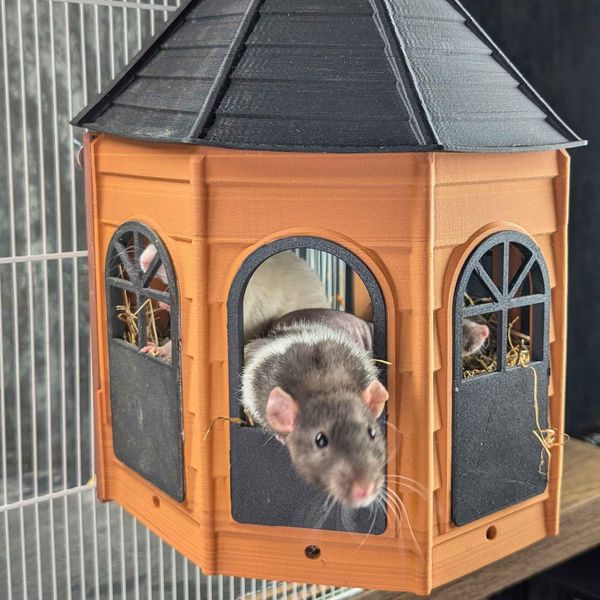
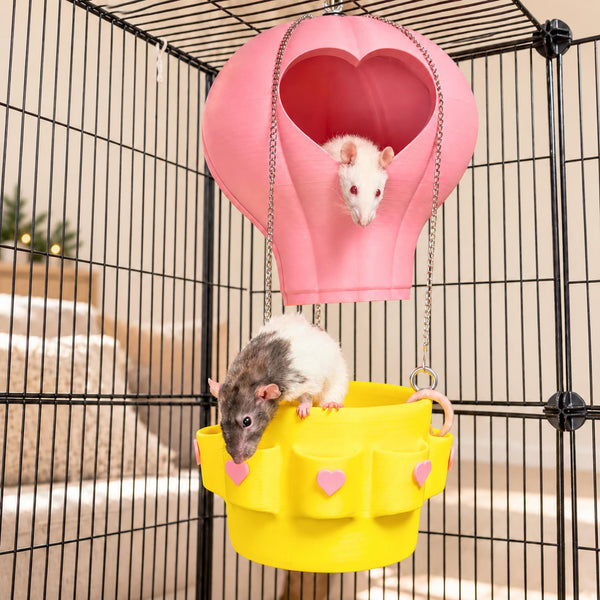
Hides and houses
 Shelves and ledges
 Foraging and toys
 Cage accessories
 Kits and bundles
 Fairy forest
 Spooky mischief
 Sweetie stash
 Game mode
 Forest floor
 Castles and cathedrals

What rat supplies do you need?
A rat home needs room for rest, climbing and a little investigation. Start with the jobs your cage needs to do, then choose pieces that fit its layout and your rats. Here is the full shopping list for a new group, in the order we'd buy it.
- A large, escape-proof barred cage with solid floors and shelves
- Hides: one per rat plus one more, at least one big enough for the whole group
- Shelves, ledges and ladders to join the levels
- One or two hammocks
- Paper-based bedding for the base
- Nesting material: plain white tissue, shredded paper or paper strips
- One to three corner litter trays and unscented paper litter
- Two water bottles or bowls
- A complete rat food (nuggets or blocks) and a heavy bowl or foraging cups
- Chew and shred toys: cardboard tubes, boxes, safe wood
- A carrier with a fleecy blanket for vet trips
- Kitchen scales for regular weigh-ins
For a slot-by-slot plan of where each piece goes, see our guide to what a rat cage should have in it and the complete rat cage setup guide.
Rat cage accessories at a glance
Each accessory does a job. This table shows what each one is for, what to check before you buy, and where to read more.
| Accessory | Job it does | What to check |
|---|---|---|
| Hides and houses | A covered, dark place to settle | Entrance size, two exits, easy to reach and clean |
| Shelves and ledges | Routes between levels, lookout spots | Fits your bar spacing, firm when a rat lands on it |
| Hammocks | Soft, high sleeping spot, often shared | Loose threads, holes, how it is fixed |
| Foraging cups and feeders | Food-time activity, slower eating | Easy to empty and wash, fresh food removed daily |
| Tunnels and tubes | Running, hiding, chewing | Wide enough for your biggest rat |
| Ropes and ladders | Climbing and balance | Frayed ends that could wrap toes |
| Dig box | Digging and searching | Safe filling, kept dry |
| Wheel | Extra running for active rats | Solid, at least 30 cm (12 in) across |
| Litter trays | A toilet corner, easier cleaning | Low sides, placed where rats wake up |
| Water bottles or bowls | Clean water all day | Two of them, checked daily |
Somewhere to rest: hides, houses and hammocks
Hides give your rats a covered place to settle. Think about entrance size and where you can place a hide so that it is easy to reach and clean. The RSPCA says every rat must always have access to a safe, dark hiding place, that there should be one more shelter than there are rats, and that shelters need more than one exit and room for all the rats to sleep in together. Large cardboard tubes count, and are free.
Hammocks are the other favourite: Woodgreen says rats love sleeping together in them, and PDSA lists hammocks, beds and cardboard boxes as warm nest spots. Hang one high and one lower, so older or less agile rats can still reach a soft bed. Our rat hammocks guide covers what to look for.
More to explore: shelves, ledges and foraging toys
Shelves and ledges add routes between levels; foraging cups and feeders make space for food-time activities. Check the individual piece and your cage measurements before choosing. The RSPCA asks for horizontal and vertical barriers, platforms, ladders and places to hide, climb and investigate at different heights, but warns that enrichment should not take over the whole cage: rats still need open floor to run and room to stand up on their back legs.
Toys for rats: what keeps them busy
The best toys for rats let them climb, chew, shred, dig and search. PDSA names ladders, tunnels, hiding places, ropes and hammocks as rat favourites and suggests building an adventure playground of ropes, ladders, branches and shelves. Woodgreen's list adds a few good ideas:
- Pipes and tunnels to run through
- Climbing frames, such as an old metal CD tower or wine rack
- Parrot toys and perches for balancing, jumping and chewing
- Cardboard boxes with holes cut in them
- Pea fishing: peas or sweetcorn (corn) floating in a shallow dish of water
- A dig tray with a safe filling, such as coco soil
- Plain paper and card to shred into nests
- Safe wood and branches to gnaw
Rats get bored with the same layout, and PDSA warns that rats without enough attention and playtime can become depressed. Rotate a couple of toys every week or so. For more ideas, read 35 rat enrichment ideas, our guide to the best rat enrichment toys, safe rat shredding toys and safe wood for rats.
Never use an exercise ball. The RSPCA says they cause rats high levels of stress because they stop them exploring. Also avoid cotton-wool style fluffy nesting, which can wrap around limbs and tails or be swallowed.
Build a setup: kits or single accessories
- Measure the cage. Note floor size, height of each level and bar spacing, so every piece you choose fits and leaves open floor.
- Place water and food first. Put two water points at different ends or levels and a heavy bowl or foraging spot where you can reach it.
- Add hides on every level. One more hide than rats, with at least one big enough for the whole group.
- Join the levels. Fit shelves, ledges, ladders and ropes so a rat can reach every level without a long drop.
- Hang the hammocks. Put one high and one lower, away from water bottles.
- Put trays where rats wake. Woodgreen says rats tend to toilet as soon as they get up, so place a litter tray under a favourite hammock or by the main hide.
- Finish with toys and nesting. Add chews, tubes and a pile of plain paper for the rats to build their own nest.
Cage, bedding and other supplies we don't make
We don't make cages, bedding or wheels, so these are from other shops we'd look at. Check sizes against your own group before you buy.
Savic Zeno 3 Empire cage
A tall cage at 100 × 50 × 116 cm (39 × 20 × 46 in) with 9.5 mm (3/8 in) bars, above Woodgreen's minimum for up to four rats. The narrow bars suit does and young rats. Check you can reach every corner through the doors for cleaning.
MidWest Critter Nation single unit
The best-known rat cage in the US, with full-width double doors and solid plastic floor pans. A single unit suits a small group, and add-on units stack on top later. Check the bar spacing for very young or small rats.
Burgess Excel Nap and Nest paper bedding
Soft, absorbent paper bedding made from unused teabag offcuts. Good for the cage base and soft enough for beds; it can also be used as litter.
Carefresh Natural paper bedding
Reclaimed natural-fibre paper bedding the maker describes as dust-free. Choose the natural colour so you can still see urine colour when you check the cage.
Trixie Wooden Exercise Wheel, 33 cm
A wooden wheel with a cork running surface and a stand; the 33 cm (13 in) size is the one listed for rats, just over Woodgreen's 30 cm (12 in) minimum. Big bucks may need a larger wheel. Check the cork for chewing.
Savic Play Tunnel Giant Tube
An 11 cm (4.3 in) wide, 31 cm (12 in) long hanging tunnel that clips to cage bars, sold for ferrets, chinchillas and rats. A simple extra route between levels.
Oxbow Essentials Adult Rat Food
A complete daily food for rats over 6 months, with 15% minimum protein and 4% minimum fat. Not for young, pregnant or nursing rats. Feed alongside fresh vegetables.
For deeper buying guides, see the best rat cages, the best bedding for rats, rat wheels and rat carriers and travel cages.
Food, water and cleaning supplies
Feed a complete rat food as the base of the diet, with small amounts of fresh vegetables and a little fruit. Woodgreen recommends two water bottles or bowls, one at each end of the cage or on different levels, in case one breaks or leaks. Read rat drinking water: bottles, bowls and daily checks for setup.
Not sure what to put in the food bowl? Play our rat food game or check a single food with the rat food checker, and see the full list of what rats can eat.
For cleaning, the RSPCA advises spot cleaning droppings, soiled bedding and old food between full cleans, a full clean once a week while the rats are awake, and no air fresheners or strongly scented cleaners. Our rat cage cleaning guide has the routine.
When you clean, leave a handful of clean nesting material behind. The RSPCA suggests it so familiar smells stay, which helps rats settle back in quickly.
What not to buy for rats
Some common pet-shop items are wrong for rats. Skip these:
- Cages with wire mesh floors or shelves, which can cause foot problems
- Small hamster cages; Woodgreen's minimum for up to four rats is 80 × 50 × 80 cm (31.5 × 19.7 × 31.5 in)
- Exercise balls
- Cotton-wool style fluffy nesting
- Dusty sawdust, aspen, cedar or pine shavings
- Scented or coloured bedding, and newspaper as bedding
- Air fresheners near the cage
More rat care guides
- Bathing pet rats: when cleaning help is really needed
- How to train pet rats: three useful first skills
- Male or female rats: choosing a compatible group
- Pet rat biting: context, safer handling and vet checks
- Rat digging box: a simple, supervised setup
- Rat exercise wheels: fit, choice and alternatives
- Rat hiccups or breathing changes? What to record
- Rat sleeping positions: what to observe
- Rat teeth care: eating changes and when to call a vet
- Pet rat care: every guide, tool and chart
Rat supplies questions
What accessories do rats need in their cage?
At the least: a hide for each rat plus one more, shelves or ledges between levels, a hammock, a litter tray, paper-based bedding, nesting material, two water bottles or bowls, a food bowl or foraging spot, and things to chew. The RSPCA asks for hiding, climbing and investigating spots at different heights.
What toys do rats like best?
Rats like toys they can climb, chew, shred and search. PDSA lists ladders, tunnels, hiding places, ropes and hammocks as favourites. Woodgreen adds dig trays, cardboard boxes with holes cut in, parrot toys and pea fishing in shallow water. Plain cardboard tubes are free and well loved.
Do rats need a wheel?
Not every rat uses one, but a wheel is a good extra for active rats, especially females. Woodgreen says it must have a solid running surface and be at least 30 cm (12 in) across, and many rats need bigger. Never use an exercise ball: the RSPCA says they cause high levels of stress.
How many hides do rats need?
One more than the number of rats, so three rats need at least four. That is the RSPCA's rule. Each hide should have more than one way out, and at least one should be big enough for the whole group to sleep in together.
What should I avoid buying for rats?
Avoid wire-floored cages, exercise balls, cotton-wool style fluffy nesting, dusty sawdust, cedar or pine shavings, and scented or coloured bedding. Avoid any toy with gaps that could trap a foot or head, and anything a rat could chew into sharp shards.
How often should I change rat toys and accessories?
Swap one or two pieces every week or so, so the cage feels new without losing every familiar place. Keep the main sleeping hide and some used nesting in place: the RSPCA advises leaving a handful of clean nesting after cleaning so familiar smells stay. Replace anything badly chewed, damp or soiled.