Hides and houses
 Shelves and ledges
 Foraging and toys
 Cage accessories
 Kits and bundles
 Fairy forest
 Spooky mischief
 Sweetie stash
 Game mode
 Forest floor
 Castles and cathedrals

For the wider setup, start with our pet rat care guide, which links every rat guide we have, or see the pet rat supplies guide.
Quick decisions at a glance
| Situation | Useful action | What to remember |
|---|---|---|
| Normal grooming | Leave the rat to its usual grooming | Routine bathing is not a care requirement |
| Small dirty patch | Spot-clean with a damp, soft cloth or unscented baby wipe | A whole-body bath may be unnecessary |
| Older or arthritic rat that cannot groom | Warm-water sponge bath where needed | Ask a vet about the cause as well |
| Repeated soiling or poor grooming | Speak to a vet about the cause | Cleaning alone may hide a health problem |
| Optional water play | Provide choice and supervise | Never put a reluctant rat into water |
Can you bathe pet rats?
Yes, you can, but most pet rats never need a full bath. The National Fancy Rat Society describes rats as very clean animals that spend a lot of time washing and grooming their coats, and PetMD says rats are naturally hygienic and rarely need baths. RSPCA Australia says rats rarely need washing, and names the exceptions: elderly or arthritic rats that can no longer groom themselves, and rats that have become very dirty.
There is a good reason to hold back. RSPCA Australia points out that rats rely heavily on smell, and a new scent such as shampoo can stress the washed rat and its cage mates, sometimes leading to isolation or squabbling when the rat goes back in. A rat that smells "clean" to you may smell like a stranger to its group.
Do pet rats need regular baths?
No. Rats normally keep themselves clean, so a calendar reminder to bathe every rat is not the starting point. First look at what needs attention: a small dirty patch, wet bedding, an inaccessible toilet area or a rat that is not managing its normal grooming. Those situations need different responses.
RSPCA Australia recommends warm water and a sponge-style clean rather than immersion when assistance really is required, and avoiding shampoo where possible. If your vet has prescribed a specific treatment, follow that plan instead of replacing it with advice from a general guide. Never put an unidentified product on a rat simply because it says gentle on the bottle.
How often should I bathe my rat?
Only when there is a reason, and for most healthy rats that is never or almost never. No welfare or vet source we checked gives a bathing schedule. If you find yourself cleaning the same rat often, look at why: the cage, the bedding and the rat's health matter more than the bath.
- Is the bedding damp, or is the toilet corner overdue a clean? See our rat cage cleaning guide and our guide to the best bedding for rats
- Can the rat reach every part of its body, or is it stiff, overweight or arthritic?
- Is the coat dull, greasy, matted or "starry" (oily and clumped)? The RSPCA lists this as a sign to call a vet
- Is there diarrhoea or droppings stuck under the tail?
- Is the rat scratching a lot, or are there scabs or bald patches?
- Is there red staining around the eyes and nose? Rats groom often, so a lot of it can mean a severe problem
Any of these, beyond a one-off messy moment, is a reason to talk to your vet. Our guide to rat health problems and when to call a vet covers each sign.
How to give a rat a sponge bath
When a rat genuinely needs help, a sponge bath with warm water is the gentlest way, following RSPCA Australia's advice. Clean only the areas that need it.
- Get everything ready first. Lay out a soft cloth, a small bowl of warm water, a towel and, only if truly needed, unscented or baby shampoo. Prepare any cleaning equipment before handling so you are not leaving a vulnerable rat waiting while you search for a towel.
- Warm the room. Work in a draught-free room within the RSPCA's ideal 19 to 23°C (66 to 73°F).
- Check the water. It should feel comfortably warm on the inside of your wrist, never hot.
- Hold the rat securely and low. Sit down and hold your rat close to your body on a towel on your lap.
- Sponge the dirty area. Wipe gently in the direction the fur lies. Keep water away from the eyes, ears and nose.
- Rinse fully if you used shampoo. RSPCA Australia says any shampoo must be completely rinsed off.
- Dry thoroughly. Pat dry with the towel and keep the rat warm until the coat is fully dry. RSPCA Australia says the rat must be dry before it goes back into its enclosure.
- Return and watch. Put the rat back with its group and watch for squabbling over the new scent. Rubbing a little of their used bedding on your hands and the rat can help.
What if an older or unwell rat needs help?
Tell your vet what has changed: which areas are dirty, whether the rat can reach them, whether this is new and whether movement or appetite is different. Take a clear photograph if doing so will not delay care or distress the animal. The important question is not just how to remove the mess but why the rat needs help.
Keep access to food, water, resting places and toileting areas practical while you obtain advice. Lower shelves, ramps and a shallow litter tray help a stiff rat reach what it needs. Do not turn a care problem into a repeated bathing routine without reviewing the setup. Our guide to caring for rats at every age covers changes that help senior rats.
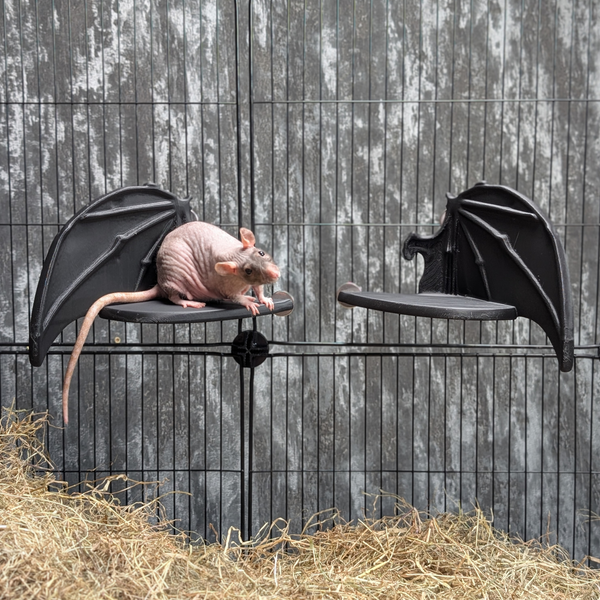
Hairless rats groom themselves too, but their bare skin can need a gentle wipe and extra warmth afterwards. See our hairless rat guide.
Nails and whiskers
Grooming help sometimes means nails rather than a bath. RSPCA Australia says to trim nails only when needed, for example when they catch on clothing, bedding or hammocks, because a snagged nail can tear. The National Fancy Rat Society notes that sharp claws can lead to scratches, spots and scabs.
- Choose the tool. Use human baby nail clippers, small pet nail clippers or a soft emery board.
- Find the quick. Cut only the clear tip, leaving a small gap before the pink quick (the blood supply), which bleeds if cut.
- Do one or two nails at a time. Use a calm voice and treats, and stop if your rat becomes stressed.
- Ask for help if you need it. PetMD suggests a vet trim if nails curl or your rat is hurting itself scratching.
Is water play the same as bathing?
No. Optional supervised play is different from holding a rat in water to wash them. RSPCA UK says some rats enjoy water and others do not; a shallow room-temperature tray must allow easy entry and exit, with the rat choosing whether to use it. They advise against placing rats directly into the water, forcing swimming or leaving a water bath in the home cage, and say rats should never be left unsupervised with water.
- A shallow tray, with water well below the rat's shoulders
- Water at room temperature
- Easy, non-slip entry and exit on every side
- Offered only during supervised free-range time, never left in the home cage
- A towel and a warm room for drying afterwards
- Your rat decides whether to go in
A video of another rat swimming is not evidence that yours wants the same activity. If your rat walks away, let that be the answer. Keep the session separate from treatment: water play is not a remedy for skin disease, parasites or a rat that cannot groom. Our rat enrichment ideas include other options for rats who are not keen on water.
Choosing accessories around the care routine
Frequently asked questions
Should I bathe my rat every week?
No. No welfare or vet source recommends a routine bathing schedule for rats. Healthy rats spend a lot of time grooming and keep themselves clean. Clean only when there is a reason, such as a dirty patch or a rat that cannot groom, and investigate any new difficulty keeping clean.
Can I use human shampoo?
Do not improvise with ordinary human or fragranced products. RSPCA Australia says to avoid shampoo if you can, and if you must use one, choose an unscented or baby shampoo and rinse it off completely. Never use flea, dog or medicated products unless your vet prescribes them for your rat.
Is a sponge clean preferable to immersion?
Yes. RSPCA Australia recommends a warm-water sponge bath rather than immersing a rat in water when help is needed. A sponge clean is quicker, less frightening and easier to keep to the dirty area, and it leaves less of the coat wet to dry.
Can I make my rat swim to get clean?
No. Never force a rat into water or make them swim. The RSPCA says forced swimming is very stressful. Some rats enjoy paddling in a shallow tray they can climb in and out of by choice, but that is play, not a way to wash them.
What if my rat repeatedly gets dirty?
Ask a vet about the underlying cause and review access, bedding and mobility rather than relying on repeated baths. Repeated soiling under the tail, a greasy or matted coat, or a rat that has stopped grooming are all listed by the RSPCA as signs to contact a vet.
Why does my rat smell?
A healthy rat has only a mild smell. A strong smell usually comes from the cage: damp bedding or a toilet corner that needs cleaning more often. A rat that smells unusual itself, has a dirty coat or discharge, may be unwell and needs a vet check rather than a bath.
Can I use baby wipes on my rat?
Yes, for a small spot. PetMD suggests a damp, soft cloth or unscented baby wipes for spot-cleaning. Choose fragrance-free wipes, clean only the dirty area, and let your rat dry in a warm room before returning them to the cage.
Do hairless rats need baths?
Hairless rats still groom themselves and do not need routine baths, but their bare skin can look oily or catch bedding dust. Wipe gently with a damp, soft cloth if needed and keep them warm afterwards. Our hairless rat guide covers their skin care in more detail.
Advice here is general; speak to a rat-experienced vet about an individual health or mobility concern. Source guidance checked November 2026.