Hides and houses
 Shelves and ledges
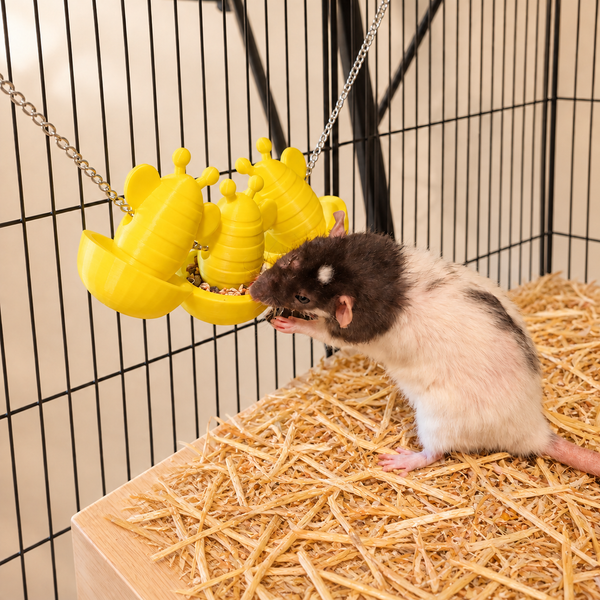
 Foraging and toys
 Cage accessories
 Kits and bundles
 Fairy forest
 Spooky mischief
 Sweetie stash
 Game mode
 Forest floor
 Castles and cathedrals
Paper parcel
Fold a few pieces of the usual daily ration into plain paper or a small cardboard box. Leave out tape, staples, string and scented paper.
Check before use: Supervise and remove the parcel when it is wet, dirty or falling apart.
Small-pet care guides and made-to-order rat pieces


Little luxuries for your mischief.
Choose a type of activity, a budget and how long you have, and get one simple idea to try with your rats today.

Your activity shows here
Set the filters, or leave them on "any", and tap the button. Every idea uses things you already have or that cost very little.
Saved ideas
Fold a few pieces of the usual daily ration into plain paper or a small cardboard box. Leave out tape, staples, string and scented paper.
Check before use: Supervise and remove the parcel when it is wet, dirty or falling apart.
Offer several open paper cups or cardboard tubes with small portions of the normal daily ration spread between them.
Check before use: Use several food points for a group and keep the total within the daily allowance.
Rearrange clean, wide cardboard tubes and stable hides to make a short route with more than one way through.
Check before use: Remove crushed tubes and check that every opening is clear.
Refresh one enclosed resting spot with clean, familiar nesting material, leaving the rest of the cage unchanged.
Check before use: Keep the hide easy to remove and inspect.
Scatter part of the normal ration through clean bedding or several safe spots so the rats can search for it and handle it.
Check before use: Don't add extra food on top of the planned daily amount.
Move stable shelves, ledges or a secure rope to make a different way between levels.
Check before use: Check every fixing and keep a safe way down.
Offer a shallow tray with clean paper, cardboard and a familiar object to investigate during supervised time out.
Check before use: Avoid loose threads, sharp edges, treated materials and anything with a strong scent.
Set up a secure play area with a hide, a wide tunnel and a food-search station, with clear routes between them.
Check before use: Rat-proof the room first and supervise throughout.
Use a clean target such as the end of a chopstick to invite one step, then reward from the normal daily ration.
Check before use: Stop while the rat is still comfortable; never chase or force contact.
Fill a low, clean cardboard box with torn plain paper and hide a few pieces of the usual ration.
Check before use: Remove it if it gets wet or chewed into small pieces.
Place a few pieces of clean used nesting material between a hide and a food point to invite calm investigating.
Check before use: Use familiar material only; never add essential oils or perfumes.
Introduce one clean, safe object, such as a plain cardboard tube or a suitable chew, then watch how each rat chooses to use it.
Check before use: Remove anything that splinters, frays, has a coating or causes repeated fear.
Float a few peas or a little sweetcorn (corn) in a shallow dish of water and let the rats fish them out. Woodgreen suggests it for enrichment.
Check before use: Use a shallow dish they can step out of, count the peas in the day's food and dry any wet bedding.
Offer a cooled, unpeeled boiled egg for the group to work through, as the RSPCA suggests.
Check before use: Cooked only, shared between the group, and taken out of the day's food. Clear leftovers before they spoil.
Give a few seeds or nuts still in their shells to crack open, as the RSPCA suggests.
Check before use: Only a few, as they are fatty. Never walnuts, and nothing salted.
Hide a few pieces of the ration in a plain paper bag or a cardboard tube with the ends folded, as PDSA suggests.
Check before use: Plain paper only, no handles, glue or print. Remove it once it is soggy.
Fill a sturdy, deep tray with clean play sand or torn paper and bury a few pieces of the ration. The RSPCA notes that rats love digging.
Check before use: Use plain, washed play sand, keep it away from the sleeping area and change it when soiled.
Say one rat's name, then reward them when they look at you or come over. The RSPCA says rats can learn to respond to their names.
Check before use: Keep sessions to a few minutes and use the normal ration as rewards.
Hold a treat just above a rat's nose so they lift a paw, touch the paw gently with a fingertip and reward. Another trick the RSPCA lists.
Check before use: Reward-based only. Stop if a rat turns away.
Let the group explore a rat-proofed room or a large play pen with places to run, climb and dig, as the RSPCA recommends once they are relaxed with you.
Check before use: Check cables, gaps, plants and chemicals first, and stay with them the whole time.
Hang a natural-fibre rope between two levels so the rats can climb and balance. The RSPCA suggests natural-fibre ropes.
Check before use: Replace it when it frays and trim loose threads.
Swap one or two toys or hides for ones they haven't seen for a while. The RSPCA says varied, rotated toys keep rats interested.
Check before use: Change one or two things at a time so the cage still smells like home.
Join a few plain boxes with doorways cut between them to make a hideout with several ways in and out. Woodgreen lists cardboard boxes in every shape and size.
Check before use: Take off tape and staples, and cut doorways big enough for your biggest rat.
Rat Foraging & Training Toys from our rat shop
Rat Shelves & Climbing Ledges from our rat shop
Rat enrichment is anything that lets rats forage, dig, climb, hide, chew and explore. Easy ideas include scattering part of their daily food in the bedding, a paper bag lucky dip, pea fishing in a shallow dish, a cardboard box castle and a new rope route. The picker gives you one activity at a time, filtered by type, cost and time.
There are 23 activities, each sorted by type (foraging, movement, shelter, sensory or training), by cost (free or under £5, about $6) and by how long it takes to set up (about 5 minutes, about 15 minutes, or half an hour or more). Set the filters you want, or leave them on "any", and tap the button. The picker chooses one matching idea at random and never repeats the one you just saw.
Every idea comes with a safety check. Save the ones you like to a list on this device, or copy a link that opens the page on that idea. The whole list is under "See all 23 ideas" if you would rather browse.
The RSPCA says rats need room to forage and play, love digging, and need things to climb such as natural-fibre ropes. It recommends varied toys that are swapped round to keep rats interested, and, once rats are relaxed with you, supervised time to explore a rat-proofed room or large play pen. PDSA suggests scattering rat nuggets round the cage instead of using a bowl, and hiding treats in paper bags or cardboard tubes so rats work for their food.
Rats also need hiding places. The RSPCA asks for several dark hides with more than one way out, ideally one more hide than there are rats. AFRMA notes that tunnels and hide boxes give a quieter rat a way out of an argument.
Most foraging ideas use food, so take it from the day's normal ration rather than adding extra on top. The RSPCA says fresh foods and treats should count towards the daily allowance, and AFRMA warns that treat-based enrichment can be overused and lead to weight gain. For a group, spread food across several spots so every rat gets a turn.
| Type | What it gives rats | Ideas to try |
|---|---|---|
| Foraging | Searching, digging and working for food | Scatter a meal, paper parcel, pea fishing, egg in its shell, digging tray |
| Movement | Running, climbing and balancing | Rope route, climbing route reset, tunnel route, supervised free roam |
| Shelter | Safe, dark places to rest and retreat | Cardboard box castle, quiet hide refresh, familiar scent trail |
| Sensory | New textures, objects and smells to investigate | Texture tray, one new object, toy swap |
| Training | Learning and time with you | Name and come, target and reward, high five |
Enrichment is anything that lets rats do what comes naturally: forage for food, dig, climb, chew, hide, explore and play together. It can be as simple as scattering part of their daily food in the bedding, or as big as a supervised free roam in a rat-proofed room. Change things round regularly to keep it interesting.
Use what you already have: plain cardboard boxes and tubes, paper bags, white tissue and plain paper. Fold part of the daily food into a paper parcel, scatter a meal in the bedding, build a cardboard box castle, or swap one or two toys for ones they haven't seen for a while. Remove anything wet or chewed to bits.
Pea fishing means floating a few peas or a little sweetcorn (corn) in a shallow dish of water and letting the rats fish them out. Woodgreen suggests it for enrichment. Use a dish shallow enough to step out of, count the peas as part of the day's food, and dry any wet bedding afterwards.
Yes. The RSPCA says rats love digging. Fill a sturdy, deep tray with clean, washed play sand or torn plain paper and bury a few pieces of their daily food. Keep it away from the sleeping area and change the sand when it gets dirty.
The RSPCA recommends varied toys and activities that are rotated to keep rats interested, especially young, playful rats. Swap one or two things at a time rather than the whole cage, so it still smells like home and your rats don't get stressed. Replace ropes once they fray.
Yes. The RSPCA says rats learn quickly and can be taught to come to their name, give high fives, fetch a ball and roll over using reward-based training. Use small pieces of their normal food as rewards, keep sessions short, and never punish. Stop while your rat is still enjoying it.
Foraging and training pieces from our rat shop.