Hides and houses
 Shelves and ledges
 Foraging and toys
 Cage accessories
 Kits and bundles
 Fairy forest
 Spooky mischief
 Sweetie stash
 Game mode
 Forest floor
 Castles and cathedrals

Yes, rats can eat plain sweet almonds as a rare treat. A vet-reviewed guide from The Vet Desk says sweet almonds are safe, raw or roasted, if unseasoned, and Chewy's vets suggest about one nut at a time. Almonds are very fatty, so once or twice a week is plenty. Never give bitter almonds, which can release cyanide.
| Safe? | Sometimes: sweet almonds only |
|---|---|
| How much | One almond per rat, chopped or in the shell |
| How often | Once or twice a week at most |
| Best served | Plain, unsalted, raw or dry roasted |
| Watch out for | Bitter almonds, salted, smoked, chocolate or honey-coated almonds, almond butter |
Are almonds safe for rats?
Plain sweet almonds are, in small amounts. These are the almonds sold in every supermarket. The Vet Desk's vet-reviewed guide says rats can eat them raw or roasted, as long as they are unseasoned, and suggests limiting nuts to one or two a week. Chewy's vets list bland almonds among the nuts rats can have in moderation. The RSPCA in the UK recommends offering the odd nut so rats can handle their food.
Not every source agrees. The Ontario SPCA says small animals should never be given almonds, because raw almonds carry trace cyanogenic compounds and a lot of fat. That page is written for hamsters, guinea pigs and rabbits, not rats. We follow the rat-specific vet advice, but take its careful end: one almond, once or twice a week, and none for overweight rats.
Sweet almonds vs bitter almonds
Bitter almonds are a different kind, sold mainly for flavouring and baking in some countries. The Vet Desk explains that they contain amygdalin, which turns into cyanide in the body, and that small animals are at higher risk than people because of their size. Ordinary sweet almonds have far less. Almond extract and marzipan flavourings can be made from bitter almond oil, so keep those away from rats too.
If your rat has eaten a bitter almond or almond extract, ring a vet straight away. Watch for fast or laboured breathing, wobbliness, weakness or collapse, which need an emergency visit.
How many almonds can a rat eat?
One almond per rat, once or twice a week. Almonds are high in fat, and The Vet Desk warns that too many can cause obesity, and that high-fat diets add to liver and blood vessel problems and a higher risk of diabetes. Chop the almond into three or four pieces for a small rat, or give it in the shell for an older rat who enjoys the work.
| Type | OK? | Why |
|---|---|---|
| Plain raw sweet almond | Yes, rarely | Fatty, so one at a time |
| Dry roasted, unsalted | Yes, rarely | Same as raw |
| In the shell | Yes, supervised | Good for gnawing; The Vet Desk advises supervising |
| Salted, smoked or flavoured | No | Salt and seasoning |
| Chocolate, yoghurt or honey-coated | No | Sugar, fat and chocolate |
| Almond butter | No | Thick pastes are a choking risk, as Walkerville Vet warns |
| Bitter almonds, almond extract | Never | Can release cyanide |
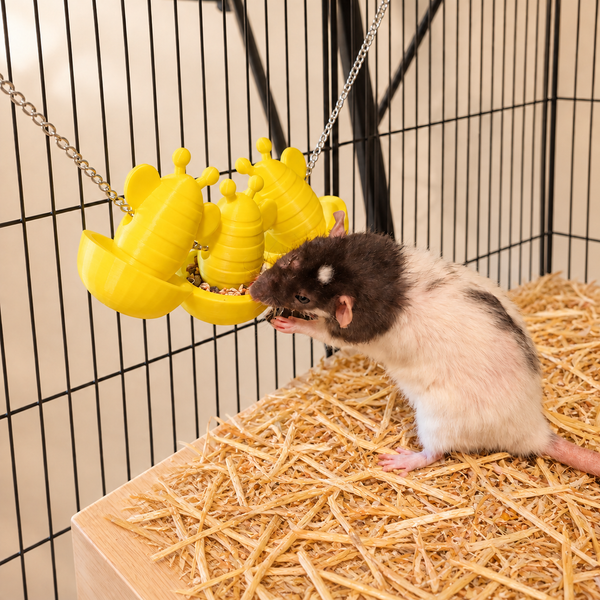
An almond in the shell, or chopped pieces hidden in a foraging cup, makes one small treat last much longer.
What to offer instead
For a lower-fat crunch, try a piece of plain popcorn or a fresh vegetable. Other nut and seed pages: peanuts, peanut butter and sunflower seeds. See the rat safe food list, our rat diet guide and the pet rat care hub.
Questions rat owners ask
Can rats drink almond milk?
Not as a regular drink. Rats need fresh water, and many almond milks have added sugar and flavourings. A lick of plain unsweetened almond milk won't harm a rat, but there is no benefit to giving it.
Can rats eat almond shells?
Rats enjoy gnawing through the shell to get the nut, and The Vet Desk says that is fine if you supervise. The shell itself is not food, so remove the pieces afterwards. An almond in the shell still counts as the week's nut: one or two a week at most.
Can rats eat marzipan?
No. Marzipan is mostly sugar, and some is flavoured with bitter almond oil. Keep it, along with almond cakes and biscuits, away from rats.