Hides and houses
 Shelves and ledges
 Foraging and toys
 Cage accessories
 Kits and bundles
 Fairy forest
 Spooky mischief
 Sweetie stash
 Game mode
 Forest floor
 Castles and cathedrals

What is a robo hamster?
A robo hamster is the Roborovski dwarf hamster, Phodopus roborovskii, one of three dwarf hamster species kept as pets alongside the Campbell's and the Winter White. The Animal Diversity Web (University of Michigan) says wild robos live in the sandy semi-deserts and steppes of Mongolia and northern China. They dig burrows about 90 cm (3 ft) deep into dunes, with a nest chamber and separate food stores, and come out at night when the desert cools.
That desert life explains how to keep one: robos love to dig, run, bathe in sand and hoard food. Our guide to Syrian or dwarf hamsters helps you decide whether a robo is the right kind for you.
How to recognise a Roborovski hamster
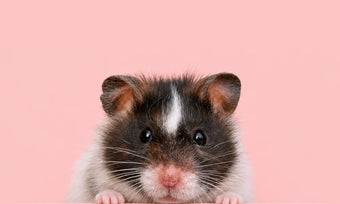
Look for a tiny, round hamster with a sandy brown back, a white belly, white "eyebrow" patches above each eye and no dark stripe down the back. The Animal Diversity Web also notes white patches at the base of each ear and white feet. PetMD describes the coat as lighter white to grey than other dwarfs.
| Hamster | Length | Weight | Back stripe? | Lifespan |
|---|---|---|---|---|
| Roborovski | 4 to 5 cm (1.5 to 2 in) | 20 to 25 g | No | About 3 years, up to 4 |
| Campbell's dwarf | 5 to 10 cm (2 to 4 in) | 40 to 60 g | Yes, dark and narrow | 2.5 to 3 years |
| Winter White dwarf | 5 to 10 cm (2 to 4 in) | Larger than a robo | Yes | 1 to 3 years |
| Syrian | 15 to 18 cm (6 to 7 in) | 90 to 140 g | No | 2 to 3 years |
Lengths, weights and lifespans are from PetMD's vet-written breed guide. A tiny hamster with a stripe is a Campbell's, a Winter White or a hybrid of the two: see our Russian dwarf hamster guide.
Roborovski hamster temperament
Robos are curious, busy and quick, but timid with people. Wood Green says they are very fast and not suited to regular handling, especially by children, and PetMD notes that their size and speed mean many owners prefer to watch rather than hold them. In the wild they are shy and run when approached, according to the Animal Diversity Web.
That makes a robo a wonderful pet to watch and a poor one to cuddle. Our guide to taming a hamster shows how to build that trust slowly, sitting on the floor or over a soft surface so a jump can't hurt them.
Hand-feed a sunflower seed or a dried mealworm from a flat palm resting inside the cage each evening. A robo that comes to your hand by choice is far less likely to panic and leap than one that is scooped up.
Can Roborovski hamsters live together?
Good sources disagree. The RSPCA says dwarf hamsters, including Roborovskis, can live in pairs or trios if the group is formed early in life, ideally from young littermates, but that even dwarfs don't need company to be happy and that groups may fall out later. Wood Green advises that all hamsters live alone as pets.
We'd start with one robo. It is the choice with no risk of fights, and a single robo in a big setup is a happy robo. If you do keep a pair, follow the RSPCA's rules: same sex, never mixed species, a large cage with several hides, food bowls and wheels, and checks for injuries every morning, because hamsters fight at night and don't play-fight. Any fight means separating them for good.
Robo hamster cage size and setup
A robo needs at least 100 × 50 cm (40 × 20 in) of unbroken floor, which PDSA and Wood Green both use as the minimum for every hamster species, and Wood Green asks for at least 40 cm (16 in) of height for dwarfs. Small size does not mean a small cage: robos run a lot and dig deep, so floor space and bedding depth matter more than levels. PDSA says single-level cages are usually better than tall ones because hamsters see poorly and can fall.
- Choose the enclosure. A large glass or plastic tank, a bin cage or a wide wire cage with bars no more than 7 mm (about ¼ in) apart, as Wood Green advises for dwarfs. Robos squeeze through gaps that would hold a Syrian.
- Fill it deep. PDSA asks for bedding at least 25 cm (10 in) deep. Wood Green suggests at least 15 cm (6 in) across most of the floor with a 25 to 30 cm (10 to 12 in) digging area. Use paper-based bedding; PetMD warns against cedar and unprocessed pine shavings.
- Add a solid wheel. At least 20 cm (8 in) across with a solid running surface, never rungs. Our hamster wheel size guide explains how to check the back stays straight.
- Add a sand bath. A shallow dish of hamster-safe sand. Robos roll in it to clean their coats. Our sand bath guide lists safe sands.
- Give hides and tunnels. Several hides, including a multi-room one, cork, cardboard tubes and piles of hay to tunnel through.
- Place it well. Somewhere quiet, away from draughts, radiators and direct sun.
For cage models that pass, see our hamster cage size guide and best hamster cages.
Roborovski hamster toys and enrichment
The best robo toys copy the desert: things to dig, run, climb low and forage. Scatter their dry food through the bedding instead of using a bowl for all of it, so they search the way they would in the wild. Add cardboard tubes and boxes, cork logs, a sand dish, sprays of millet or dried grasses, and chew items such as untreated apple wood. Our hamster enrichment guide and best hamster toys have more ideas.
What do Roborovski hamsters eat?
A good-quality hamster pellet or complete dry mix as the base, with tiny amounts of fresh vegetables and the odd protein treat. The Animal Diversity Web says wild robos mostly eat seeds (70 to 90% of their diet), plus leaves, stems and insects such as beetles. Wood Green suggests 5 to 8 g (about one teaspoon) of dry food a day for a robo.
| Food | How much | How often |
|---|---|---|
| Hamster pellets or complete mix | 5 to 8 g (one level teaspoon) | Daily, scattered |
| Fresh vegetables and herbs | About one teaspoon | Daily |
| Fruit | About one teaspoon, finely chopped | One to three times a week |
| Protein treat (dried mealworm, plain boiled egg) | A piece the size of a grain of rice | A few times a week |
| Fresh water | Always available | Changed daily |
The fresh food amounts are from PetMD's dwarf hamster care sheet, which also says fresh food and treats should be no more than 10% of the diet and that uneaten fresh food should be removed within 10 hours. Good vegetables include broccoli, cucumber, courgette (zucchini), carrot in small amounts, and herbs such as coriander (cilantro). Our hamster diet guide and safe food list cover every food.
Robo hamster temperature and grooming
PetMD says keep a dwarf hamster's room no hotter than 27°C (80°F), and PDSA recommends a steady 18 to 21°C (64 to 70°F). Wild robos don't hibernate, the Animal Diversity Web says, but a pet that gets too cold can slip into torpor: see our hamster temperature guide. Robos need no grooming from you. The sand bath does it, and you should never bathe a hamster in water.
Weekly care for a Roborovski hamster
- Daily: remove fresh food left over, refill water, top up dry food
- Daily: spot-clean the toilet corner and any wet bedding
- Weekly: look at eyes, nose, bottom and teeth from a distance or during hand-feeding
- Weekly: sift the sand bath and replace dirty sand
- Every few weeks: a partial bedding change, leaving some old bedding so the cage still smells like home
PDSA says big, deep setups often need a full clean only every few weeks. Our cage cleaning routine explains how.
Roborovski hamster health problems
PetMD's dwarf hamster care sheet lists common dwarf hamster illnesses, including diarrhoea and wet tail, bite wounds, skin mites and hair loss, overgrown teeth, tumours and diabetes. It recommends a check with an exotics vet within one to two weeks of getting a hamster, then once or twice a year.
A wet, dirty bottom, a hunched hamster that won't eat, or sudden weight loss needs an exotics vet the same day. In a 20 g (under 1 oz) animal, a day without food or water is serious.
Diabetes is a much bigger worry in Campbell's and Winter Whites than in robos, but it costs nothing to keep a robo's fruit small too. Our hamster health guide lists every sign to watch and how fast to act.
Pregnant robo hamster?
Pet shops sometimes mis-sex dwarf hamsters, so a surprise litter does happen. If you think your robo is pregnant, separate any other hamster from her straight away, don't handle her or clean the nest, keep food and water topped up, and ring an exotics vet for advice. The RSPCA strongly advises against keeping mixed sexes together.
Where to get a Roborovski hamster
Start with rescues. The RSPCA, Wood Green, Blue Cross and local small-animal rescues rehome hamsters, and rescue staff can tell you whether a robo is calm or nervous. In the US, look at local shelters and small-animal rescues. If you buy from a breeder, ask:
- Are the parents calm, healthy and the same species, not hybrids?
- How old is the hamster, and has it been sexed by someone experienced?
- Has it lived with others, and will it come home alone or as a littermate pair?
- What food is it eating now, so you can keep it the same at first?
A healthy robo has bright eyes, a clean dry bottom, a clean nose, a smooth coat and moves fast. Avoid one that is hunched, wet underneath or very thin. Our guide to where to get a hamster has the full checklist, and the complete hamster care guide covers everything else. We share our home with a dwarf hamster, and a deep, wide, sandy setup is the best gift you can give one.
Roborovski hamster questions
How long do Roborovski hamsters live?
About 3 years, and up to 4 with good care, according to PetMD's vet-written guide, which makes the robo one of the longest-lived pet hamsters. Wood Green gives one and a half to three years for hamsters in general. A big cage, deep bedding, a steady temperature and a careful diet all help.
Can Roborovski hamsters live together?
Sometimes. The RSPCA says dwarf hamsters, including robos, can live in pairs or trios if the group is formed young, ideally littermates, but they don't need company and may fall out later. Wood Green advises keeping every hamster alone. If you try a pair, use a big cage and separate them for good at the first fight.
Are robo hamsters good for children?
Usually not as a hands-on pet. Wood Green says robos are very fast and not suited to regular handling, especially by children, and PetMD notes many owners prefer to watch rather than hold them. They suit an older child or adult who enjoys watching a busy, natural setup more than cuddling.
Do Roborovski hamsters bite?
They rarely bite hard, but any hamster may nip when startled, grabbed or woken. Robos are more likely to run than bite. Let your hamster climb onto your hand from the cage floor in the evening, keep your hands low over a soft surface, and never squeeze or grab it from above.
Should I use a hamster ball for a robo?
We'd skip it. Our sources don't recommend balls, and a robo already gets the running it needs from a solid 20 cm (8 in) wheel and a big, deep floor. A ball shuts a tiny hamster in a small plastic space it can't leave, with less air and no way to hide.
What fruit can Roborovski hamsters eat?
Small pieces of apple without pips, pear, blueberry or strawberry are fine as an occasional treat. PetMD's dwarf hamster care sheet suggests about a teaspoon of fruit, one to three times a week, at most. Watery fruit in larger amounts can upset a robo's stomach, so keep pieces tiny.
Sources
- PetMD (Gretchen Cole, DVM): The five most popular hamster breeds
- PetMD (Maria Zayas, DVM): Dwarf hamster care sheet
- Woodgreen Pets Charity: Caring for hamsters as pets
- PDSA: The ideal home for your hamster
- RSPCA: Keeping hamsters together
- Animal Diversity Web, University of Michigan: Phodopus roborovskii