Hides and houses
 Shelves and ledges
 Foraging and toys
 Cage accessories
 Kits and bundles
 Fairy forest
 Spooky mischief
 Sweetie stash
 Game mode
 Forest floor
 Castles and cathedrals

What are fancy mice?
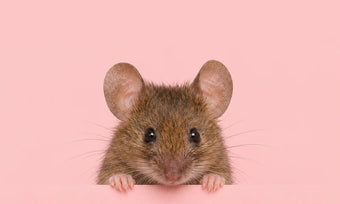
Fancy mice are pet mice. Crittery Exotics, a UK exotic pet rescue, describes them as the domesticated form of the common house mouse, Mus musculus. "Fancy" comes from the mouse fancy: the clubs and breeders who show mice, such as the National Mouse Club (NMC) in the UK and the American Fancy Rat and Mouse Association (AFRMA) in the US. Every mouse in a pet shop is a fancy mouse, whether or not it came from a show line.
Mice don't come in breeds the way dogs or rabbits do. AFRMA explains that mice come in varieties, meaning different coat types, all with the same body shape, and each variety comes in many colours and markings. Our guide to pet mouse breeds and types covers every colour group in depth, and our complete pet mouse care guide covers everything else.
Fancy mouse varieties: coats and colours
AFRMA recognises eight coat varieties. The NMC in the UK shows mice in five sections (selfs, tans, marked, satins and any other variety) and lists astrex and longhaired among its varieties.
| Coat | What it looks like | Care difference |
|---|---|---|
| Standard | Smooth, glossy and fine to the touch | None |
| Satin | Very fine, dense, silky coat with a strong sheen | None |
| Long-haired | As long as possible, fine and silky | Check for bedding caught in the coat |
| Long-haired satin | Long coat with a satin sheen | As long-haired |
| Frizzie (Rex in the UK) | Tightly waved coat with curly whiskers | None |
| Astrex | A curly-coated UK variety | None |
| Frizzled ("fuzzy") | Dense, tight curls cropped close to the skin; standardised in 2022 | Keep warm |
| Hairless | Thin, translucent skin, large ears, short or no whiskers | Extra warmth and nesting, soft bedding |
Colours and markings sit on top of the coat. The NMC lists selfs (one colour, such as black, blue, champagne, chocolate, cream, dove, fawn, lilac, red and white), tans, marked mice (Dutch, even marked, broken marked, banded, rumpwhite, tricolour, Hereford), and other varieties such as agouti, cinnamon, sable, pearl, argente, chinchilla, brindle, merle and the pointed Siamese and Himalayan. Our page on Siamese mice covers the pointed colours. Colour doesn't change temperament or care.
A hairless mouse has no coat to hold heat. Our sources don't give a separate temperature for them, so we'd reason from the species: give a hairless mouse plenty of soft paper nesting, keep the cage well away from draughts and windows, and house it with furred cage mates to share warmth.
Fancy mouse size and lifespan
The MSD Veterinary Manual gives a body length of 6 to 8 cm (2.5 to 3.5 in), 15 to 18 cm (6 to 7 in) with the tail, and an adult weight of 20 to 40 g, about 1 oz. Show-bred mice are bigger: AFRMA wants a long, slim, "racy" body of 20 to 23 cm (8 to 9 in) from nose to tail tip, and Crittery notes show types weigh 60 g (2 oz) and up.
Fancy mice live 1.5 to 2.5 years, says MSD; Wood Green gives one to two years and Crittery up to three.
Temperament: boys or girls?
Fancy mice are curious, quick and busy, and show-bred lines are chosen to be "tractable and easy to handle", in AFRMA's words. The bigger choice is sex. The RSPCA advises compatible single-sex groups that stay the same, without adding or removing mice. Crittery explains that females (does) live happily in groups with enough space, while males (bucks) are more prone to fights and are best left to experienced keepers if kept together. Males can also be neutered by an experienced vet and join a female group six weeks after the operation. Our guide to male vs female mice goes into the choice.
Never pick a mouse up by its tail. Wood Green says it is painful and can injure them. Scoop your mouse up in cupped hands instead.
Fancy mice cage size and setup
Wood Green gives at least 80 x 50 x 35 cm (31 x 20 x 14 in) for three or four mice and 100 x 50 x 35 cm (39 x 20 x 14 in) for up to six. Bars must be 7 to 9 mm apart, with 7 mm (about 1/4 in) the safest, because mice squeeze through tiny gaps. Crittery calls the idea that mice suit tiny tanks a misconception. Our mouse cage size guide has more sizes.
- Choose a quiet spot. The RSPCA advises a quiet room out of direct sun, away from bathrooms, garages, conservatories and high-pitched noises such as alarms.
- Lay deep bedding. Add paper bedding (substrate), hemp or similar, at least 2 cm (about 1 in) deep as the RSPCA's minimum and much deeper in one area for digging. Avoid sawdust, wood shavings and scented or coloured bedding.
- Add nesting. Give soft, white tissue paper for nests, never cotton-wool-type bedding, which Wood Green warns can wrap round legs and tails.
- Fit a wheel. Wood Green advises a solid, upright 20 cm (8 in) wheel.
- Fill the space. Add hides, ropes, platforms, tubes and things to chew, and use the height of the cage for climbing.
- Set out water. Wood Green prefers a water bowl, with a bottle as a backup. The RSPCA says to check bottles morning and evening for blockages.
Our mouse cage setup guide and mouse bedding guide go further. Note that sources disagree on aspen: Wood Green lists it as suitable, while the RSPCA says to avoid it. We'd follow the RSPCA and use paper or hemp.
What do fancy mice eat?
Fancy mice are omnivores. Wood Green advises about 5 g (one teaspoon) of dried food per mouse per day: a mix with grains, seeds and pulses and a protein such as dried mealworms. Treats should be small and occasional, such as one or two fresh mealworms. Avoid coloured chew sticks and salt or mineral licks. Our fancy mouse diet guide covers fresh foods and what to avoid.
How to take care of fancy mice: the routine
- Daily: refill water and food, remove fresh food that wasn't eaten
- Daily: spot clean droppings and wet bedding; the RSPCA advises doing this in the early evening
- Daily: watch every mouse for a minute, since mice hide illness
- Weekly: handle and check each mouse for lumps, scabs, hair loss and weight
- Every one to two weeks: full clean, returning a handful of clean old bedding
- Weekly: move a few toys around to keep things new
The RSPCA gives a full clean every one to two weeks; Wood Green says fortnightly, or more often for big groups. Wash hammocks and ropes at 60°C (140°F) with non-bio detergent, as Wood Green advises.
Common fancy mouse health problems
Wood Green names three problems seen most in pet mice: tumours and lumps, especially in older mice; parasites such as mites, which show as hair loss, scabs, red skin, heavy dandruff and scratches around the neck; and chest infections, made worse by dusty bedding, poor airflow, sudden temperature changes and stress. Crittery adds that obese and underweight mice fall ill more easily.
Find a vet who treats mice before you need one, usually an exotics practice. A mouse that is hunched, puffed up, breathing noisily, not eating or losing weight needs a vet promptly. Our pet mouse health guide explains the signs.
Fancy mouse breeding
Breeding is best left to people who show and have homes lined up. The MSD Veterinary Manual says mice mature at 6 to 8 weeks, when males and females must be housed apart, carry for 19 to 21 days and average 10 to 12 pups, and a female can get pregnant again within 24 hours of giving birth. A pair can fill a house very fast. If you want to breed for show, join a club: the NMC in the UK or AFRMA in the US.
Where to find fancy mice
Look at rescues first. Crittery notes fancy mice are frequently found in rescue, and a rescue can often tell you which mice already get on. RSPCA centres and small animal rescues are good places to ask.
If you go to a breeder, AFRMA's breeders' list covers the US, and the NMC can point you to UK breeders. AFRMA advises asking which diseases a breeder tests for, not buying mice younger than five weeks, bringing your own carrier and keeping new mice apart from any you already have for a while. Choose mice with bright eyes, clean noses and bottoms, smooth coats and quiet breathing. Our guide on where to get a pet mouse lists more questions.
Fancy mouse questions
What is the difference between a fancy mouse and a pet mouse?
There isn't one. Fancy mouse is the name used by mouse clubs and breeders for the domesticated house mouse kept as a pet or shown. Every pet mouse sold in a shop is a fancy mouse. Show-bred mice are often bigger and longer in the body, but the care is the same.
How long do fancy mice live?
The MSD Veterinary Manual gives 1.5 to 2.5 years, and Wood Green gives one to two. Crittery Exotics, a UK rescue, gives up to three. Tumours and chest infections are the most common problems in older mice, so weekly checks and a vet who sees mice help yours reach the top of that range.
Can fancy mice live alone?
No. Wood Green says mice shouldn't live alone and suggests trios or groups, so one is never left by itself if another dies. Females are easiest to keep together. Males are more prone to fights, so Crittery advises leaving male groups to experienced keepers, or having a male neutered by an experienced vet to join females six weeks later.
What is the best bedding for fancy mice?
A paper-based bedding (substrate) or hemp, with soft white tissue for nesting. Wood Green and the RSPCA both say to avoid sawdust, wood shavings and cotton-wool-type bedding, and the RSPCA says to avoid scented or coloured materials. Give at least 2 cm (about 1 in) of bedding, and much more so they can burrow.
Do fancy mice smell?
All mice scent mark with urine and gland secretions, says the RSPCA, so a cage that isn't spot cleaned daily soon smells. Give them objects to use as toilet spots and clean those daily. After a full clean, Wood Green suggests returning a handful of clean old bedding so the cage still smells like home.
How do I breed fancy mice?
We'd suggest you don't unless you plan to show and have homes waiting. The MSD Veterinary Manual says mice mature at 6 to 8 weeks, carry for 19 to 21 days, have 10 to 12 pups on average and can get pregnant again within 24 hours of giving birth. Mouse clubs such as the National Mouse Club support new breeders.
Are fancy mice good pets for children?
For older children with an adult in charge, yes. Wood Green says mice suit older children because they are small and delicate, and they are best watched and handled gently rather than carried around. They are awake mostly in the evening and at night, and they should never be picked up by the tail.
Sources
- American Fancy Rat and Mouse Association: Fancy mice
- American Fancy Rat and Mouse Association: Mouse varieties
- American Fancy Rat and Mouse Association: Members' breeders list
- National Mouse Club: Breed standards
- MSD Veterinary Manual: Description and physical characteristics of mice
- MSD Veterinary Manual: Breeding and reproduction of mice
- Wood Green: Caring for mice as pets
- RSPCA: Mouse environment
- RSPCA: Mouse company
- Crittery Exotics: Fancy mice