Hides and houses
 Shelves and ledges
 Foraging and toys
 Cage accessories
 Kits and bundles
 Fairy forest
 Spooky mischief
 Sweetie stash
 Game mode
 Forest floor
 Castles and cathedrals


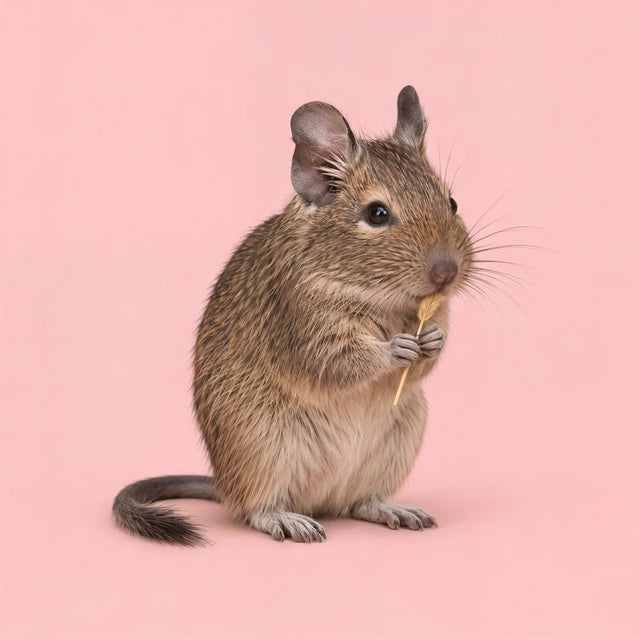
Yes, degus can eat dried herbs, and they are one of the best treats for them. Woodgreen says degus need hay, pellets and natural treats such as dried herbs and flowers, and Blue Cross suggests forage mixes, dandelion leaves and hay-based treats. Choose plain dried plants with nothing added, and scatter a little through their hay. Avoid any mix with fruit, molasses or sugar.
| Safe? | Yes, plain dried plants |
|---|---|
| How much | A little, scattered through hay |
| How often | Most days, as a small extra |
| Best served | Plain dried leaves, herbs and flowers |
| Watch out for | Dried fruit, carrot, molasses or sweetened bits in mixes |
Why dried herbs suit degus
Degus cannot digest or process sugar and carbohydrates well and are very prone to diabetes, Blue Cross explains, and the RSPCA says they need a diet low in sugar and fat. Most of a degu's diet should be hay. Dried herbs and flowers are low in sugar and fit around hay, which is why Woodgreen names them as natural treats and Blue Cross suggests forage mixes.
Which dried herbs and plants are safe?
Burgess names these dried plants for degus. We list the plants, not brands.
| Dried plant | Named by |
|---|---|
| Dandelion leaves | Burgess (dried); Blue Cross (dandelion leaves as a treat) |
| Nettle leaves | Burgess |
| Red clover | Burgess |
| Ribwort (ribwort plantain) | Burgess |
| Marigold flowers | Burgess |
| Cornflower | Burgess |
| Rose petals and hibiscus | Burgess |
Burgess also lists fresh basil and parsley among degu greens; dried, plain versions are the same plants.
What to avoid in herb mixes
- No dried fruit: the RSPCA says chinchilla mixes with dried fruit are not suitable for degus
- No molasses: the RSPCA warns against nuggets and mixes with molasses
- No dried carrot, beetroot or parsnip chunks: the RSPCA says these sugary roots are occasional treats in very small pieces
- No yoghurt drops, honey or sweet coatings
- No peanuts or sunflower seeds, which Burgess calls high in fat
How much and how often?
None of the sources gives a weight. Burgess suggests mixing dried forage into feeding hay, and Blue Cross says each degu needs unlimited hay plus about a tablespoon of pellets a day. We would scatter a small sprinkle of dried herbs through the hay most days, so the hay stays the main food.
How to give dried herbs
- Read the label. Plain dried plants only, with nothing added.
- Introduce one at a time. Avoid sudden diet changes, then watch droppings.
- Scatter it in hay. Blue Cross suggests scattering food so degus forage and squabble less.
Drying your own is easy: pick dandelion leaves from clean, unsprayed ground, wash them, and air-dry them flat until crisp. Store in a paper bag somewhere dry.
Other low-sugar extras
Fresh leafy vegetables are also on the Blue Cross treat list. See lettuce and broccoli, and why carrots are a tiny occasional treat. See our degu food list, the degu diet guide and the degu care hub.
Questions owners ask
Can degus eat dried dandelion?
Yes. Burgess lists dried dandelion leaves for degus, and Blue Cross names dandelion leaves as a treat.
Can degus eat dried flowers?
Yes, plain ones such as marigold, cornflower, rose petals and hibiscus, which Burgess names for degus. Avoid flower mixes with fruit or sugar added.
Can degus eat herb mixes made for rabbits or guinea pigs?
Only if the mix is plain dried plants. The RSPCA warns that foods for other species often do not suit degus, and mixes with dried fruit or molasses are a no.
Can degus eat dried herbs every day?
A small sprinkle through the hay most days is fine. Hay should stay the main food.