Hides and houses
 Shelves and ledges
 Foraging and toys
 Cage accessories
 Kits and bundles
 Fairy forest
 Spooky mischief
 Sweetie stash
 Game mode
 Forest floor
 Castles and cathedrals

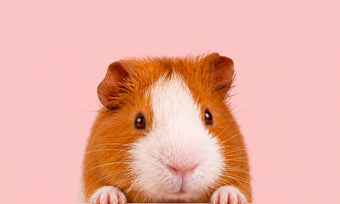
What is an Abyssinian cavy?
It is one of the three most popular guinea pig breeds, alongside the smooth-coated English (American) and the long-haired Peruvian, according to VCA's vets. Burgess calls it one of the oldest breeds. In Britain, breeders and shows use "cavy", the older word for a guinea pig, so you will see "Abyssinian cavy" from breeders and "Abyssinian guinea pig" from pet owners in both the UK and US. They mean the same animal.
The breed has a full standard with the British Cavy Council, looked after by the Abyssinian Cavy Club. Our guinea pig breeds guide compares it with every other coat type.
How to recognise an Abyssinian guinea pig
Look for a guinea pig whose short, harsh coat seems to be going in every direction at once. Each swirl is a rosette, a point the hair grows out from like the crown of your head, and where two rosettes meet the hair stands up in a ridge. PetMD's vet-written guide describes a rough, spiky coat of nearly 5 cm (2 in) with eight rosettes paired across the body. The British Cavy Council standard limits the coat to 4 cm (1.5 in).
The eight rosettes
The British Cavy Council standard places them like this:
- Four across the middle of the back. The saddle and side rosettes, in a straight line across the body.
- Two on the hips. One on each hip, level with each other.
- Two on the rump. Thumb-shaped rosettes with equal centres.
Each rosette should have a pinpoint centre, good depth and a clear edge. Between them run the ridges: a centre ridge along the spine, two side ridges, a collar ridge over the shoulders and a back ridge over the hips. The head should have a harsh, upstanding mane and a prominent moustache. In the show standard, the coat's look (ridges and rosettes) earns 45 of the 100 points.
| Breed | Coat | Grooming |
|---|---|---|
| Abyssinian | Short and rough, up to 4 cm (1.5 in), in rosettes | A few times a week |
| English (American) | Short, smooth and straight | Weekly |
| Peruvian | Very long, straight and silky | Daily |
| Coronet | Long with a single crest on the head | Daily |
See our profiles of the Peruvian and the Coronet, and our guide to curly and rough-coated guinea pigs.
Plenty of pet-shop and rescue guinea pigs have a few rosettes or an uneven pattern. These are often Abyssinian crosses and make just as good pets. Only show animals need the perfect eight.
Abyssinian guinea pig colours
Any colour can appear in an Abyssinian. The British Cavy Council sorts show Abyssinians into these colour groups:
| Colour group | What it looks like |
|---|---|
| Brindle or tortoiseshell | Red and black hairs mixed, or in patches |
| Tortoiseshell and white | Separate patches of red, black and white |
| Roan | White hairs mixed through the colour: blue roan (black and white) or strawberry roan (red and white) |
| Self | One solid colour, most often red or black |
| Any other colour | Everything else, such as red and white, black and white, or tricolours |
If you ever breed, never pair two roan guinea pigs. Creatures' breed guide warns of the lethal white risk from pairing roans or dalmatians, and the safest choice for any pet owner is not to breed at all.
An Abyssinian with a glossy satin coat is an Abyssinian satin. Our satin guinea pig guide explains the extra health checks satins need.
Abyssinian guinea pig temperament
Abyssinians are known for being bold. PetMD's vet-written guide describes them as very affectionate and outgoing but likely to get into trouble because they are so curious, and calls them great first guinea pigs for families. VCA's vets say guinea pigs in general are docile, rarely bite or scratch and are highly interactive.
They are still prey animals. The RSPCA says guinea pigs tend to freeze when faced with something new and need hides to feel safe. Our guide to taming a guinea pig shows how to build trust, and guinea pig sounds explained decodes the wheeks, purrs and chuts an Abyssinian will make.
Do Abyssinians need a friend?
Yes. PDSA says guinea pigs should be kept in groups of three or more, and the RSPCA recommends pairs or small groups. Good pairings are two sows, two boars that grew up together, or a neutered boar with sows. Our guide to guinea pig pairs and groups explains introductions.
Caring for an Abyssinian: what is different
Almost everything is standard guinea pig care. The coat is the one real difference.
Grooming
The short, rough coat tangles less than a long-haired breed's, but Burgess warns that Abyssinians need a fair amount of grooming to prevent tangles. Brush gently with a soft brush in the direction each section of hair grows, a few times a week, and more often when moulting. Pick out hay and bedding from the rosettes, and check the bottom and back end for soiling, especially in older boars.
- Settle your guinea pig. Sit on the floor with a towel on your lap and a few herbs to nibble.
- Brush with the swirl. Follow the hair outwards from each rosette centre, using short, light strokes.
- Clear the debris. Tease out hay, seeds and bedding with your fingers.
- Check the body. Feel for lumps, scabs and bald patches while you groom, and look at the feet and nails.
- Finish with a treat. A leaf of romaine lettuce or a sprig of coriander (cilantro) makes grooming something to look forward to.
Space
Woodgreen recommends at least 153 × 61 cm (5 × 2 ft) on one level for a pair of sows, 182 × 61 cm (6 × 2 ft) for a pair of boars or a trio, plus a run of 182 × 122 cm (6 × 4 ft) and 46 cm (18 in) high. The RSPCA says guinea pigs can be awake up to 20 hours a day and should be brought indoors when it drops below 15°C (59°F). VCA's vets give an ideal range of 18 to 26°C (65 to 80°F), with heatstroke risk above 27°C (80°F). Our guinea pig cage size guide and temperature guide have the details.
Food and vitamin C
There is no special Abyssinian diet. PDSA says hay and grass should make up 85 to 90% of the diet, with about one cup of fresh vegetables a day per guinea pig, at least five or six kinds, and one tablespoon of grass-based pellets per adult. Guinea pigs can't make their own vitamin C, so it must come from food every day. VCA's vets advise using pellets within 90 days of being made, because vitamin C breaks down, and never adding vitamin C to drinking water. See our guinea pig diet guide and vitamin C guide.
Weekly care checklist
- Daily: unlimited fresh hay, a cup of mixed vegetables each, fresh water
- Daily: spot-clean wet bedding and droppings
- Daily: watch each guinea pig eat and pass droppings
- Weekly: brush the coat and pick out debris from the rosettes
- Weekly: full health check of eyes, ears, teeth, feet, skin and bottom, as PDSA recommends
- Weekly: weigh each guinea pig and note any loss
- Weekly: full clean of the cage
- Monthly: check nails, and trim or have them trimmed if they curl
Abyssinian guinea pig health
We found no vet or breed club source listing health problems special to the Abyssinian, so watch for the same problems as any guinea pig. VCA's vets name bumblefoot (sore feet, often from wire floors), heatstroke, urinary stones, dental problems and impacted scent glands in older boars. Without enough vitamin C, guinea pigs get scurvy, PDSA warns, so a guinea pig that seems stiff, sore or off its food needs its diet and a vet check.
A guinea pig that stops eating, stops passing droppings, is hunched and puffed up, or is breathing with clicks or a wet nose needs a vet the same day. PDSA warns that a guinea pig that stops eating is at risk of gut stasis.
Our guinea pig health guide lists every sign, and the lifespan guide covers life stages.
Abyssinian guinea pigs for sale near me: where to find one
Start with rescues. The RSPCA says it rehomes guinea pigs of all ages, and rescues often have rough-coated guinea pigs and Abyssinian crosses. In the UK, try the RSPCA, Woodgreen, Blue Cross and local guinea pig rescues. In the US, look at local shelters, small-animal rescues and adoption listings. Rescues often have bonded pairs ready to go home together.
If you want a show-quality Abyssinian, the British Cavy Council's breed club pages list the Abyssinian Cavy Club, and breeders' adverts appear through its member clubs. Ask any breeder:
- Can I see the mother and where the babies live?
- Are the babies weaned, and has each been sexed by someone experienced?
- Are the parents roans? (Avoid babies from a roan-to-roan pairing.)
- Can I take two, or will you help me pair one with my existing guinea pig?
- Will you take the guinea pig back if I can't keep it?
A healthy Abyssinian has bright, clear eyes, a clean nose and ears, a coat with no bald or scaly patches, a clean dry bottom and a solid, firm body. Walk away from cramped, dirty pens or sellers who will only sell one guinea pig alone. Our guide to where to get a guinea pig has the full checklist, and the complete guinea pig care guide covers everything else.
Abyssinian guinea pig questions
How many rosettes does an Abyssinian guinea pig have?
Eight in a show Abyssinian. The British Cavy Council standard asks for four in a line across the back, one on each hip and two on the rump, and PetMD's vet-written guide also gives eight, paired across the body. Pet Abyssinians often have more, fewer or uneven rosettes, which makes no difference to a pet.
Are Abyssinian guinea pigs friendly?
Usually very. PetMD's vet-written guide describes them as very affectionate and outgoing, curious enough to get into trouble, and great first guinea pigs for families. Like all guinea pigs they are prey animals, so they settle best with gentle daily handling, low to the floor, and a guinea pig friend.
How long do Abyssinian guinea pigs live?
About 4 to 8 years, the range PDSA gives for guinea pigs, and VCA's vets say most live 5 to 6 years and some 8 to 10. We know of no breed club or vet source that gives the Abyssinian a different lifespan from other guinea pigs. Good hay, daily vitamin C and company help most.
Do Abyssinian guinea pigs need a lot of grooming?
Less than long-haired breeds. The coat is rough and no longer than 4 cm (1.5 in) in the British Cavy Council standard. Burgess advises plenty of grooming to stop tangles, so a soft brush a few times a week, and more in a moult, keeps it tidy. Check the bottom for soiling.
Are Abyssinian guinea pigs noisy?
They talk as much as any guinea pig, and their bold nature can make them more vocal. The RSPCA says guinea pigs make around 11 different sounds: a loud wheek usually means excitement, often at feeding time, a low chutting purr means contentment, and a sharp squeak means alarm.
What is the difference between an Abyssinian and a Peruvian guinea pig?
Coat length. An Abyssinian has a short, rough coat in rosettes, no longer than 4 cm (1.5 in) in the British standard. A Peruvian has long, straight, silky hair that needs daily grooming. VCA's vets name the English, Abyssinian and Peruvian as the three most popular breeds.
Can an Abyssinian live alone?
No. Guinea pigs are social, and PDSA recommends groups of three or more, while the RSPCA says pairs or small groups. A person can't stand in for another guinea pig. Two sows, or a neutered boar with one or more sows, are the easiest groups to keep.
Sources
- British Cavy Council: Abyssinian breed standard
- British Cavy Council: Abyssinian Cavy Club
- PetMD (Laurie Hess, DVM): 9 breeds of long-haired guinea pigs
- VCA Animal Hospitals: Owning guinea pigs
- PDSA: Guinea pigs as pets
- PDSA: Your guinea pig's diet
- Woodgreen Pets Charity: Guinea pig housing
- RSPCA: Ten facts you need to know before getting guinea pigs
- Burgess Pet Care: A guide to different types of guinea pigs
- Creatures: Abyssinian guinea pig